10-K: Annual report [Section 13 and 15(d), not S-K Item 405]
Published on March 9, 2026
UNITED STATES
SECURITIES AND EXCHANGE COMMISSION
Washington, D.C. 20549
FORM 10-K
ANNUAL REPORT PURSUANT TO SECTION 13 OR 15(d) OF THE SECURITIES EXCHANGE ACT OF 1934 | |||||
For the fiscal year ended December 31 , 2025
OR
TRANSITION REPORT PURSUANT TO SECTION 13 OR 15(d) OF THE SECURITIES EXCHANGE ACT OF 1934 | |||||
For the transition period from ___________ to ___________
Commission File Number: 001-42932
(Exact Name of Registrant as Specified in its Charter)
(State or other jurisdiction of incorporation or organization) | (I.R.S. Employer Identification No.) | ||||||||||
| (Address of principal executive offices) | (Zip Code) | ||||||||||
Registrant’s telephone number, including area code: (802 ) 281-3623
Securities registered pursuant to section 12(b) of the Act:
Title of each class | Trading Symbol(s) | Name of each exchange on which registered | ||||||
Indicate by check mark if the registrant is a well-known seasoned issuer, as defined in Rule 405 of the Securities Act. Yes o No x
Indicate by check mark if the registrant is not required to file reports pursuant to Section 13 or Section 15(d) of the Act. Yes o No x
Indicate by check mark whether the registrant (1) has filed all reports required to be filed by Section 13 or 15(d) of the Securities Exchange Act of 1934 during the preceding 12 months (or for such shorter period that the registrant was required to file such reports), and (2) has been subject to such filing requirements for the past 90 days. Yes x No o
Indicate by check mark whether the registrant has submitted electronically every Interactive Data File required to be submitted pursuant to Rule 405 of Regulation S-T (§ 232.405 of this chapter) during the preceding 12 months (or for such shorter period that the registrant was required to submit such files). Yes x No o
Indicate by check mark whether the registrant is a large accelerated filer, an accelerated filer, a non-accelerated filer, a smaller reporting company, or an emerging growth company. See the definitions of “large accelerated filer,” “accelerated filer,” “smaller reporting company” and “emerging growth company” in Rule 12b-2 of the Exchange Act.
| Large accelerated filer | o | Accelerated filer | o | |||||||||||||||||
| x | Smaller reporting company | |||||||||||||||||||
| Emerging growth company | ||||||||||||||||||||
If an emerging growth company, indicate by check mark if the registrant has elected not to use the extended transition period for complying with any new or revised financial accounting standards provided pursuant to Section 13(a) of the Exchange Act. o
Indicate by check mark whether the registrant has filed a report on and attestation to its management’s assessment of the effectiveness of its internal control over financial reporting under Section 404(b) of the Sarbanes-Oxley Act (15 U.S.C. 7262(b)) by the registered public accounting firm that prepared or issued its audit report. o
If securities are registered pursuant to Section 12(b) of the Act, indicate by check mark whether the financial statements of the registrant included in the filing reflect the correction of an error to previously issued financial statements. o
Indicate by check mark whether any of those error corrections are restatements that required a recovery analysis of incentive-based compensation received by any of the registrant's executive officers during the relevant recovery period pursuant to §240.10D-1(b). o
Indicate by check mark whether the registrant is a shell company (as defined in Rule 12b-2 of the Act). Yes o No x
As of June 30, 2025, the last business day of the registrant's most recently completed second fiscal quarter, there was no established public trading market for the registrant’s equity securities. The registrant’s Class A common stock began trading on the New York Stock Exchange on November 3, 2025.
As of March 4, 2026, there were 221,249,271 shares of Class A common stock, $0.0001 par value per share, and 8,501,484 shares of Class B common stock, $0.0001 par value per share, outstanding.
DOCUMENTS INCORPORATED BY REFERENCE
Portions of the registrant's Proxy Statement related to the 2026 Annual Meeting of Stockholders are incorporated by reference in Part III of this Annual Report on Form 10-K. This Proxy Statement will be filed with the Securities and Exchange Commission within 120 days after the close of the fiscal year covered by this report.
Table of Contents
Page | ||||||||
Special Note Regarding Forward-Looking Statements
This Annual Report on Form 10-K (“Annual Report”) includes “forward-looking statements” within the meaning of federal securities laws, which statements involve substantial risks and uncertainties. All statements other than statements of historical facts included or incorporated by reference in this report, including, without limitation, statements regarding the Company’s future financial position, business strategy, budgets, projected revenues, projected costs, and plans and objectives of management for future operations, are forward-looking statements. Forward-looking statements generally can be identified by the use of forward-looking terminology such as “may,” “will,” “could,” “expect,” “intend,” “project,” “estimate,” “anticipate,” “plan,” “believe,” or “continue” or the negative of such terms or similar terminology. Important factors that could cause actual results to differ materially from the Company’s expectations include, but are not limited to, the important factors discussed in Part I, Item 1A. “Risk Factors” in this Annual Report for the year ended December 31, 2025.
You should not rely upon forward-looking statements as predictions of future events. We have based the forward-looking statements contained in this Annual Report primarily on our current expectations and projections about future events and trends that we believe may affect our business, financial condition, results of operations and prospects. The outcome of the events described in these forward-looking statements is subject to risks, uncertainties and other factors, including those described in this Annual Report. Moreover, we operate in a very competitive and rapidly changing environment. New risks and uncertainties emerge from time to time and it is not possible for us to predict all risks and uncertainties that could have an impact on the forward-looking statements contained in this Annual Report. We cannot assure you that the results, events and circumstances reflected in the forward-looking statements will be achieved or occur, and actual results, events or circumstances could differ materially from those described in the forward-looking statements.
The forward-looking statements made in this Annual Report relate only to events as of the date on which the statements are made. We undertake no obligation to update any forward-looking statements made in this Annual Report to reflect events or circumstances after the date of this Annual Report or to reflect new information or the occurrence of unanticipated events, except as required by law. We may not actually achieve the plans, intentions or expectations disclosed in our forward-looking statements and you should not place undue reliance on our forward-looking statements. Our forward-looking statements do not reflect the potential impact of any future acquisitions, mergers, dispositions, joint ventures, similar transactions or investments we may enter into.
In addition, statements that “we believe” and similar statements reflect our beliefs and opinions on the relevant subject. These statements are based upon information available to us as of the date of this Annual Report, and while we believe such information forms a reasonable basis for such statements, such information may be limited or incomplete, and our statements should not be read to indicate that we have conducted an exhaustive inquiry into, or review of, all potentially available relevant information. These statements are inherently uncertain and investors are cautioned not to unduly rely upon these statements.
As used in this Annual Report, unless otherwise stated or the context requires otherwise, references to “BETA,” the “Company,” “we,” “us,” and “our” refer to BETA Technologies, Inc. and its consolidated subsidiaries.
Summary Risk Factors
Our business is subject to a number of risks and uncertainties, including those described in Part I, Item 1A. “Risk Factors” in this Annual Report. You should carefully consider these risks and uncertainties when investing in our Class A common stock. The principal risks and uncertainties affecting our business include the following:
•our ability to access capital markets or obtain affordable financing to support our significant capital requirements;
•our ability to generate revenue from electric aircraft, batteries, core technologies and charging infrastructure;
•our ability to design, manufacture, certify and roll out our aircraft without significant delays;
•our ability to succeed if markets for our offerings do not materialize or grow as expected;
•our ability to succeed if the electric aviation industry does not develop or achieve market adoption or certification;
•our limited operating history, which makes evaluating our business difficult and increases investment risk;
•our history of significant losses and uncertainty regarding future profitability;
1
•our ability to realize returns on significant resources invested in new products and technologies;
•our ability to establish and expand international market presence;
•our exposure to location-specific risks and regulatory uncertainties in our charging network;
•our ability to commercialize technology before competitors or capture first-mover advantages;
•our dependence on market adoption of electric aircraft and infrastructure for growth;
•our reputation, which may be impacted by broader industry perception;
•our ability to keep pace with technology advances and maintain our competitive position;
•our ability to develop new aircraft and services to address market opportunities;
•our ability to compete in the highly competitive aircraft market against established aircraft manufacturers and new market entrants;
•our exposure to highly volatile demand in the electric aviation industry;
•our exposure to material harm from crashes, accidents, or incidents involving electric aircraft or batteries;
•our exposure to hazards and operational risks and ability to secure adequate insurance at reasonable prices;
•our exposure to product liability claims that could harm our business;
•our dependence on our founder and CEO, Kyle Clark;
•our ability to retain key personnel and attract skilled talent;
•our exposure to adverse effects from labor and union activities;
•our exposure to unique risks from U.S. government contracts;
•our exposure to U.S. government modification or termination of contracts;
•our ability to secure contracts and grow government and military relationships;
•our defense program’s dependence on personnel maintaining security clearances;
•our exposure to risks associated with strategic relationships;
•our exposure to conflicts with collaborators or partners that could limit our ability to implement strategies;
•our exposure to unique risks from aerospace commercial contracts;
•our exposure to adverse effects from our GE Aerospace partnership and future alliances;
•our ability to realize all expected sales;
•our exposure to revenue impact from loss of significant customers or their payment defaults;
•our dependence on suppliers and service partners for raw materials, parts and components;
•our ability to obtain, maintain, protect or enforce our intellectual property rights;
•our exposure to third-party claims that we infringe their intellectual property;
•our exposure to threats not addressed by intellectual property rights;
•our exposure to operational harm from IT and communications system failures;
•our exposure to cybersecurity attacks and incidents;
•our exposure to evolving privacy laws and potential investigations, fines and increased compliance costs;
•our exposure to adverse impacts from use of artificial intelligence (“AI”) technologies;
•our exposure to brand risks from social media and reputation damage;
•our exposure to global climate change risks, including physical and transitional risks;
•our exposure to lower-than-expected aircraft utilization due to weather and other factors;
•our exposure to unexpected aircraft and charger maintenance frequencies or costs;
•our ability to maintain adequate facilities and infrastructure to offer products or services effectively;
•our ability to use net operating losses and tax attributes, which may be limited;
•our exposure to adverse fluctuations from changes in accounting standards;
•our exposure to additional costs or reputational risks from increasing environmental, social, and governance scrutiny and requirements;
•our exposure to legal proceedings that could delay or prevent commercialization of our aircraft;
•our exposure to resource strain and management distraction from public company requirements;
•our ability to comply with aerospace and electric aircraft laws and regulations;
2
•our ability to comply with a wide variety of laws and regulations from federal, state, and foreign agencies;
•our ability to obtain regulatory approvals for commercialization in the U.S. or foreign markets;
•our ability to comply with stringent export and import controls and secure authorizations timely;
•our exposure to significant costs from complying with environmental, health and safety laws;
•our ability to comply with rapidly changing privacy laws relating to privacy, data protection, and security;
•our exposure to political and regulatory challenges from international subsidiaries and future operations;
•our exposure to material harm from changes in tax laws applied adversely to us;
•our exposure to operational restrictions from credit agreement covenants and impact of noncompliance;
•our ability to generate sufficient cash to service or repay indebtedness when due;
•our exposure to Class A common stock price fluctuations, which could result in stockholders losing all or part of their investment;
•our control by Kyle Clark, whose interests may conflict with other stockholders;
•our exposure to conflicts from directors and management with interests different from other stockholders;
•our status as a “controlled company” relying on NYSE governance exemptions; stockholders lack certain protections;
•our exposure to dilution or adverse stock price effects from issuance of additional capital stock;
•our intention not to pay dividends;
•our exposure to adverse trading market effects from the multi-class structure;
•our exposure to stock price reduction from future stock sales and dilution from additional equity sales;
•our exposure to adverse stockholder equity impact from terms of subsequent financings;
•our exposure to harm to competitive position and stock price from analyst downgrades or negative reports;
•our obligation to maintain effective internal controls under Sarbanes-Oxley Section 404 and the related impact on investor confidence in the event of control deficiencies;
•our use of reduced emerging growth company disclosure requirements, which may make our Class A common stock less attractive;
•our corporate governance provisions, which could make acquisitions difficult or prevent stockholder removal of management;
•our exposure to securities litigation, activist investors and short-selling campaigns;
•our certificate’s designation of Delaware Chancery Court as exclusive forum, limiting the forum available to our stockholders;
•our ability to comply with NYSE listing standards; delisting could limit stock transactions;
•our exposure to harm if deemed an investment company under the Investment Company Act;
•our exposure to adverse effects from global challenges, including tariffs, inflation, interest rates, or recession; and
•our exposure to adverse effects from public health threats.
These and other risks are more fully described in Part I, Item 1A. “Risk Factors” in this Annual Report. If any of these risks actually occur, our business, financial condition, results of operations, cash flows and prospects could be materially and adversely affected. As a result, you could lose all or part of your investment in our Class A common stock.
3
GLOSSARY
The following are abbreviations and definitions of certain terms used in this Annual Report, which are commonly used in the Company’s industry:
•“AAM” refers to advanced air mobility.
•“A&D” refers to aerospace and defense.
•“Backlog” refers to the aggregate number of Firm Orders and Options.
•“CTOL” refers to a Conventional Takeoff and Landing aircraft that takes off and lands at speed along a runway.
•“DARPA” refers to the Defense Advanced Research Projects Agency.
•“DCSA” refers to the Defense Counterintelligence and Security Agency.
•“DOT” refers to the U.S. Department of Transportation.
•“EAR” refers to the Export Administration Regulations.
•“EASA” refers to the European Aviation Safety Agency.
•“FAR” refers to the Federal Acquisition Regulation.
•“Final Assembly Facility” means the production facility of our aircraft manufacturing campus located in South Burlington, Vermont.
•“Fixed Based Operator” refers to an entity granted the right by an airport to operate at the airport and provide services such as, but not limited to, fueling, hangaring and parking, along with other similar services.
•“eCTOL” refers to electric Conventional Takeoff and Landing aircraft that takes off and lands at speed along a runway.
•“Enabling Technologies” include batteries, motors, flight control systems and an international network of electric charging and related equipment.
•“eVTOL” refers to electric Vertical Takeoff and Landing aircraft.
•“FAA” refers to the Federal Aviation Administration.
•“FBW” refers to a fly-by-wire system that replaces manual flight controls with electrically signaled controls.
•“FCC” refers to the BETA flight control computer.
•“Firm Orders” refers to the number of aircraft under signed agreements with financial commitments. Unless otherwise specifically described, any reference to the number or value of Firm Orders in this Annual Report is as of December 31, 2025.
•“ITAR” refers to the International Traffic in Arms Regulations.
•“OEM” refers to an original equipment manufacturer.
•“Options” refers to the number of aircraft that customers with Firm Orders have the right to purchase under signed agreements. Unless otherwise specifically described, any reference to the number or value of Options in this Annual Report is as of December 31, 2025.
•“PHMSA” refers to the Pipeline and Hazardous Materials Safety Administration.
•“SFAR” refers to the Special Federal Aviation Regulation adopted by the FAA in December 2024.
•“VTOL” refers to a Vertical Takeoff and Landing aircraft that can take off and land vertically without the use of a runway (similar to a helicopter).
•“zero-emission,” as used herein with respect to our aircraft technology, refers to aircraft that produce no exhaust emissions during flight and does not refer to any emissions associated with manufacturing electricity used to power the aircraft or manufacturing or transporting the aircraft.
1
PART I
Item 1. Business.
Our Company
We are redefining the aerospace industry. We have developed an electric aircraft platform and propulsion systems that are positioned to transform the aviation industry forward into a new phase of growth. We design, manufacture and sell high-performance electric aircraft, advanced electric propulsion systems, charging systems and components. Further, we have invested in the underlying infrastructure of this breakthrough technology, which is critical to bringing electric aviation to life. We believe we have developed a differentiated presence in North America and are well positioned to expand globally.
Our company was purpose-built to capture the significant, untapped market opportunity in sustainable, reliable and efficient electric aviation.
Vertical integration allows us to innovate rapidly and capture meaningful economic value throughout an aircraft’s lifetime by providing batteries and aftermarket services for BETA aircraft and other customers. Our focus is on the Enabling Technologies essential to electric aviation, including batteries, motors, flight control systems and an international network of electric charging and related equipment. With proprietary control over these core technologies, we offer customers a complete platform to support their adoption of electric aircraft to enable both existing and new missions. This multilayered approach provides us with recurring, high-margin opportunities.
We have developed highly scalable technologies that can be tailored to and deployed for cost-effective and safe missions across cargo and logistics, medical, defense and passenger end markets. Our simplified approach to designing electric aircraft allows us to service a variety of end markets and mission types leveraging the same core technologies. The portability of our technologies and systems across various aircraft also unlocks flexibility to innovate on future generations of aircraft.
We are pursuing a stepwise approach to growing our business in both certification and market entry. We believe this significantly derisks our business model and expands our addressable market. This approach creates a logical progression where each certification effort informs the next—streamlining documentation, building continuity with FAA personnel and reducing risk across programs.
Our go-to-market strategy is also incremental over time. We intend to prioritize cargo and logistics, while also giving focus to military applications and medical industries, before delivering aircraft to passenger operators.
We believe our ALIA CTOL electric aircraft is at the forefront of the electric aviation industry. The ALIA CTOL has successfully flown thousands of flights, over 100,000 nautical miles, including operations in North America, Europe and New Zealand. This includes the world’s first, all-electric passenger flight into John F. Kennedy International Airport, which utilized approximately $7.00 in flight fuel costs, demonstrating electric aircraft’s integration into congested national airspace and approximately 95% in fuel cost savings when compared to a combustion aircraft based on internal estimates. Our ALIA CTOL also made its debut at the Paris Air Show in June 2025, opening the show with an aerial ballet demonstrating the performance and agility of our electric aircraft. Further, our aircraft has been used by the U.S. Military in training missions and flown by the FAA, providing us with valuable data with respect to our aircraft and our certification strategy. We have also completed successful cargo and logistics demonstrations with medical partners and customers such as UPS and United Therapeutics Corporation (“United Therapeutics”).
We believe our aircraft represents a significant cost efficiency advantage, as total operating costs are 42% lower compared to new conventional fixed-wing aircraft based on internal estimates. This reduction is primarily attributed to the substantially reduced maintenance requirements given our simplified aircraft design. Our aircraft’s design eliminates the need for complex components such as gear boxes, in-flight liquid cooling systems and thrust vectoring mechanisms, further streamlining maintenance operations and contributing to lower operational costs. The operating savings are even higher when comparing our ALIA VTOL variant to traditional helicopters—a 74% reduction based on internal estimates.
2
We believe we are the first electric aircraft OEM with a scale production facility and we have room to grow. Our approximately 188,000 square foot Final Assembly Facility in South Burlington, Vermont is designed to support production of more than 300 aircraft annually at maturity through optimized processes and manufacturing flows. We have site control and permits for expansion to over 355,000 square feet to accommodate significant future growth.
Our advantage is our technology. We believe the core competency of our company and our core intellectual property are contained within our Enabling Technologies, which are fundamentally composed of four critical components:
•Batteries
•Motors
•Ground service equipment ("GSE")
•Flight Control Systems
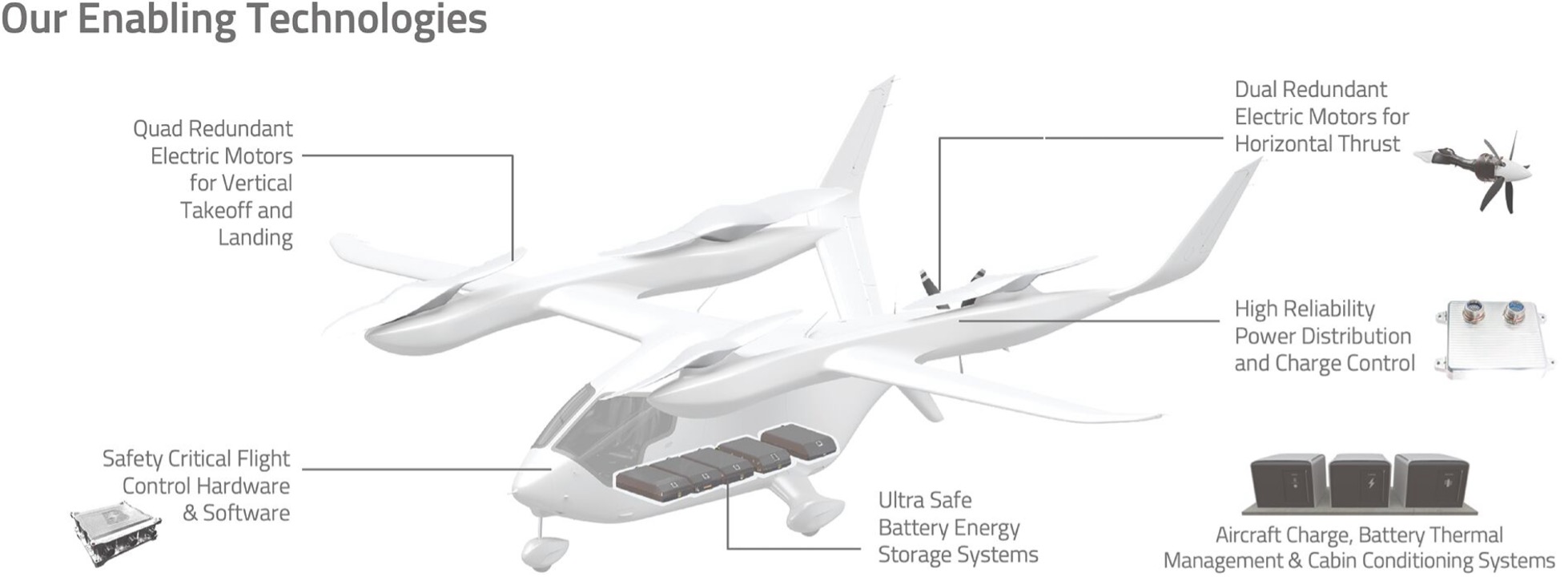
Together, these Enabling Technologies create a vertically-integrated ecosystem across our product lines. We designed each of these critical components for our electric aircraft and plan to use this technology in our ALIA CTOL (CX300), ALIA VTOL (A250) and MV250 aircraft, significantly reducing our overall development expense and creating economies of scale for production. Additionally, our Enabling Technologies have centralized, modular and interchangeable designs, enabling future generations of electric aircraft to incorporate our patented technologies. We also design and manufacture a line of aviation-centric charging equipment that features compatibility with a broad range of emerging electric aircraft. Our technologies are thoughtfully designed to enhance their lifetime value and long-term utility. These systems have applications across customers, sectors and geographies, which positions us for continued growth.
3
Key and Enabling Technologies employed on the BETA Aircraft.
Our business model contemplates four key revenue streams:
(1)selling aircraft to military and commercial customers such as UPS, Air New Zealand and United Therapeutics;
(2)selling replacement batteries to operators in the aftermarket;
(3)selling propulsion systems as a merchant supplier to other eVTOL manufacturers such as Embraer-backed EVE Air Mobility (“EVE”), Textron eAviation and defense technologies; and
(4)selling GSE, primarily chargers, to state governments, operators, Fixed Base Operators and other electric aviation companies.
Our market-entry strategy for our aircraft is initially focused on selling to operators that specialize in cargo and logistics, military and medical operations, before expanding into delivery of aircraft to customers for passenger operations. That said, our financial opportunity is maximized over the entire lifetime of the aircraft. For example, if operated for 20 years, we estimate a typical electric aircraft will require 18 to 20 sets of replacement batteries, generating approximately $13 million in revenue assuming replacement of batteries for all customer use cases every year at current year pricing levels with a 2.5% annual escalation. We believe there are customers who will easily meet this utilization.
Further, our customers will also benefit from improving battery technology over the lifetime of the aircraft, as replacement batteries are expected to deliver superior aircraft performance due to improved energy density, which directly translates into longer range and higher speeds. We believe our ownership of the battery pack technology, protected by an extensive portfolio of intellectual property, will allow us to recognize substantial recurring revenue, even after the initial aircraft sale, contributing a majority of the lifetime revenue at attractive margins.
As a merchant supplier, we leverage our technical advantage and strong, positive reputation among established A&D OEMs in selling and marketing propulsion systems, core components and charging infrastructure to others in the aerospace and defense technologies to prime contractors. In addition to signing a contract to provide up to $1 billion of pusher motors to EVE, we have also delivered lift motors to enable the flight testing of their proof-of-concept aircraft. We expect further opportunities to provide critical components as the EVE aircraft program continues to mature.
We are also developing a fully-integrated, digital platform, “BETA Operate,” with access to real-time data from our aircraft and GSE to optimize our customers’ operational capabilities. This system enables end-to-end visibility and control over their electric aircraft fleets, including real-time flight monitoring and charging infrastructure management, AI-powered predictive maintenance and network planning and battery health and operating cost optimization. Our digital platform also drives regulatory compliance through automated maintenance record synchronization and offers seamless integration with existing aviation systems through universal API access.
We are developing BETA Operate in four modules: Maintenance, Control Center, Network and Data. The Maintenance module launched in July 2025 and is in active use to track maintenance on aircraft currently in the field. Development of the integrated Control Center module is underway, with limited functionality already in use, and an initial commercially-viable version targeted to be operational by the first half of 2026. The Network and Data modules remain in planning, with availability expected prior to aircraft certification, currently targeted for late 2026.
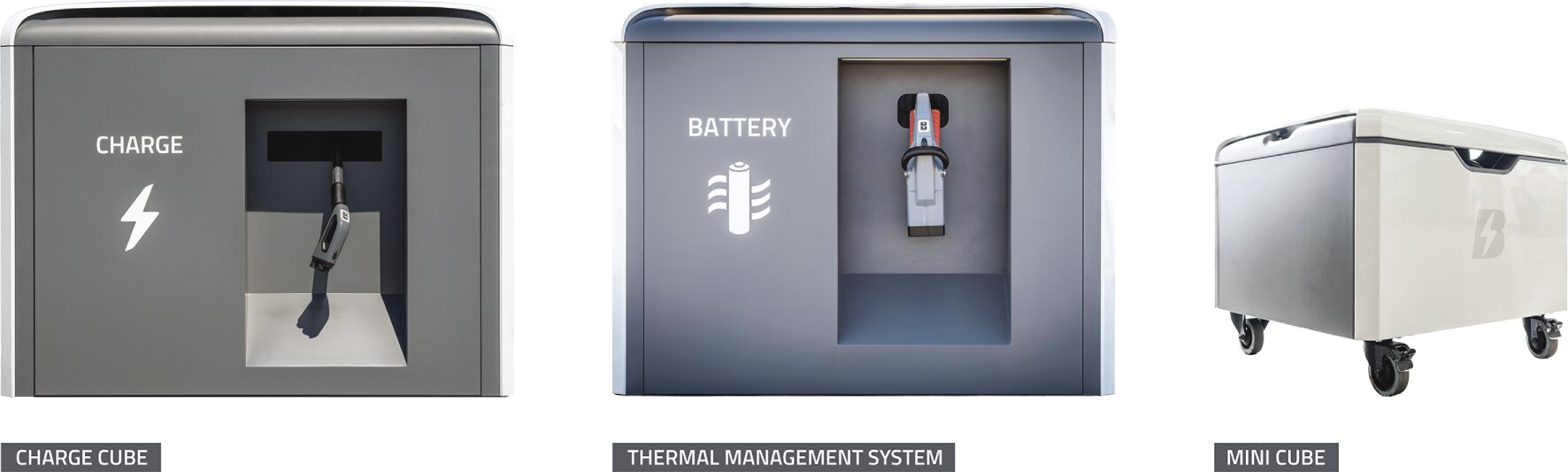
Finally, our business model capitalizes on a fundamental element of electric mobility. Electric aircraft need electric charging. To this end, we have developed a series of charging infrastructure, including large Charge Cubes designed for stationary charging, Mini Cubes designed for more mobile applications and thermal management systems, which cool batteries during high-speed charging. Our charging products and infrastructure are designed to use the CCS-1 charging protocol, allowing for charging access for both electric aircraft and ground vehicles. Through a series of customer and government investments, we have built a charging infrastructure for all electric aircraft operators to use nationwide.
Our Products
We develop electric aircraft, their critical systems and components (such as motors and batteries) and GSE to charge them. We believe this enables our customers to complete all-electric, cargo and logistics, medical transport and passenger missions at lower operating costs.
Aircraft
4
We have an existing civil aircraft Backlog of 891 aircraft worth $3.47 billion, of which 289 are Firm Orders and 602 are Options. Our current civil aircraft customers include UPS, United Therapeutics, Air New Zealand, Bristow and Metro Air Services. Additionally, we currently have an agreement with Republic Airways relating to the use of our aircraft to fulfill its missions. These customers highlight the diversity of civil uses for our aircraft ranging from cargo and logistics to medical to passenger missions. Importantly, in addition to selling aircraft, we intend to sell a full suite of support products to these aircraft operators. Many of these products are similar to what is conventionally sold to aircraft operators by aircraft producers (e.g., flight training, aftermarket parts), but because we own the intellectual property and produce all key components onboard the aircraft, we can also sell key aftermarket replacements, such as batteries, through either direct replacement or the industry's first “energy by the hour” program.
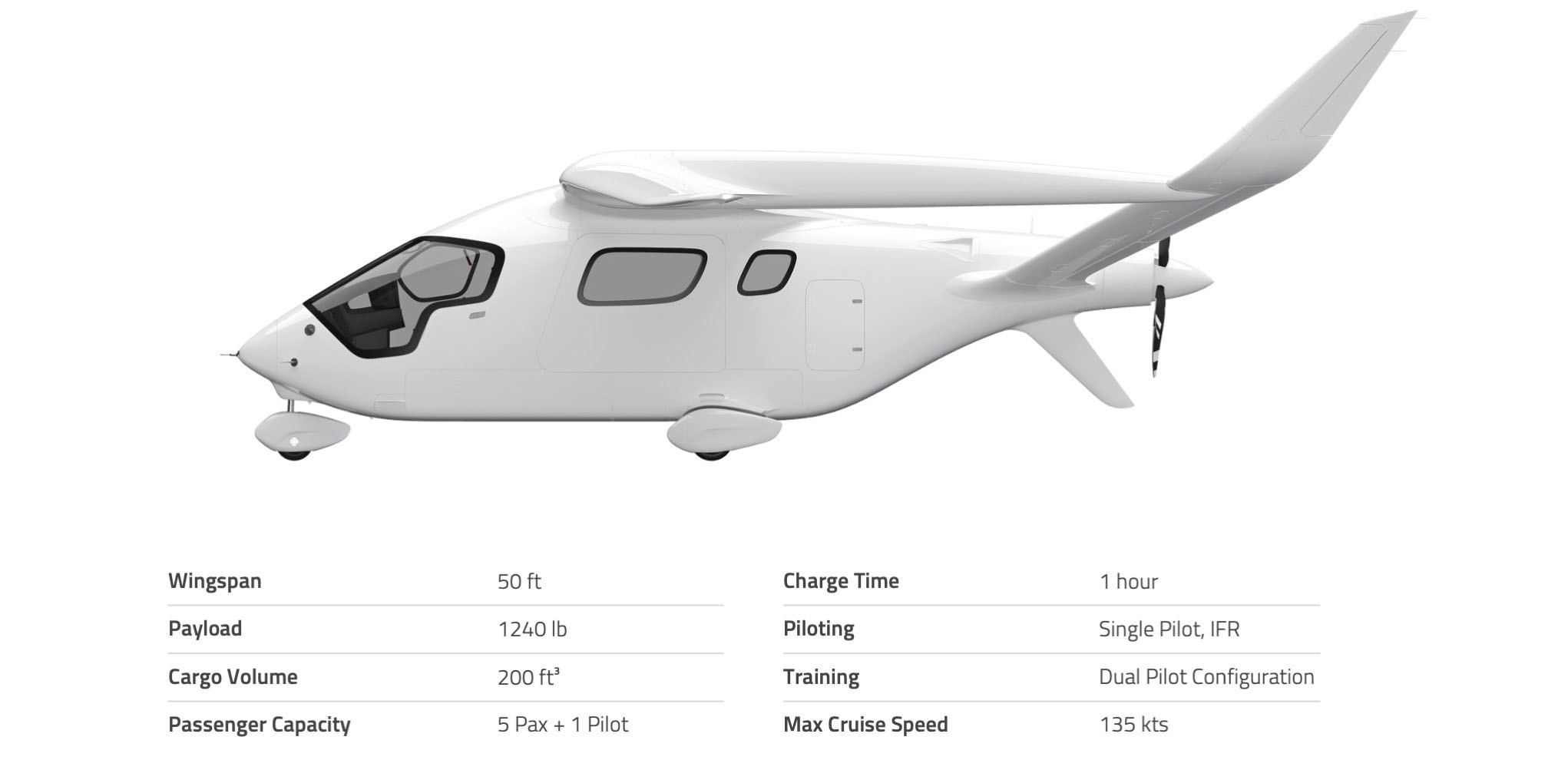
ALIA CTOL CX300 (Piloted, Electric)
ALIA CTOL (CX300) – Designed for flexible deployment and reliability, including under Instrument Flight Rules (IFR), our CTOL aircraft transports six people or 200 cubic feet of cargo plus two crew members on missions of up to approximately 215 nautical miles. This aircraft is intended to leverage existing airport infrastructure and fly in accordance with existing procedures to enable rapid adoption. We are targeting FAA Part 23 certification approximately 12 months following the Type Certification of our H500A electric motor. Our Backlog for the CTOL consists of 331 aircraft, of which, 131 are Firm Orders and 200 are Options. Examples of key CTOL launch customers include Air New Zealand and United Therapeutics, highlighting the versatility of the aircraft. We have not yet delivered any certified aircraft and therefore, no associated revenue has been recognized.
5
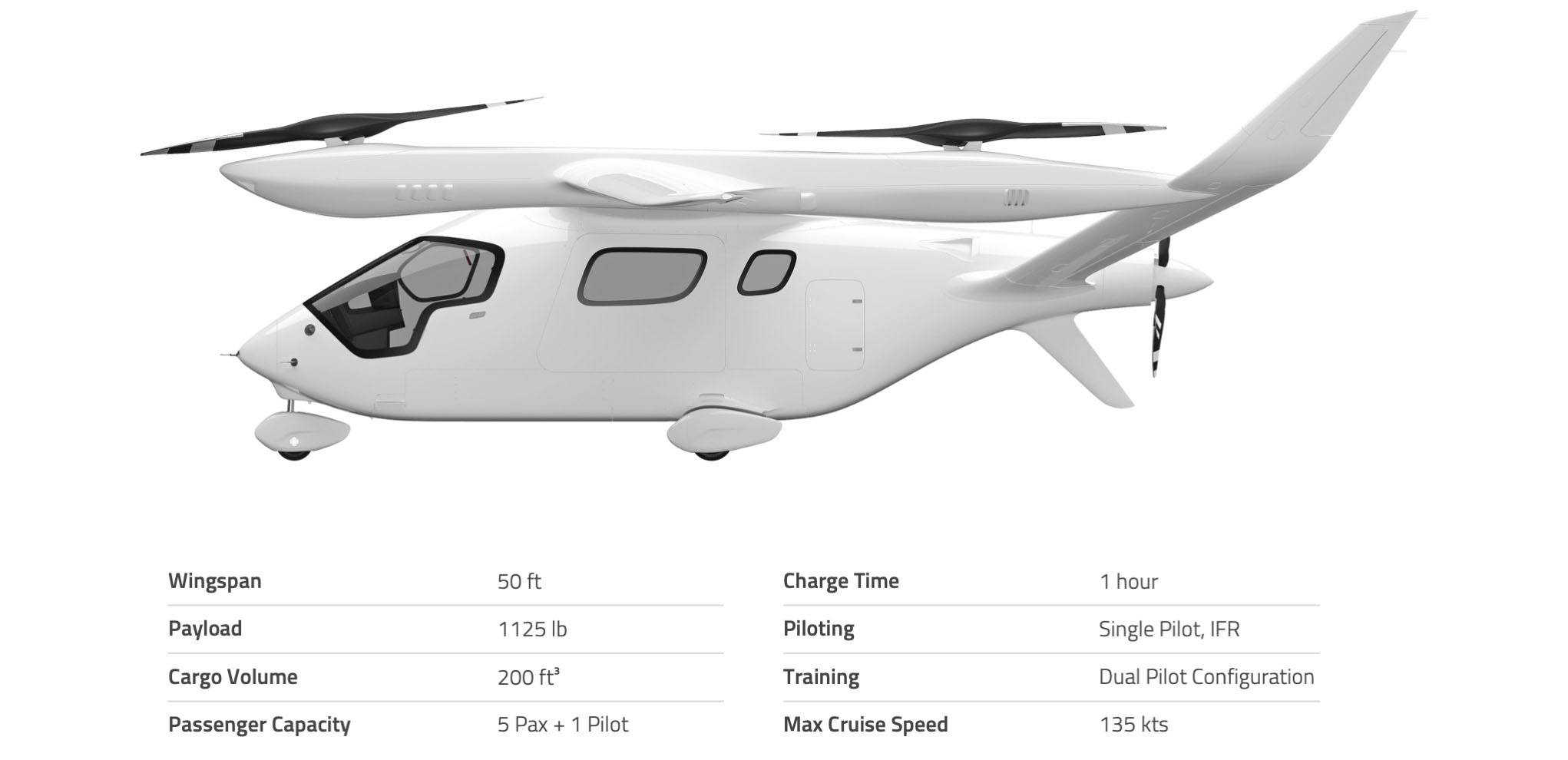
ALIA VTOL A250 (Piloted, Electric)
ALIA VTOL (A250) – The ALIA VTOL (A250) is a vertical takeoff and landing aircraft, allowing it to operate from locations with or without runway access. We believe our simple and efficient design differentiates us from others in the industry – enabling a clear path to certification, lower operating costs, high reliability, and class-leading range and payload.
Our Backlog for the ALIA VTOL consists of 560 aircraft, of which 158 are Firm Orders and 402 are Options, with a goal of achieving Type Certification approximately 12 months following the Type Certification of our ALIA CTOL aircraft. Our order book highlights the broad capabilities of our aircraft across: cargo and logistics, including orders from UPS and Bristow; medical operations, including orders from Metro Aviation and New Zealand Air Ambulance; and passenger operations, including orders from FlyNYON. We have not yet delivered any certified aircraft and therefore, no associated revenue has been recognized.
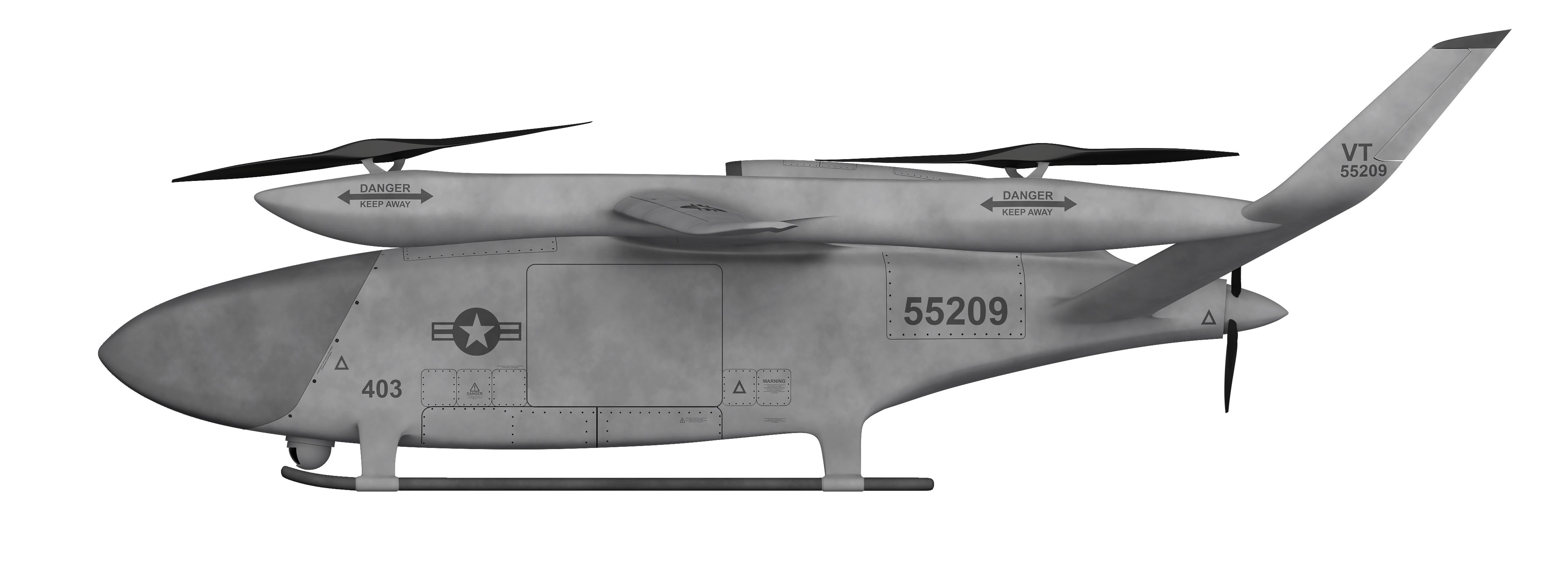
ALIA Defense VTOL MV250 (Autonomous, Hybrid)
6
ALIA Defense VTOL (MV250) – The MV250 is the military variant of our VTOL aircraft and draws heavily from the ALIA platform. The capability specifications from our cargo and logistics customers closely match U.S. Military specifications for their next generation aircraft, including capabilities such as long-range, low-heat and low-noise signature operations and the potential to operate autonomously. The specifications from these customers, which we expect to be able to deliver, are for a vertical takeoff and landing aircraft that can carry up to one ton (approximately 2,000 pounds) 250 nautical miles, which is priced between $5-10 million and has operating cost benefits over existing aircraft models.
We expect multiple military branches to use ALIA Defense VTOLs in their operations. We remain a candidate for the United States Marine Corps’s Aerial Logistics Connector program which seeks to fill the large size class contested logistics mission. Additionally, the Army established the Contested Logistics Cross-Functional Team under Army Futures Command to generate requirements that will drive future programs of record.
We have partnered with GE Aerospace to co-develop a hybrid electric turbogenerator, specifically designed for defense and civil applications. In conjunction with this partnership, GE Aerospace has made an equity investment of $300 million in BETA. This collaboration is poised to enhance our offerings by integrating hybrid electric capabilities, which are critical to modern defense applications. The new turbogenerator technology, we believe, can deliver multiple advantages, including longer range, higher speed, reduced operating costs and increased payload capacity. Our joint efforts signify a strategic advancement in leveraging hybrid electric propulsion systems, meeting the stringent demands of both defense operations and commercial aviation. This partnership reflects our commitment to adopting cutting-edge technology for sustained growth and operational efficiency.
The certification process for defense aircraft is different from the FAA civil aircraft certification process in that standards of safety and performance are applied to aircraft based on the intended mission and level of safety required to perform the intended mission for the U.S. Military, in many cases offering reduced requirements than the FAA. Due to the variety of mission cases the MV250 has the potential to serve, the requirements for and timeframe in which it is approved for military service remains to be defined. Separately, the U.S. Military has the ability to operate the aircraft for a subset of test and demonstration missions prior to obtaining formal approval.
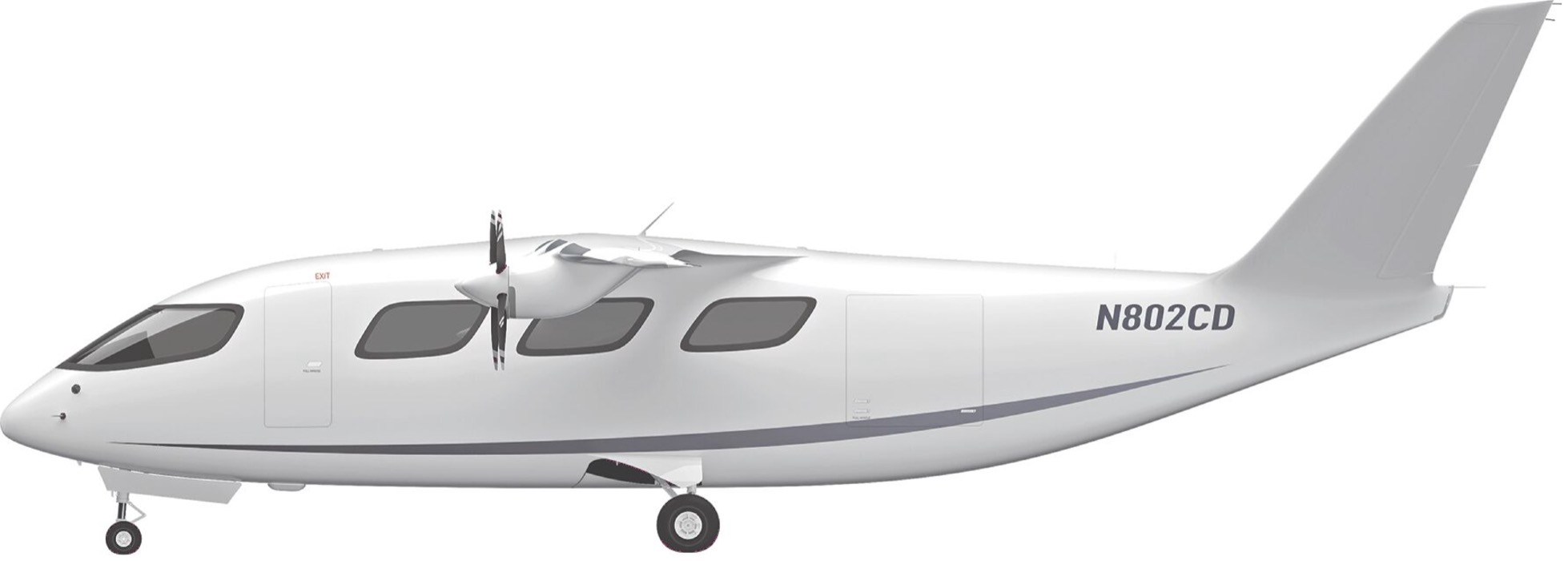
Larger Aircraft – We are in the development phase of a larger aircraft initially designed to carry up to 19 passengers. We are able to accelerate development by leveraging our existing technologies and experience from our existing aircraft. We believe this product will further expand our market share by creating new opportunities for operators to realize the benefits of electric aviation in large aircraft. The timeline for obtaining civil certification of the larger commercial aircraft has yet to be determined.
Motors
Every BETA propulsion system is designed, validated, conformed and customized to the operational requirements of our aircraft, customers and their respective use cases. Currently, there is an entire industry ecosystem around manufacture and sales, financing and services of conventional combustion engines for aircraft. A similar market opportunity is forming for electric propulsion systems. While still emerging, we believe we are positioned to lead in that evolving market and competitive landscape as we continue to innovate in the design, manufacture and marketing of our electric motors.
7
We believe the H500A motor leads the industry both in terms of maximum power output and power-to-weight ratio, weighing only 165 pounds while providing 573 horsepower based on internal testing. We believe this leadership position is achieved through a simple design that is free of heavy liquid cooling systems and complicated assemblies – allowing for 97.5% efficiency based on internal testing. The H500A features dual redundancy and significantly fewer parts than a comparable legacy aircraft engine. Our design philosophy of the H500A lends itself to easy adaptation into the more powerful H500B variant and V600A vertical lift motors, both quad-redundant and currently in development.
We sell our motors to both established A&D OEMs, as well as new market entrants designing electric aircraft. Our electric motors have aerospace and defense applications that require high reliability with significant power in a small package. As an example, we have a subcontract with General Dynamics Applied Physical Sciences, manufacturing and delivering defense propulsion technologies and associated engineering services in support of a DARPA program focused on developing advanced propulsion for undersea vehicles.
We are currently involved in additional programs to provide defense propulsion technologies. These opportunities represent both initial sales and long-term recurring revenue when motors require maintenance or replacement in the aftermarket.
In July 2025, the Hartzell Propeller received FAA Part 35 Type Certification, becoming the first propeller the FAA has certified for any electric aircraft. This milestone serves as a stepping stone for obtaining Type Certification by the FAA for the H500A under Part 33 given the parallels between FAA Part 35 Type Certification, which governs propeller certification and FAA Part 33, which governs airworthiness standards for engines.
We have built conforming H500A motors, which are currently being used in for-credit testing with the FAA. We are targeting Type Certification by the FAA for the H500A under Part 33 in the first half of 2026. A Part 33 certification will enable easier integration of the H500A onto Part 23 aircraft.
Batteries
Electric aircraft require batteries, and we are operating with today’s battery capabilities. We purchase battery cells and integrate them into a proprietary module and pack assembly designed with features to deliver safer energy across multiple aircraft and non-aircraft platforms. Our batteries contain redundant protections against unlikely thermal runaway events, communication issues or non-uniform discharges. The packs we deliver meet stringent industry-standard regulatory requirements. The frequency of replacement can depend on various usage conditions, but we estimate the majority of customers will need to replace batteries every 12-24 months.
We have developed and manufactured proprietary battery packs and energy storage systems in-house since 2019, with an emphasis on designing for long-range eVTOL and eCTOL applications. We demonstrated this with a proof-of-concept by flying our ALIA CTOL aircraft 336 nautical miles on one charge. The certification-intent CTOL aircraft, the ALIA CTOL, carries 225 kWh of onboard energy with our current battery technology. Our aircraft has been purposefully designed around the energy storage system, with mounting provisions and volume allocations that provide flexibility to incorporate future cell technology advancements, including changes in form factor. This architecture will allow us to integrate battery improvements over time, enabling an opportunity to improve aircraft performance of an airframe over its life. We strategically prioritize range as a key differentiator, allocating a high weight fraction for energy storage while utilizing commercially available cells from high-volume production environments to ensure reliability and supply chain stability.
Safety forms the cornerstone of our battery design philosophy, supported by our dedicated battery test facility in St. Albans, Vermont. This facility enables high-throughput, data-rich destructive testing that has directly informed our iterative design process for thermal runaway containment systems and other aviation-specific safety features. The design of energy storage systems for aviation safety represents a core BETA competency, with our in-house testing generating extensive validation data that will streamline the certification process while ensuring the highest safety standards.
8
Our innovative modular approach features five identical 45 kWh battery packs, each containing eleven substantially identical subpack modules, creating significant advantages across certification, manufacturing and operations. This modularity greatly simplifies verification testing by eliminating redundant test requirements and enabling compliance demonstration at appropriate system levels rather than requiring complete system testing to satisfy every requirement. The architecture allows all motors to nominally draw power from all battery packs as needed, creating the opportunity to configure the design of the aircraft with four or five packs depending on range and payload targets, without requiring significant architectural design changes. Additionally, this standardization of the design reduces manufacturing complexity by minimizing component variations, enabling more efficient production scaling while maintaining an economical price point for end customers.
Flight Control Systems
The flight control computers are the heart of our FBW control architecture. Our aircraft have three FCCs each, providing triplex redundancy and ensuring continued safe operation, even in the event of a failure. The FCCs take in data from the pilot controls, systems status and critical sensors, such as airspeed and altitude, and then send commands to the flight control surfaces and propulsion motors to carry out the pilot's intent. The FBW system enhances the safety of every flight while saving the weight and complexity of a conventional mechanical control system. Additionally, the thoughtful design of our FCCs helps prepare each aircraft we build to be flown autonomously in the future. We provide our FCC technology to other aircraft manufacturers as a merchant supplier.
GSE and Multi-Modal Charging Network
We design and manufacture the mission-ready equipment needed to charge electric aircraft and supporting infrastructure. Our charge equipment uses the CCS-1 plug format adopted as the industry standard. Several electric aircraft operators have purchased our charging products for their facilities and vertiports. Our suite of products enables seamless reservations, billing and a zero-touch user experience. We believe this interoperability creates a strong network effect and further cements our leadership role in the industry.
In addition to designing GSE, we have deployed these technologies to develop a comprehensive network designed to enable the safe, efficient and scalable operation of electric aircraft. Our ground support ecosystem is powered by our modular charging products, which includes high-power Charge Cubes, mobile Mini Cube chargers and tower-based solutions. These systems are capable of efficient charging across both aircraft and ground vehicles and the Charge Cubes are certified by Underwriters Laboratories.
Our suite of ground support systems has been built and installed across 56 airports and logistics hubs around the world as of December 31, 2025, with further sites already under contract. Our GSE network reflects our commitment to building the entire electric aviation ecosystem, which critically includes the infrastructure underpinning the category's growth. Importantly, we believe this owned infrastructure will further grow our topline performance and diversify its revenue mix as the company scales.
Current customers and partners include: Fixed Base Operators including Signature Aviation and Atlantic Aviation; aircraft customers including United Therapeutics; other AAM OEMs including Archer Aviation and Vertical Aviation; as well as government entities including the State of Michigan, international customers including Abu Dhabi Airports and end-customer U.S. Department of Health and Human Services. We also provide such customers a variety of value-added services throughout the lifecycle of certain pieces of equipment, like the charger. These services include a suite of connected technologies that provide streams of data, transaction services and insights to our customers.
Charge Cube – The Charge Cube is the central component of charging infrastructure. Its compact design, 50-foot charging radius and compliance with the CCS-1 standard allows compatibility with a broad range of emerging electric aircraft. Certified by Underwriters Laboratories, our Charge Cube offers differentiating features such as a touchless interface, automated cable management, reduced crew workload and enhanced safety.
Thermal Management System ("TMS") Cube – The TMS Cube optimizes battery charging and performance and extends the lifespan of batteries. It pre-conditions and thermally manages aircraft batteries to enable efficient and reliable charging, especially in varying environmental conditions. Thermal management is vital to maximizing battery health and enabling fast charging. Other early-stage electric aircraft manufacturers are working to make their aircraft design compatible with our TMS product.
9
Mini Cube – The Mini Cube offers flexible, mobile fast charging for a variety of platforms including aircraft and ground vehicles. Its portability, integrated cable storage and support for the CCS-1 standard make it ideal for dynamic use in hangars and vertiports. The Mini Cube supports a clean and safe operational environment, while providing supplemental or backup charging capacity for diverse transportation assets.
Charging Products
As of December 31, 2025, we have commissioned 56 airport charging stations capable of recharging our ALIA CTOL or VTOL aircraft in as little as 20-40 minutes for average flights. This network has been funded almost entirely by our customers and industry peers. Additionally, we have installed the first electric aircraft charger on a U.S. Military base at Duke Field, which is part of the broader Eglin Air Force Base complex.
Aircraft Design and Engineering
In addition to the design and development of our Enabling Technologies, we have created significant in-house capabilities in the design and engineering of electric aircraft, electric aircraft components and airport charging systems. We design and engineer airframes, interiors, heating and cooling and low-voltage electrical systems in-house and in conjunction with our suppliers, partners and customers, to ensure our products meet the requirements of our customers.
We have developed our substantially integrated, electric aircraft manufacturing Final Assembly Facility with the goal of obtaining Production Certification from the FAA. Our engineering and manufacturing teams work alongside one another in an effort to accelerate the development of our electric aircraft. We believe the co-location of our engineering and manufacturing teams will help accelerate the development of new products and allow for faster introduction of product changes.
Large, Untapped Market Opportunity
We define our market opportunity in terms of our total addressable market (“TAM”), which is calculated based on the potential for new aircraft sales for commercial and defense applications, in addition to the lifetime revenue of potential aftermarket components and services. The aftermarket components and sales include batteries, motors, other components, maintenance, training and charging solutions.
We estimate the TAM for electric/hybrid aircraft to consist of approximately 60,000 units with an assumed value of $250 billion, using an average selling price of approximately $4 million per unit, through 2035. This is based on internal calculations derived from publicly available information and an analysis conducted by a global third-party consulting firm, not commissioned by us, which focused on passenger use cases. In addition, we have included incremental cargo, medical, defense and passenger use cases based on our market analysis and experience. We have further excluded certain geographic and aircraft use cases that are outside the scope of our intended business model. In addition to initial aircraft sales, we believe that each aircraft represents an estimated three times in incremental aftermarket revenue opportunity throughout its life, for an approximate value of $750 billion. We have developed CTOL and VTOL aircraft which can serve both commercial and military end markets, cargo and logistics and passenger applications, to maximize the potential TAM.
10
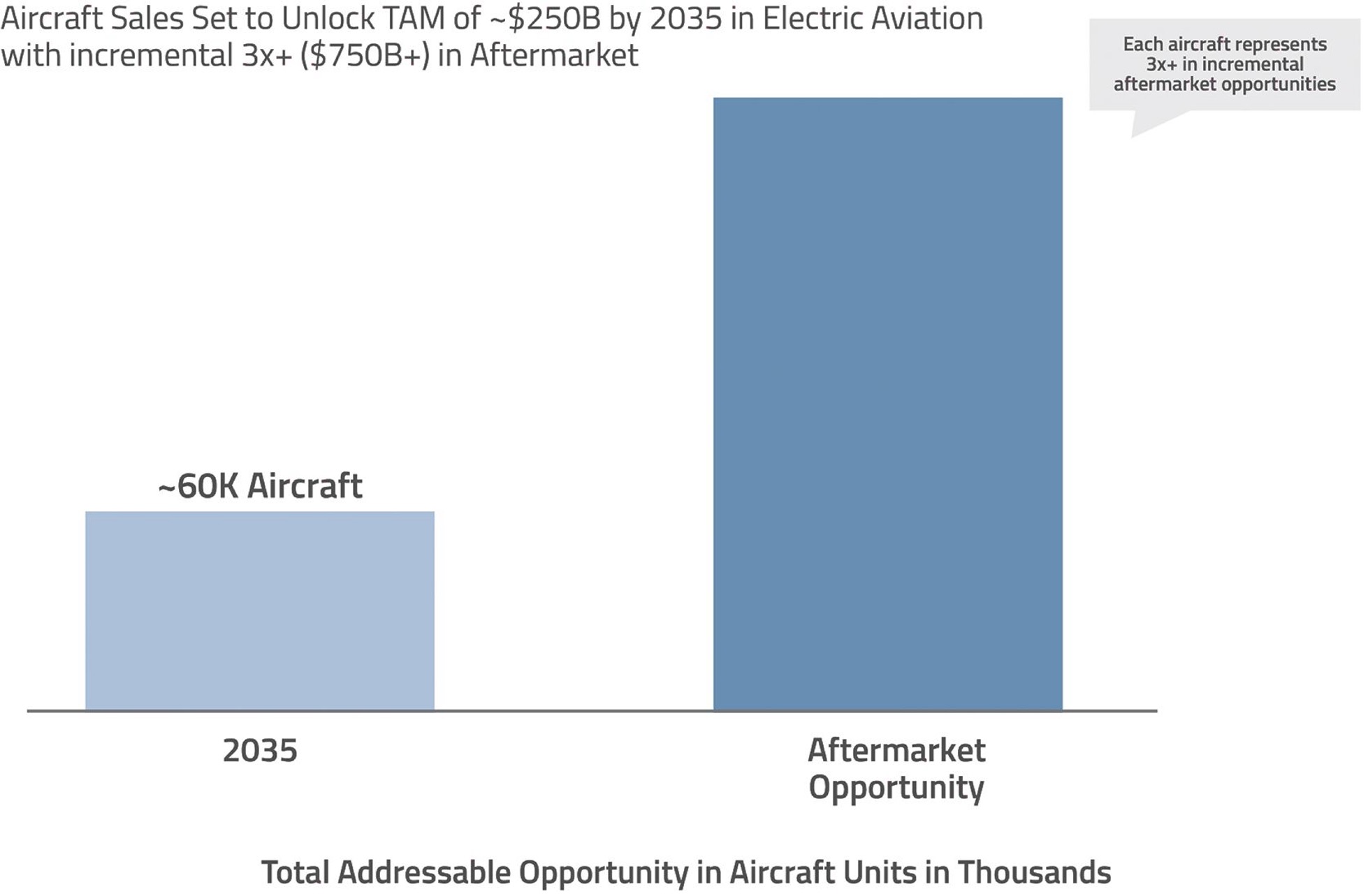
We believe that each aircraft we sell presents a larger long-term service and aftermarket revenue opportunity for additional value capture over a 20-year period. As our global aircraft fleet grows, replacement batteries and maintenance requirements are also expected to grow. To support growing fleets of electric aircraft, charging infrastructure will be required at airports and vertiports globally. In aviation, most maintenance requirements are recurring and non-deferrable, even during periods of economic downturn or reduced demand for commercial air travel.
We primarily compete across four end markets within the aerospace industry: cargo and logistics, medical, defense and passenger.
Cargo and Logistics: We believe cargo and logistics represent a near-term, sizable and compelling opportunity for our aircraft and products. Based on the demand for timely supply chain solutions caused by the rise of e-commerce, large global parcel and e-commerce companies have tested and placed orders for electric aircraft and drones to address supply chain constraints. In 2024, e-commerce made up approximately 16% of total retail sales in the United States based on the U.S. Census Bureau, 2024 Annual Retail Trade Survey. In parallel, customers are increasingly demanding faster delivery times, pressuring traditional distribution networks. The introduction of electric aircraft in cargo and logistics, specifically in rural areas, received additional support in the June 2025 Executive Order entitled “Unleashing American Drone Dominance” (the "Executive Order"). Customers including UPS and Bristow have placed Firm Orders for BETA aircraft.
Medical: Electric aviation, both CTOL and VTOL, are well-suited to meet the growing demand for fast, reliable and environmentally sustainable healthcare logistics. Our aircraft are uniquely suited for medical operations with their large and flexible interior spaces. Lower operating costs of electric aircraft make them well-suited for Medical Cargo and Low-Acuity Patient Transfer missions. Customers including United Therapeutics, Metro Aviation and New Zealand Air Ambulance have placed Firm Orders for BETA aircraft.
11
Defense: Our ALIA platform is well-suited for emerging necessities of modern warfare in both its low maintenance burden and its autonomy-ready designs. Current events and conflicts across the globe have resulted in increased defense and national security spending, both nationally and internationally. Existing defense logistics platforms, mainly helicopters, are poorly suited for imminent threats, including conflicts across wide expanses of ocean. In the United States, defense and national security spending benefits from strong bi-partisan support, which has resulted in a stable and growing investment over time. Our demand forecast consists of nearly 2,000 BETA aircraft for defense applications through 2035, based on U.S. Military estimates and internal opportunity sizing. We believe that our Enabling Technologies and their high degree of mission flexibility align closely with key national security focus areas and that meaningful new opportunities exist as the U.S. defense budget is expected to expand.
Passenger: We believe that the demand for urban and regional air mobility services will usher in a new wave of growth for the commercial aerospace market. Based on 2025 schedule data, 20% of flights globally are under 300 miles, demonstrating this trend. As traditional, ground-based transportation alternatives become increasingly expensive and population growth accelerates, their scalability is becoming highly questionable. At the same time, technological advances in battery energy density, propulsion, design and materials are enabling aircraft to serve shorter distances in a more cost-effective and environmentally sustainable manner. The convergence of these forces has led airlines, aircraft lessors and charter companies to place orders for over 10,000 aircraft worth over $80 billion. We expect these trends to continue and create new opportunities to convert terrestrial transportation demand to aircraft.
Our Competitive Strengths
Simple Design along with a Strategic, Stepwise Approach to Derisk the Certification Process
Our certification strategy is purpose-built to advance new technology through a staged roadmap that we believe aligns with the FAA’s safety mission of “building confidence instead of friction.” This strategy advances our guiding principle, “safety through simplicity.” For example, if a component, joint or moving piece is not needed for safety on the aircraft—it is not on the aircraft. This clarity and decisiveness saves us a significant amount of time and effort as we seek certification across our product suite. In July 2025, the Hartzell Propeller received FAA Part 35 Type Certification, becoming the first propeller the FAA has certified for any electric aircraft.
We are taking a pragmatic approach that aligns with FAA frameworks, de-risks certification timelines and lays a scalable foundation for broader market success. This stepwise approach creates a logical progression where each certification effort informs the next—streamlining documentation, building continuity with FAA personnel and reducing risk across programs. Our market entry strategy mirrors this discipline by beginning with cargo and logistics and medical applications—lower-risk, high-value missions that can enable early revenue, generate real-world safety data and foster public trust ahead of passenger operations.
We are leaders in shaping policy through FAA collaboration and contributions to the development of policy needed for innovative technologies. We believe that we have built a trusted, influential relationship with the agency across all levels, enabling us to help shape regulation and accelerate progress first for BETA and thereafter for the entire industry.
In July 2025, the FAA released Advisory Circular (AC 21.17-4), which covers Type Certification of powered-lift aircraft and sets out the requirements for airworthiness approval of eVTOL vehicles. Previously, eVTOL developers engaged with the FAA on an individual basis to agree on the G-1 certification basis for their aircraft, including a lengthy public comment process. In BETA’s case, however, pursuant to AC 21.17-4, we were able to adopt the AC requirements as our certification basis, accelerating our path to certification. In August 2025, we closed our G-1 certification basis in under two weeks following the submission of our Stage 3 response to the FAA. Due to negotiations with the FAA and our advocacy for streamlined requirements that are optimized for our aircraft configuration within the final Advisory Circular, we were able to secure favorable certification requirements that are closely aligned with the SFAR.
Certification Pathway
Vertically-Integrated Aerospace Company Developing the Core Technologies that Enable the Emerging Electric Aviation Ecosystem
We control and make proprietary batteries, motors, FBW systems and software for our aircraft. These core technologies are sought after by leading aerospace incumbents, further validating the demand for our products. These aircraft components are designed, manufactured and tested in our existing facilities.
12
Our vertical integration facilitates improved collaboration and communication across different stages, through our “approve then improve” strategy. We prioritize rigorous design, manufacturing and testing protocols to ensure the highest quality products. This integration supports our ability to adapt swiftly to design and product changes, ensuring that we remain competitive and responsive to our customers’ needs.
Our vertical integration allows for rapid iteration in the design and manufacturing process of our aircraft. The physical proximity of our research and development, manufacturing and testing facilities allows for faster collaboration and increased efficiency compared to a process reliant on many external suppliers. The capital investment in extensive manufacturing space enables us to scale to a rate of 300 aircraft per year at maturity and we have site control for additional expansion. Further, our aircraft production lines are designed with the capability to produce both the ALIA CTOL and ALIA VTOL aircraft on the same tooling. Common part applications across our aircraft programs, such as engines, batteries, FBW controls, avionics and landing gears, enable streamlined manufacturing processes and maximize operational efficiency.
Cargo and Logistics First Approach to Provide Nearer Term Market Entry
Our cargo and logistics ALIA CTOL facilitates early market entry. The cargo and logistics ALIA CTOL relies on standing rules and infrastructure to tap into an existing and growing logistics market. The demand from cargo and logistics and medical logistics operators is demonstrated by existing Backlog orders. Our CTOL aircraft easily integrates into the nation’s airspace and procedural landscape. Electric charging systems are the only additional infrastructure required, which we have been building for several years. We believe certifying our cargo and logistics ALIA CTOL airplane under FAA’s Part 23 relies on established rules to unlock revenue through the sale of type certified aircraft.
We believe the benefits of our cargo and logistics first approach will flow through to support the rapid progression of the passenger ALIA CTOL, along with all our ALIA VTOL programs. We expect to collect valuable operational data and flight experience through the use of our cargo and logistics ALIA CTOL by logistics and medical customers. We believe this data and experience will support passenger variant entry into service with a track record of safety and operational successes. This inertia further allows us to continue building the infrastructure necessary to support our passenger customers’ urban and regional operations.
Our strategy carries across both our ALIA CTOL and VTOL platforms. Each aircraft is expected to enter service under a Type Certification for cargo and logistics operations first, followed by a passenger configuration through an Amended Type Certification process. The significant similarity across the ALIA platform will ease the FAA’s Amended Type Certification process. As the only electric aircraft manufacturer with a clear cargo and logistics go-to-market strategy, we believe that we are well positioned to benefit from the rural logistics-focus of the June 2025 Executive Order – particularly in its directive for the FAA to allow the commercial use of electric aircraft prior to Type Certification.
Aftermarket-Focused Business Model that Targets Recurring Revenue over Full Aircraft Lifetime
Our business strategy centers around leveraging aircraft sales to generate extensive recurring revenue at attractive margins over the lifetime of each aircraft. We plan to provide essential support throughout the operational lifespan of our aircraft, seeking to ensure continuous performance, safety and reliability. Our strategy prioritizes establishing diversified and consistent recurring revenue streams, servicing batteries, charging, maintenance and parts, creating a compelling opportunity for long-term profitability.
Battery replacements alone are expected to exceed the initial revenue from selling individual aircraft and provide higher margins. In a dynamic unique to electric aviation, replacement battery packs have the opportunity to increase the range of existing aircraft – increasing their utility.
Beyond BETA-built aircraft, selling our motors, batteries and other aircraft components to others extends our ability to leverage aftermarket recurring revenue at attractive margins.
Deep Relationships with Partners and Customers Who Rely on Our Innovative Solutions
Our innovative technologies have allowed us to develop deep partnerships with world-class A&D OEMs, commercial passenger and cargo and logistics operators, airports across the globe and the U.S. Military.
13
We provide critical components to A&D OEMs. We have established strategic relationships with key commercial entities, many of whom we count as early investors, to enhance their logistics and transportation capabilities. Our partners and customers include UPS, with whom we collaborate to design systems for the efficient movement of cargo, and United Therapeutics for specialized organ transport. Similarly, we work with Air New Zealand and Bristow to design systems for the safe, efficient transportation of passengers. In addition, we believe our recently-established partnership with GE Aerospace to co-develop hybrid electric turbogenerators will bring significant enhancements to range, payload, speed and performance compared to existing aircraft. We have also cultivated and maintained strong working relationships with key branches of the military, including the U.S. Air Force, Army and Marine Corps. Our collaborations with these branches exemplify our commitment to supporting the operational needs of the military through enhanced efficiency, reliability, and technological integration. We believe that, through these efforts, we have been able to deliver solutions that meet the rigorous demands of military operations and contribute meaningfully to their critical missions and objectives. We have successfully completed several exercises with the U.S. Military including a three-month deployment to Eglin Air Force base which included more than 200 flights with 100% up time.
Extensive Intellectual Property Portfolio
Our focus is on Enabling Technologies essential to electric aviation. Our business model leverages a broad suite of intellectual property (“IP”) protected by over 460 issued patents, as of December 31, 2025, to protect our ownership and control of such Enabling Technologies, the earliest expiration date of which is 2040 if all maintenance fees are paid. These patents underscore the portfolio’s strategic coverage and solidify our position as a leader in the aerospace sector. This broad suite of protected IP is not only designed to ensure our competitive edge but also facilitates ongoing innovation and application of our technologies.
Experienced Leadership and Team with Deep and Relevant Industry Expertise
Our leadership team, led by founder and Chief Executive Officer Kyle Clark, includes a group of seasoned executives, all of whom bring extensive experience in aerospace, engineering and operations. This diverse expertise allows us to navigate the complexities of developing an innovative solution to revolutionize the aviation industry.
Kyle is an experienced technical leader and multidisciplinary engineer. He holds a degree in Materials Science and Engineering from Harvard University and has practiced and taught power electronics and controls engineering for more than 20 years. Kyle was the lead engineer on the Patriot Missile System electrification program and has published papers on high-voltage design and test for proton accelerators. Kyle is also a certified flight instructor and commercial pilot with both helicopter and jet ratings and he flies a variety of aircraft nearly every day. Kyle is an experienced aircraft builder, machinist, welder and test pilot, which enables him to empathize and debate a wide variety of topics from primary manufacturing, to system test, to industrialization.
We also maintain a world-class board of directors (our “Board”), with deep-rooted experience that includes multiple public company founders and CEOs, military experts, financial and operations experts, and five certified pilots. In addition, we maintain a Defense Advisory Board composed of three generals and two lieutenant generals, each possessing extensive experience in defense and strategic planning and whose collective expertise is instrumental in providing insight and guidance on our defense strategies. Our Board and Defense Advisory Board play a critical role in shaping our approach to navigating complex environments, seeking to ensure that our solutions meet the rigorous demands of modern commercial and military operations.
Our team’s collective experience and strategic direction are foundational to our continued success and innovation.
In addition to the design and development of our Enabling Technologies, we have created significant in-house capabilities in the design and engineering of electric aircraft, electric aircraft components and airport charging systems. We design and engineer airframes, interiors, heating and cooling and low voltage electrical systems in-house and in conjunction with our suppliers, partners and customers, to ensure our products meet the requirements of our customers.
We have developed our substantially integrated, electric aircraft manufacturing Final Assembly Facility with the goal of obtaining Production Certification from the FAA. Our engineering and manufacturing teams work alongside one another in an effort to accelerate the development of our electric aircraft. We believe the co-location of our engineering and manufacturing teams will help accelerate the development of new products and allow for faster introduction of product changes.
14
Manufacturing
Aircraft Assembly and Quality Control
Our Final Assembly Facility is designed for flexibility and scalability and is configured to meet our expected production rate needs through 2027 without significant additional investment and we anticipate that the current approximately 188,000 square foot facility will support ALIA CTOL and ALIA VTOL production until 2029 without substantial additional floorspace requirements. The Final Assembly Facility is vertically integrated, enabling us to build all wire harnesses, assemble flight control computers, build inverters and electronic assemblies, manufacture our electric engines, assemble our battery packs and perform aircraft structural assembly and final assembly in-house. This integration is further enhanced by our internal metallics machining and composites fabrication capabilities that support production operations. Our aircraft production lines are designed with the capability to produce both the ALIA CTOL and ALIA VTOL aircraft on the same tooling. Common part applications across our aircraft programs, such as engines, batteries, FBW controls, avionics and landing gears, enable streamlined manufacturing processes and maximize operational efficiency.
As our aircraft production volume grows, we believe that we will be able to enhance production capacity through the improvement of labor utilization and operating leverage. Costs of materials can be expected to improve as we enter long-term agreements with suppliers targeting higher production volumes. Additionally, there is opportunity to leverage innovation in aircraft structure design to minimize the cost and the number of components required to build each aircraft, without compromising on safety. To support our continued growth in operations, we have developed internal training curriculums and programs and have engaged in local workforce development efforts, ensuring we will maintain a skilled, local workforce capable of meeting aerospace manufacturing standards.
Our centralized quality team is integrated throughout the entire aircraft manufacturing process. From supplier onboarding through procurement, incoming inspection and internal manufacturing of all components, systems and complete aircraft, our quality team verifies that our production is performing to the high standard of excellence we have set. These quality professionals ensure we have implemented processes to build conforming hardware that meets the design definition in our technical data package and then verify compliance, maintaining the high standards required for aerospace applications. Our manufacturing operations run off of an integrated Enterprise Resource Planning and Manufacturing Execution System that has been implemented at BETA for a number of years and we are continuing to roll out an internal Quality Management System that positions us for future Production Certification requirements, informed by CFR Part 21 Subpart G, establishing the foundation for scalable production that meets rigorous aerospace standards.
Suppliers
Suppliers are an important stakeholder group in the manufacturing of our aircraft. We purchase certain component systems, such as avionics, sidesticks, servos, and various forms of aircraft structures, from suppliers. Our supply base is located globally, with approximately 90% of our suppliers located in North America, 9% in Europe and the remaining 1% in Asia as of December 31, 2025. We have developed close relationships with several key suppliers particularly in the procurement of lithium-ion cells and certain electric propulsion components. See also the heading “Risks Related to Our Business and Industry—We depend on suppliers and service partners for raw materials and certain parts and components” in Part I, Item 1A. "Risk Factors” included elsewhere in this Annual Report.
We use various raw materials in our business including pre-impregnated carbon composites, aluminum, titanium and stainless steel. The prices for these raw materials fluctuate depending on market conditions and global demand for these materials. We believe that we have adequate supplies or sources of availability of the raw materials necessary to meet our manufacturing and supply requirements.
We have implemented enterprise resource planning and management software to automate our procurement and inventory processes and integrate them with our financial accounting. We plan additional investment in our management systems to support further growth in our operations.
Customers and Selected Relationships
We currently sell our aircraft components and GSE to civil aircraft operators, A&D OEMs and ground support operators.
15
Our aircraft components include but are not limited to electric motors, batteries and flight control computers. Our GSE includes, but is not limited to, Charge Cubes, mobile Mini Cube chargers and thermal management systems.
Our customers range from airlines, logistics operators, medical providers and aircraft lessors to defense contractors and aerospace manufacturers. Further, our vertical integration enables key customer groups to include cargo and logistics operators, vertiport operators and fixed base operators through ground support systems.
Our range of products has gained traction with defense customers within the U.S. Military, highlighting the capability of our technology across the private and public sectors.
Commercial Aircraft Customers
We have an existing civil aircraft Backlog of 891 aircraft worth $3.47 billion, of which 289 are Firm Orders and 602 are Options. Our current civil aircraft customers include UPS, United Therapeutics, Air New Zealand, Bristow and Metro Air Services. Additionally, we currently have an agreement with Republic Airways relating to the use of our aircraft to fulfill its missions. These customers highlight the diversity of civil uses for our aircraft ranging from cargo and logistics to medical to passenger missions. Importantly, in addition to selling aircraft, we intend to sell a full suite of support products to these aircraft operators. Many of these products are similar to what is conventionally sold to aircraft operators from aircraft producers (e.g., flight training, aftermarket parts), but because we own the intellectual property and produce all key components onboard the aircraft, we can also sell key aftermarket replacements, such as batteries, through either direct replacement or the industry’s first ‘energy by the hour’ program.
Commercial Component Customers
The core Enabling Technologies outlined above have earned a strong, positive reputation among other A&D OEMs. We have already begun selectively selling these components to other customers within the aviation industry and beyond. Current customers in this category include established A&D OEMs and others.
Commercial GSE Customers
We produce the GSE required to enable not only our aircraft operations, but also the aircraft operations of other AAM aircraft. Our CCS-1 standard chargers currently lead the industry and are installed in 56 locations in the United States and abroad with additional sites already under contract as of December 31, 2025.
Current customers and partners include: Fixed Base Operators including Signature Aviation and Atlantic Aviation; aircraft customers including United Therapeutics; other AAM OEMs including Archer Aviation and Vertical Aviation; as well as government entities including the State of Michigan, international customers including Abu Dhabi Airports and end-customer U.S. Department of Health and Human Services. We also provide such customers a variety of value-added services throughout the lifecycle of certain pieces of equipment, like the charger. These services include a suite of connected technologies that provide streams of data, transaction services and insights to our customers.
Defense Customers
Defense applications for all of our products continue to highlight the utility of our products across the private and public sectors. Our products are built to meet the needs of both types of customer, which highlights their dual-use nature. Over the years, we have cultivated and maintained strong working relationships with key branches of the military, including the U. S. Air Force (since 2019) and U.S. Army (since 2021). For example, we have collaborated with the U.S. Air Force’s Agility Prime program, where we have explored the potential use of our electric aircraft to further certain logistical, medical evacuation and intelligence missions. Since our inception, we have collected approximately $50 million through U.S. Air Force and U.S. Army contracts on research and development areas such as VTOL, hybrid and further development around future autonomous flight.
We plan to continue to expand our relationships with defense and government customers and advance our military capabilities with cutting-edge technology tailored to modern defense needs.
Regulatory
16
We are subject to various government regulations and may in the future be subject to heightened U.S. government regulation as a contractor or subcontractor to one or more U.S. governmental organizations. Among the most significant U.S. government regulations that currently or may in the future affect our business are:
•FAR and supplemental agency procurement regulations, which comprehensively regulate the formation, administration and performance under government contracts;
•the National Industrial Security Program Operating Manual Rule, which establishes the security guidelines for private companies participating in classified programs or accessing classified information in connection with a government contract and imposes certain foreign ownership, control or influence mitigation measures based on foreign involvement in such private companies;
•International Traffic in Arms Regulations and Export Controls;
•the Committee on Foreign Investment in the United States, which is tasked with reviewing the national security implications of foreign acquisitions of and investments in U.S. businesses;
•the False Claims Act, which imposes substantial damages and penalties in connection with a misrepresentation made in connection with a request for payment by the U.S. government, and the False Statements Act, which, imposes penalties on the basis of false statements to federal agencies, even if not made in connection with a payment; and
•laws, regulations and executive orders restricting the use and dissemination of information classified for national security purposes and the exportation of certain products and technical data.
We view our aircraft and related services to qualify as commercial products and services, as defined in the FAR, as our aircraft and related services will be available for sale in the commercial marketplace. In some cases, we may make minor modifications to our aircraft for defense applications. Companies that provide commercial products and services to the U.S. government avoid certain regulatory compliance requirements that might otherwise apply, including the need to make disclosures under the Truthful Cost or Pricing Data Statute (formerly the Truth in Negotiations Act) and technical government contract cost accounting rules (Cost Accounting Standards and Cost Principles). Should the U.S. government determine that our products and services do not qualify as commercial products and services under the FAR, we would be subject to such disclosure and cost accounting requirements, among other compliance and audit requirements.
We also need to maintain our facility security clearance as an organization, and certain employees must maintain personnel security clearances to continue working on and advancing certain programs and contracts with the U.S. government (whether directly with the U.S. government, or indirectly through a subcontract with a prime contractor). To the extent we are involved in them, classified programs generally require that we comply with various Executive Orders, federal laws and regulations and customer security requirements designed to protect classified information that may include restrictions on how we develop, store, protect and share such information.
In addition, we are subject to industry-specific regulations due to the nature of the products and services we provide. For example, certain aspects of our business are subject to further regulation by additional U.S. government authorities, including: (i) the Federal Aviation Administration, which regulates the design and production of aircraft in the U.S. and the airspace for all air vehicles in the National Airspace System, (ii) the National Telecommunications and Information Administration and the Federal Communications Commission, which regulates wireless communications in the United States and (iii) the Directorate of Defense Trade Controls of the U.S. Department of State that administers the ITAR, which regulates the temporary import, export, reexport and transfer of controlled technical data, defense articles and defense services, as discussed further in “—International Traffic in Arms Regulations and Export Controls.”
The nature of the work we do for the federal government and others may also limit the parties who may invest in or acquire us. Export laws may keep us from providing potential foreign investors with a review of the technical data pertaining to our technology, which would likely be central to such a potential investment. Moreover, investments, direct or indirect, by investors may be subject to regulatory review and approval requirements, or ultimately prohibited, by governmental entities. See the heading “Risks Related to Laws and Regulations—We are subject to stringent U.S. export and import control laws and regulations, which may change. We may be unable to comply with these laws and regulations or U.S. government licensing policies, or to secure required authorizations in a timely manner” in Part I, Item 1A. “Risk Factors” included elsewhere in this Annual Report.
17
In addition, the export from the United States of certain of our products may require the issuance of a license by the Bureau of Industry and Security of the U.S. Department of Commerce under the Export Control Reform Act of 2018 and the EAR. Some of our products may also require the issuance of a license by the Directorate of Defense Trade Controls of the U.S. Department of State under the Arms Export Control Act and its implementing regulations, the ITAR, which licenses under which are generally harder to obtain and take longer to obtain than do licenses under the EAR.
We are subject to laws that may limit the use or other processing of personal information gathered online and that require online services to establish privacy policies.
International Traffic in Arms Regulations and Export Controls
Our business is subject to, and we must comply with, stringent U.S. import and export control laws and regulations, including the ITAR and the EAR. The ITAR generally restrict the export of hardware, software, technical data and services that have defense or strategic applications. The EAR similarly regulates the export of hardware, software and technology that have commercial or “dual-use” applications (i.e., for both military and commercial applications) or that have less sensitive military or aerospace-related applications that are not subject to the ITAR. The regulations exist to advance the national security and foreign policy interests of the U. S.
The U.S. government agencies responsible for administering the ITAR and the EAR have significant discretion in the enforcement of these regulations. The agencies also have significant discretion in approving, denying or conditioning authorizations to engage in controlled activities. Such decisions are influenced by the U.S. government’s commitments to multilateral export control regimes.
Many different types of internal controls and efforts are required to ensure compliance with such export control rules. In particular, we are required to: maintain a registration under the ITAR; determine the proper licensing jurisdiction and classification of hardware, software, technical information and defense services; obtain licenses or other forms of U.S. government authorizations to engage in activities, including the performance of services for foreign persons, related to and in support our business; and manage physical access and security accordingly. Such regulations require authorization prior to the release of controlled technology to foreign persons, including employees, customers, suppliers and other foreign persons. See also the heading “Risks Related to Laws and Regulations—We are subject to stringent U.S. export and import control laws and regulations, which may change. We may be unable to comply with these laws and regulations or U.S. government licensing policies, or to secure required authorizations in a timely manner” in Part I, Item 1A. “Risk Factors” included elsewhere in this Annual Report.
Certification
Type Certification
In the U.S., new aircraft must undergo a rigorous FAA certification process to ensure the design, manufacturing and individual aircraft meet all applicable safety and airworthiness standards. This process begins with Type Certification, in which the FAA evaluates the aircraft design through extensive ground and flight testing to verify compliance with federal regulations. The Final Assembly Facility must obtain a Production Certificate, which confirms that the manufacturer’s facilities, quality systems, and procedures can reliably produce aircraft that conform to the approved type design. Once the Type Certificate has been issued to the OEM, each aircraft produced can receive a Standard Airworthiness Certificate, authorizing it to operate within the National Airspace System. We plan to initially certify our aircraft for cargo and logistics operations under Visual Flight Rules and Instrument Flight Rules, for flights during both day and night. Following initial certification, we intend to amend our type certificate which will allow us to modify the aircraft design to include approval for medical logistics, flight into known icing conditions and additionally passenger missions. We began working with the FAA in 2020 and have made significant progress toward the certification of both our eCTOL aircraft and our eVTOL aircraft, as well as the certification of our electric engines under Part 33 for integration in aircraft certified under FAA Part 23 and 14 CFR § 21.17(b), as determined by the FAA. Following the first flight of our initial production-intent eCTOL airplane in 2024, we have built multiple production-intent aircraft and secured FAA Special Airworthiness Certificates to support continued flight testing and market survey operations. Our electric aircraft have collectively logged over 1,400 hours using electric propulsion alone, demonstrating both technical maturity and operational readiness as we advance toward Type Certification.
18
The Type Certification process can be thought of in five phases. Each phase is a milestone that reduces the risk of the product, builds regulatory trust, and unlocks commercial value. Progress in Type Certification is not always linear, meaning it is possible to make simultaneous progress in different phases on different aircraft parts or systems, depending on their maturity. Effective certification is a partnership between applicant and regulator since this process involves close coordination in working to align on mutually accepted outcomes. Our projections are strengthened with each functional completion of a specific phase. Functional completion allows for some items to be kept open until the end of the project but allows for a state of maturity where we can move into the next phase and iterate as necessary.
•Phase 1 – Conceptual Design: The Company works with the FAA to define the scope of the Type Certification project and submit the certification plan. This initiates formal FAA oversight and the timeline towards Type Certification.
•Phase 2 – Requirements Definition: The Company looks for alignment with the FAA on which safety and performance standards apply. This locks in the regulatory targets we’re certifying to.
•Phase 3 – Compliance Planning: The Company and the FAA design the roadmap that defines how we will demonstrate the aircraft meets FAA standards. This stage aligns all parties on the path to approval.
•Phase 4 – Implementation & Testing: The Company plans, documents and completes thousands of inspections, tests and analyses in accordance with the certification plans previously drawn up in the third stage to submit for FAA approval. This is the core phase of demonstrating compliance, safety and reliability. The results are verified by the FAA and a Type Certificate is issued.
•Phase 5 – Post-Certification: This phase is intended for maintaining and scaling through fleet monitoring and in-service reporting, as well as validating with other countries and applying for amended Type Certification. This enables market expansion, global sales, and long-term safety.
With a mature design informed by over 1,400 flight hours in our electric aircraft, we are making strong progress toward Type Certification. We are actively engaged with the FAA, progressing through the extensive testing and validation required to achieve FAA Type Certification.
Our product’s FAA Type Certification will be accepted or validated by certain international regulators through bilateral aviation safety agreements between the FAA and the appropriate foreign regulatory authorities. Following FAA Type Certification, we intend to pursue validation with Transport Canada and the Civil Aviation Authority of New Zealand, in support of firm customer orders. We have also initiated discussions with EASA regarding validation of H500A and ALIA CTOL. We anticipate we will start the validation process on H500A with EASA immediately following FAA Type Certification or in 2026.
In June 2025, at a press event at the Paris Air Show, the DOT and FAA announced the recent work done by the National Aviation Authorities Network, unveiling a joint roadmap to harmonize global certification of AAM aircraft. This initiative enables participating regulators to adopt streamlined validation processes, thus expediting validation and aligning on safety standards. These arrangements provide a means of efficient international expansion as we develop commercial operations around the world.
As a first mover in electric aviation, we are helping to shape the regulatory framework that will define the future of flight. Our path to certification leverages a large body of existing processes, procedures and standards. However, as one of the companies leading this next generation of the aviation industry, many of the rules necessary for electric aircraft and, in particular, eVTOL certification and operations, are still being finalized by the FAA and foreign regulatory authorities. As these frameworks continue to take shape, the existing rules and regulations may be revised, or we may see additional requirements imposed that would extend our timeline for certification. While this pioneering role brings some added complexity, it also positions us to set the standard for the industry.
Production Certification
We are developing the systems, procedures, and quality assurance processes required to obtain FAA Production Certification, which will authorize us to manufacture our electric aircraft with the FAA-approved type design. We intend to obtain Production Certification for our approximately 188,000 square foot Final Assembly Facility after we receive Type Certification for the aircraft, and we have built our Final Assembly Facility and developed our processes and systems with the necessary requirements in mind. We build the motors, batteries, charge control, flight control and computers at our manufacturing facility, which will likely support our production rates through 2029.
19
Other Certifications
We plan to deliver comprehensive factory training programs for both pilots and maintenance personnel operating the ALIA CTOL. These programs are designed to support Part 135 operators by preparing their initial cadre of pilots and maintainers, and by providing high-quality training materials that can be integrated into their FAA-approved initial and recurrent training programs.
In May 2022, the FAA indicated that it was revisiting the decision to certify all eVTOLs under Part 23 and would, instead, require certification under the “powered lift” classification. In October 2024, the FAA published a Special Federal Aviation Regulation that includes pilot certification and operational regulations for eVTOL aircraft. For the ALIA VTOL, we intend to establish a Part 142 training center, equipped with a certified Flight Simulation Training Device and in-aircraft instruction. This capability will enable the delivery of powered-lift Category Ratings, Instrument Ratings, A250 Type Ratings, and Part 135 initial training. In parallel, an enhanced factory training program for ALIA VTOL maintenance teams will ensure operators are equipped to support sustained, safe operations.
We plan to obtain a Part 145 Repair Station Certificate, which would authorize us to perform maintenance, repair and overhaul services for our electric aircraft engines and subsystems once they are certified and in commercial operation. This capability will enable us to support fleet reliability and long-term service readiness, following delivery to our commercial customers.
Our operations may become subject to additional U.S. federal, state and local requirements in the future.
Policy Engagements with Decision Makers and Communities
Our business requires collaboration with decision and policy makers at the U.S. federal, state and local level of government. At the U.S. federal level, we have built trusted relationships, drawing support not just from our home states of Vermont and New York, but also from areas where our other facilities, customers and suppliers are rooted. On the defense side, these relationships have yielded funding for key U.S. Military programs, from operational deployments to work on hybrid systems and autonomy.
On the civil side, we have helped shape major aviation policy. On December 3, 2025, our founder, President and Chief Executive Officer, Kyle Clark, testified before Congress— a follow-on to his first time testifying during the FAA Reauthorization process— offering again an industry voice on how to accelerate AAM integration and support the global competitive position of the U.S.
We engage with state and local leaders to prepare for the scaling of Advanced Air Mobility. We have partnered with states across the country to share insights, identify infrastructure opportunities, and shape policies designed to ensure they are prepared for AAM. In New York, we recently demonstrated our technology at New York Airports in collaboration with the Port Authority of New York and New Jersey. The event drew state leaders, highlighting the momentum around AAM and our industry leadership. With a flight test base in Plattsburgh, New York, we have built deep relationships with state and country officials, which has resulted in state funding for growth and workforce development programs. In Utah, after visiting all three leading AAM OEMs, state officials selected BETA as their partner to help bring this new transportation mode to their communities. In North Carolina, our engagement helped catalyze the state to issue its first request for information on electric aircraft. In Michigan, we have secured over $2 million for the deployment of charging infrastructure. Across the U.S., states are stepping up to lead on AAM, and we are the resource they are coming to as they look to build that vision.
In our home state of Vermont, we are recognized as a leading employer and a key contributor to the state’s future. We have built strong partnerships with state and local officials, regularly advising on public policy issues from infrastructure and housing to workforce development. We regularly host legislative tours to share insights on the innovation economy and what it takes to grow in Vermont.
Regulation – Battery Safety and Testing
20
Recent breakthroughs in battery technology are playing a pivotal role in the emergence of the AAM sector, which is set to revolutionize aviation with clean, efficient, electric-powered aircraft. Although battery applications in aviation come with specific technical hurdles, continuous progress in engineering, validation, and safety standards is driving the industry toward exceptional reliability. We believe these innovations are shifting the focus from a pre-prescribed containment-focused pathway to a standard systems safety approach that will allow for typical aerospace techniques used to develop systems to a very high reliability standard, including prevention and layered mitigations, reducing the likelihood of critical failures to near-zero. We believe this evolution will position AAM as an equivalent level of safety for air travel, and also a key enabler in the transition to a more sustainable and efficient transportation ecosystem.
Like other components of our aircraft, the batteries used for propulsion must be shown to satisfy regulatory requirements during the Type Certification process. Currently, the industry has limited in-service experience with use of lithium-ion batteries for aircraft propulsion, and existing regulations may not fully address all criteria such batteries will be required to satisfy in a particular application. Therefore, although industry standards exist with respect to some aspects of this technology, the airworthiness criteria applicable to a particular aircraft and means of demonstrating compliance are subject to determination by the FAA on a project-specific basis. We are actively engaged with the FAA over certification of the batteries, and anticipate that we will successfully demonstrate compliance to various operational and safety requirements during the Type Certification process. As the use of batteries for aircraft propulsion represents a cutting-edge use of technology, it is possible that FAA requirements may be revised, thereby potentially extending our timeline for certification.
Further, our batteries are subject to various U.S. and international regulations that govern transport of “dangerous goods,” defined to include lithium-ion batteries, which may present a risk in transportation. We conduct testing to demonstrate our compliance with such regulations.
The governing regulations, which are issued by the PHMSA are based on the UN Recommendations on the Safe Transport of Dangerous Goods Model Regulations and related UN Manual Tests and Criteria. The regulations vary by mode of transportation when these items are shipped by ocean vessel, rail, truck or by air. We are actively working with PHMSA to enable air cargo transport of our large lithium batteries and expect approval in the near future.
We have completed the applicable transportation tests for the battery packs we are currently producing, demonstrating our compliance with the UN Manual of Tests and Criteria, including:
•Altitude simulation – simulating air transport;
•Thermal cycling – assessing cell and battery seal integrity;
•Vibration – simulating vibration during transport;
•Shock – simulating possible impacts during transport;
•External short circuit – simulating an external short circuit; and
•Overcharge – evaluating the ability of a rechargeable battery to withstand overcharging.
The cells in our batteries are composed mainly of metal oxides. The cells do not contain any lead, mercury, cadmium or heavy metals. In addition, our batteries include packaging for the lithium-ion cells. This packaging includes trace amounts of various hazardous chemicals whose use, storage and disposal is regulated under applicable U.S. federal, state, and local laws and regulations in the jurisdictions in which we operate. We currently have an agreement with a certified third-party battery recycling company to recycle our battery packs. See also the heading “Risks Related to Our Business and Industry—Crashes, accidents or incidents of electric and hybrid aircraft, as well as accidents or incidents involving battery solutions, such as lithium-ion batteries, could have a material adverse effect on our business, results of operations, financial condition and prospects” in Part I, Item 1A. “Risk Factors” included elsewhere in this Annual Report.
Regulation – Charging Infrastructure
21
Our charging network is currently installed at airports in the U.S. and the United Arab Emirates (“U.A.E.”), and our Charge Cube is certified by Underwriters Laboratories. Our Mini Cube charger is compliant with Underwriters Laboratory standards but will require Underwriters Laboratories certification to be used broadly by the end-customer as a plug-in appliance. Furthermore, as noted above under “—Policy Engagements with Decision Makers & Communities,” we must successfully seek and obtain permits with the various municipalities that control the airports at which our charging infrastructure is and will be installed. These permits are required to install and maintain the installed Charge Cubes. FAA involvement will be required to secure ground leases for the land on which our charging equipment will be installed and operated at grant-obligated airports. Installation of additional chargers could require obtaining approval from a public regulatory body, such as city council, airport commission or other governmental authority. In addition, our charging equipment may be subject to local taxes and fees and environmental, health and safety (“EHS”) and other laws and regulations.
Regulation – EHS
We are subject to a variety of increasingly stringent foreign, U.S. federal, state, and local EHS laws, regulations and ordinances relating to the protection of the environment, including those relating to emissions to air and other environmental media, discharges (including storm water) to surface and subsurface waters, safe drinking water, wildlife preservation, operational constraints like noise abatement, including relating to aircraft noise, and the use, management, disposal and release of, and exposure to, hazardous substances, oils and waste materials. Some of these laws and regulations require us to obtain permits, which contain terms and conditions that impose limitations on our ability to emit and discharge hazardous materials into the environment and may be periodically subject to modification, renewal and revocation by issuing authorities. We may also be subject to potential strict, joint, and several liability for the investigation and remediation of contamination, including contamination caused by other parties, that may exist at properties we currently own, lease, or operate and previously owned, leased, or operated and at other properties where we or our predecessors have arranged for the disposal of hazardous substances. We are or may be subject to new or proposed laws and regulations that may have a direct effect (or indirect effect through our third-party relationships) on our operations. Any such existing, future, new or potential laws and regulations could have an adverse impact on our business, results of operations and financial condition. See also the heading “Risks Related to Laws and Regulations—We could incur significant costs in complying with EHS laws and regulations and could be adversely affected by liabilities or obligations imposed under such laws and regulations” in Part I, Item IA. “Risk Factors” included elsewhere in this Annual Report.
Our operations are subject to several U.S. federal and state laws and regulations, including the federal Occupational Safety and Health Act (“OSHA”) and comparable state statutes, the purpose of which is to protect the health and safety of workers. The Occupational Safety and Health Administration is the principal federal regulator of safety in the workplace. OSHA governs safety requirements in our manufacturing and aircraft maintenance operations. For example, employees may be required to wear certain personal protective equipment when performing manufacturing or maintenance-related tasks. In addition, the OSHA hazard communication standard, the Environmental Protection Agency community right-to-know regulations under Title III of the federal Superfund Amendment and Reauthorization Act and comparable state statutes require that information be maintained concerning hazardous materials used or produced in operations and that this information be provided to employees, state and local government authorities and citizens. Every employee is trained in the safety policies and procedures that are relevant to their role, and we encourage all employees to participate in company-wide safety initiatives, including participating in our non-punitive safety reporting program to identify hazards and reduce risks.
Competition
We believe that the primary sources of competition for offerings are conventional air transport solutions and manufacturers or other suppliers of other electric aircraft and related products and services, including batteries, motors, components, maintenance, training and charging solutions. We are not a commercial aircraft operator and do not intend to provide passenger or cargo and logistics services.
We believe the primary factors that will drive success in the electric and hybrid-electric aviation (including VTOL) market include:
•the ability to certify the aircraft and commence commercial production in a timely manner;
•the ability to produce and sustain products that meet the commercial and operational requirements of real-world operators;
•the ability to manufacture efficiently at scale;
22
•the ability to scale adequately to drive down product pricing;
•the ability to capture first-mover advantage, if any;
•the ability to develop or otherwise capture the benefits of next-generation technologies; and
•the ability to deliver products and services at a high level of quality, reliability and safety.
We believe that our aircraft and vertically-integrated approach offer the greatest long-term prospects to certify and produce the best aircraft to serve our customers and, in turn, monetize the full value chain from initial development through commercialization and ongoing operations. Others may have differentiated products and approaches but BETA is positioned to capture opportunity across the entire electric aviation ecosystem.
Seasonality
Seasonality does not have a material impact on our business. Our products and services are sold and delivered throughout the year, and demand patterns remain generally consistent across quarters. While we may experience timing variations in customer orders and deliveries due to factors such as project schedules or individual customer procurement cycles, these fluctuations are not driven by seasonal trends and have not had a material effect on our results of operations.
Intellectual Property
Our success is rooted, in part, in our ability to safeguard our core technology and intellectual property. To establish and protect our intellectual property and other proprietary rights, we rely on patents, trademarks, copyrights, and trade secrets. We also enter into license agreements, confidentiality and non-disclosure agreements with third parties, employees and contractors to restrict third-party access to and disclosure of our proprietary information. We rely on trade secrets to protect aspects of our business that are not amenable to, or that we do not consider appropriate for, patent protection and have measures in place designed to protect our proprietary information and other technological innovations.
As of December 31, 2025, we have over 460 issued patents worldwide (a majority of which are U.S. filings) and over 204 pending patent applications (of which over 136 are U.S. filings). The patent portfolio is primarily related to the technology supporting our electric aircraft and Enabling Technologies. We regularly solicit disclosures and hold invention harvesting events in order to file patent applications on the latest solutions for our products.
As of December 31, 2025, we own nine U.S. trademark registrations, seven U.S. trademark applications, 11 foreign trademark registrations and ten foreign trademark applications.
We have procedures in place to monitor for potential infringement, misappropriation or other violation of our intellectual property or proprietary rights, and it is our policy to take appropriate action to defend and enforce our intellectual property, taking into account the strength of our claim, likelihood of success, cost, and overall business priorities. However, the steps we take may not be adequate and could harm our reputation and could adversely affect our competitive position, financial condition or results of operations. See also the heading “Risks Related to Our Business and Industry—We may be unable to seek, obtain, maintain, protect or enforce our intellectual property rights, or to otherwise enforce our intellectual property rights from unauthorized access or use by third parties” in Part I, Item 1A. “Risk Factors" included elsewhere in this Annual Report.
Information Technology and Cybersecurity
Given the interconnected and collaborative nature of our operations, from initial aircraft design through certification, manufacturing, and aftermarket support, we rely on complex information technology systems and infrastructure to support our operations and business activities. Our business depends on a number of critical systems including: (i) enterprise applications for business operations, financial management, supply chain management, production, design, and testing, (ii) network and cloud infrastructure supporting our research and development, testing, and manufacturing facilities, (iii) integrated software systems in our aircraft and GSE, (iv) data platforms that process operational and customer information and (v) cybersecurity measures protecting our data and systems. Additionally, we plan to provide software and data systems to our customers that utilize data connectivity and analysis to monitor aircraft performance, enhance safety, and optimize operations, which will require us to collect, store and process proprietary data from our customers, aircraft and GSE.
Sustainability
23
By developing an energy efficient, fully electric, zero-emissions aircraft, we believe we can help reduce the aviation industry’s environmental impact over time.
We are building a dedicated workforce to achieve this goal while aiming to adhere to best practices in risk assessment, mitigation and corporate governance. To oversee all considerations relating to sustainability, including environmental impact, building a safe and engaged working environment, and establishing strong corporate governance, we have established the Nominating and Corporate Governance committee of our Board, in addition to our management team.
Employees
Our people are at the heart of everything we do at BETA. The pragmatic, dedicated and hardworking team members at BETA are the bedrock of our success. We refer to each other as team members, not employees, and our website is www.beta.team because we truly operate as one team, united in a singular vision and purpose. We strive to foster an ownership mindset, which is the basis for our decision to make all team members equity holders of the business. We believe that when people come first, we are able to push our mission further than previously imagined, together.
The skills, experience and ingenuity of our people have enabled us to attract the high-caliber talent we need. We are committed to being the destination of choice in aviation, especially as we lead the shift to electric mobility. That means people are core to our strategy: growing individuals, teams and leaders, attracting top talent from all backgrounds and creating the kind of environment that engages people and inspires them to stay.
We invest in what matters to our team: a culture of caring the most, flying what we build, and challenging each other respectfully. We have an unwavering commitment to each team member’s (and their family’s) wellbeing and upholding uncompromising integrity. We are all connected by our deep passion for aviation, technology, and environmental sustainability, and we all feel inspired and dedicated to our shared mission.
As of December 31, 2025, we had 1,008 team members, up from a total of 902 team members at June 30, 2025 – equal parts a reflection of the enduring resonance of our mission and the strength of the relationships that power our team. None of our team members are represented by labor unions or covered by collective bargaining agreements, and, to date, we have not experienced any work stoppages. We are proud of the strong relationships we have built together as a team.
Corporate Information
Our principal executive offices are located at 1150 Airport Drive, South Burlington, Vermont 05403, and our telephone number at that address is 802-281-3623. Our website is available at www.beta.team. The information contained on, or that can be accessed through, our website is not incorporated by reference into this Annual Report, and you should not consider any information contained on, or that can be accessed through, our website as part of this Annual Report or in deciding whether to purchase our Class A common stock.
Item 1A. Risk Factors.
An investment in our Class A common stock involves a high degree of risk. You should carefully consider the risks described below before making an investment decision. Our business, results of operations, financial condition or prospects could be harmed by any of these risks, as well as other risks not currently known to us or that we currently consider immaterial. The trading price of the Class A common stock could decline due to any of these risks, and, as a result, you may lose all or part of your investment. Certain statements in this “Risk Factors” section are forward-looking statements. See “Special Note Regarding Forward-Looking Statements.”
24
Risks Related to Our Business and Industry
Our business plan requires a significant amount of capital. We expect to require additional future funding to support our operations and implementation of our growth plans and we may be unable to access the capital and credit markets or borrow on affordable terms to obtain additional capital that we may require.
Our proposed operations and our business strategy contemplate significant manufacturing capacity and aircraft and infrastructure development, including additional vertiports where our aircraft can land, both within the U.S. and internationally. Construction of additional manufacturing and testing facilities, chargers and other facilities will require significant capital expenditures, as will future expansion of and improvements to our operations. Based on our recurring losses and management’s expectations that significant on-going operating expenditures will be necessary to successfully implement our business plan and develop our powerhouses, we expect to require additional funding to continue our operations through commercialization. Although we intend to partner with or pursue leasing or other arrangements with third parties in relation to certain of our facility needs, we cannot be assured that such partnership opportunities or other arrangements will be available on commercially reasonable terms, or at all.
In addition, as our facilities and aircraft mature, our business will require capital expenditures for the maintenance, renovation and improvement of such facilities to remain competitive. This creates an ongoing need for capital, and, to the extent we cannot fund capital expenditures from cash flows from operations, we will need to borrow or otherwise obtain funds.
We expect to continue funding our operations through equity offerings or debt financings, credit or loan facilities, potential other capital resources, or a combination of one or more of these funding sources. Such financings may not be available on acceptable terms, or at all, and our failure to raise capital when needed could harm our business.
Periods of instability in the capital and credit markets (both generally and those impacting the aerospace industry in particular), including as a result of global health crises or other events contributing to the disruption and volatility of global financial markets, could limit our ability to access these markets to raise debt or equity capital on affordable terms or to obtain additional financing. Among other things, our lenders may seek to increase interest rates, enact tighter lending standards, refuse to refinance existing debt at maturity on favorable terms or at all and may reduce or cease to provide funding to us. For example, increased interest rates in 2022 and 2023 led to a widespread slowdown in investment and funding opportunities, especially for pre-revenue companies. We may sell equity securities or debt securities in one or more transactions at prices and in a manner that may materially dilute our current investors. Any debt financing, if available, may involve restrictive covenants that could reduce our operational flexibility or profitability. Debt financing, if available, may result in a significant financial burden if interest rates remain high for a prolonged period or increase in the future. We expect that our existing cash and cash equivalents, will enable us to fund our operating expenses and capital expenditure requirements for at least the next 12 months.
However, our operating plan may change as a result of factors currently unknown to us, and we may need to seek additional funding sooner than planned. If we cannot raise funds or otherwise enter into financing arrangements on acceptable terms, we may be forced to delay, reduce, or eliminate our research and product development programs or future commercialization effort, or we may not be able to grow our business or respond to competitive pressures, any of which may have an adverse impact on our business, results of operations, financial condition and prospects.
25
We expect to be significantly dependent upon revenue generated from the sale of our electric aircraft, our batteries and our core technologies, along with the utilization of our charging infrastructure, and our future success will be dependent upon our ability to design and achieve market acceptance, adoption and utilization of these new technologies.
We expect to generate a significant portion of our revenue from the sale of our electric aircraft and batteries and the commercialization of our infrastructure and critical charging and software systems. While we believe we are uniquely positioned to capture revenues across the full aircraft lifecycle, from new aircraft sales for commercial and military applications to revenues from sales of related products and services, including batteries, motors, components, maintenance, training and charging solutions, each of our aircraft requires significant investment prior to commercial introduction, and may never be successfully developed or commercially successful. There can be no assurance that we will be able to design future models of electric aircraft or infrastructure and charging technologies that will meet the expectations of our customers or that our future models will become commercially viable. In particular, it is common in our industry for the production aircraft to have a styling and design different from that of the concept aircraft, which may happen with our future aircraft. As technologies change in the future for aircraft in general and electric aircraft specifically, we will be expected to upgrade or adapt our aircraft and introduce new models in order to continue to provide aircraft with the latest technology. To date, we have limited experience simultaneously designing, testing, manufacturing and selling our electric aircraft.
We may experience significant delays in the design, manufacture, certification and commercial rollout of our aircraft, which could harm our business, brand, results of operations, financial condition and prospects.
Any significant delay in the commercialization of our aircraft could materially damage our business, brand, results of operations, financial condition and prospects. Aircraft manufacturers often experience delays in the design, manufacture, certification and commercial release of new aircraft models. We may experience such delays in launching our aircraft, and any such delays could be significant.
In addition, final designs for our eVTOL and large passenger electric aircraft are still in process, and various aspects of the aircraft component procurement and manufacturing plans have not yet been determined. We are continually evaluating, qualifying and selecting our suppliers for the planned production of our aircraft. However, we may not be able to engage suppliers for the remaining materials and components in a timely manner, at an acceptable price or in the necessary quantities. In addition, we will also need to do extensive testing to ensure that our aircraft are in compliance with applicable airworthiness regulations and other applicable requirements prior to beginning mass production and delivery of the aircraft. Our plan to begin commercial production of our aircraft is dependent upon the timely availability of funds, upon our finalizing the related design, engineering, component procurement, testing, certification, build out and manufacturing plans in a timely manner and upon our ability to execute these plans within the current timeline.
The markets for our offerings are still in development, and if such markets do not materialize, or grow more slowly than we expect or fail to grow as large as we expect, our business, results of operations, financial condition and prospects could be harmed.
The markets for electric aircraft (as well as for technologies and product and service offerings relating to same) are still in development, and our success in these markets is dependent upon our ability to effectively design, develop, and certify electric aircraft and to market and gain traction in respect of electric aircraft utilization as a substitute for existing methods of transport, as well as the effectiveness of our other marketing and growth strategies. If our business customers, including, in the case of our defense program, government entities, do not perceive electric aircraft as beneficial or choose not to adopt electric aircraft as a result of concerns regarding safety, noise, affordability or for other reasons, then the market for our offerings may not materialize, may develop more slowly than we expect or may not achieve the growth potential we expect, any of which could harm our business, results of operations, financial condition and prospects.
Growth of our business will require significant investments in our infrastructure, technology and sales and marketing efforts, including significant expansion of our production facilities in the future. If our business does not have sufficient capital required to support these investments, our results of operations will be negatively affected. Further, our ability to effectively manage growth and expansion of our operations will also require us to enhance our operational systems, internal controls and infrastructure, human resources policies and reporting systems. These enhancements will require significant capital expenditures and allocation of valuable management and employee resources.
26
The electric and hybrid electric aviation (including VTOL) industry may not continue to develop, electric aircraft may not be adopted by the market, eVTOL aircraft may not be certified by government authorities or electric aircraft may not be an attractive alternative to existing modes of transportation, any of which could adversely affect our business, results of operations, financial condition and prospects.
Electric aircraft involve a complex set of technologies, which we must continue to further develop and rely on our commercial and defense program customers to adopt. However, as a prerequisite to commercializing our electric aircraft for sale to business customers or the U.S. government, we must receive requisite certifications and approvals from applicable governmental authorities. See “—Risks Related to Laws and Regulations” for a discussion of risks associated with such regulatory and related requirements. There are currently no electric aircraft certified by the FAA and operating commercially in the United States, and there can be no assurance that our design, development and certification efforts will result in our receiving FAA certification of our aircraft. In order to achieve FAA certification, the performance, reliability and safety of electric aircraft must be established, none of which can be assured. In particular, there is a risk that we will not obtain one or more certifications from the FAA that are required for ultimate commercial rollout and use of our aircraft, or that we will experience delays in receiving one or more of these certifications. Even if our electric aircraft receive Type Certification and airworthiness certificates and we receive Production Certification, aircraft operators must conform their operational authorizations to include electric aircraft, including eVTOL, which requires FAA approval of aircraft and operational procedures, and individual pilots also must be trained and ultimately approved by the FAA to fly such aircraft, which could contribute to delays in any widespread use of electric aircraft and potentially limit the number of electric aircraft operators available to purchase aircraft from or partner with us. Additional challenges to ensuring the demand for our aircraft, technologies and related services, all of which are outside of our control, include:
•market acceptance of electric aircraft, including CTOL and VTOL;
•federal, state and local regulations for our electric aircraft and charging infrastructure;
•necessary changes to existing airport or vertiport infrastructure to enable adoption, including installation of necessary charging, navigation, lighting and other equipment;
•ability for customers to obtain all government approvals necessary to operate our aircraft between commercially desirable origins and destinations;
•ability for customers to obtain access to economical insurance policies for operating eVTOL aircraft; and
•public perception regarding the safety of eVTOL aircraft and the resulting demand for our business customers’ services.
There are a number of existing laws, regulations and standards that may apply to eVTOL aircraft, including standards that were not originally intended to apply to electric aircraft. The promulgation of additional federal, state and local laws and regulations that address eVTOL aircraft more specifically, such as the operational regulations, or the SFAR adopted by the FAA in December 2024, could delay our ability to launch commercial production of our eVTOL aircraft as well as our customers’ ability to launch commercial eVTOL operations which could impact our business plans and expectations with respect to revenue from both aircraft and aftermarket components. In addition, depending on the nature of any revised or new regulations, we may need to modify our approach to certification, and we may not be able to timely comply with such regulations. Further, we have designed our aircraft to be certified under the current FAA regulatory framework. If the applicable FAA regulations are substantially changed or new regulations are adopted, we may need to modify the design of our aircraft to comply with the new regulations, which could cause us to incur significant expenses and scheduling delays in developing and commercializing our aircraft production and may impact the performance or functionality of the certified aircraft adversely, which could adversely affect our business, results of operations, financial condition and prospects. See “—Risks Related to Laws and Regulations—Failure to comply with applicable laws and regulations relating to the aerospace business in general and electric aircraft testing, certification and production specifically, could adversely affect our business, results of operations, financial condition and prospects.”
There can be no assurance that the market will accept electric aircraft, that we will be able to execute on our business strategy or that our electric aircraft or customers of our aircraft or our related or other offerings will obtain the necessary government approvals or be successful in the applicable target market or markets. There may be heightened public skepticism of this nascent technology and its adopters. In particular, there could be negative public perception surrounding electric aircraft, including the overall safety and the potential for injuries or death occurring as a result of accidents involving electric aircraft, regardless of whether any such safety incidents occur involving us. Any of the foregoing risks and challenges could adversely affect our business, results of operations, financial condition and prospects.
27
Our limited operating history makes evaluating our business and future prospects difficult and may increase the risk of investment.
We are an early-stage company with limited operating history. As such, we may encounter unforeseen expenses, difficulties, complications, delays, and other known and unknown factors as we seek to a transition to a company capable of supporting commercialization. If we do not successfully address these risks, our business, results of operations, financial condition and prospects will be materially and adversely harmed. We were formed and began designing our electric aircraft in 2018.
Our revenues were $15.1 million for the year ended December 31, 2024 and $35.6 million for the year ended December 31, 2025. We have a very limited operating history on which investors can base an evaluation of our business, results of operations, financial condition and prospects. We intend in the longer term to derive substantial revenues from the sales of our aircraft.
It is difficult to predict our future revenues and appropriately budget for our expenses, and we have limited insight into trends that may emerge and affect our business. In the event that actual results differ from our estimates or we adjust our estimates in future periods, our operating results and financial position could be materially affected.
We have incurred significant losses since inception, we expect to incur losses in the future and we may not be able to achieve or maintain profitability.
We incurred net losses of $276 million and $746 million for the years ended December 31, 2024 and 2025, respectively. It is difficult for us to predict our future operating results. As a result, our losses may be larger than anticipated, and we may not achieve profitability when expected, or at all, and even if we do, we may not be able to maintain or increase profitability. While we expect that our existing cash and cash equivalents will enable us to fund our current and planned operating expenses and capital expenditures for at least the next 12 months, until such time as we can generate significant revenue, if ever, the Company expects to fund its operations through public and private financing. There is no assurance that we will be successful in obtaining sufficient funding on terms acceptable to us to fund continuing operations, if at all. Such conditions, if they continue, may raise substantial doubt about the Company’s ability to continue as a going concern. The perception that we may be unable to continue as a going concern may make it more difficult to obtain financing for the continuation of our operations on terms that are favorable to us, or at all, and could result in the loss of confidence by investors.
We expect our operating expenses to increase over the next several years as we move towards commercial launch, continue to attempt to streamline our manufacturing process, increase our flight cadence, hire more employees and continue research and development efforts relating to new products and technologies. These efforts may be more costly than we expect and may not result in increased revenue or growth in our business. Any failure to increase our revenue sufficiently to keep pace with our investments and other expenses could prevent us from achieving or maintaining profitability or positive cash flow. Furthermore, if our future growth and operating performance fail to meet investor or analyst expectations, or if we have future negative cash flow or losses resulting from our investment in acquiring customers or expanding our operations, this could have a material adverse effect on our business, financial condition and results of operations.
We have in the past and will continue to invest significant resources in developing new product offerings and exploring the application of our Enabling Technologies for other uses and those opportunities may never materialize.
While our primary focus has been on the design, manufacture and operation of our electric aircraft, we have invested in the past and will continue to invest significant resources in developing new technologies, services, products or offerings, such as those relating to the innovation and development of electric propulsion systems, charging solutions, motors and controls. However, we may not realize the expected benefits of these investments.
28
Such research and development initiatives may also have a high degree of risk and involve unproven business strategies and technologies with which we have limited operating or development experience. They may involve claims and liabilities, expenses, regulatory challenges and other risks that we may not be able to anticipate. We may not be able to predict whether customer demand for such initiatives will exist or be sustained at the levels that we anticipate, or whether we will generate sufficient revenue to offset any expenses or liabilities associated with these investments. For example, we plan to continue to invest resources in developing, with an eye toward ultimate commercialization, of our large passenger electric aircraft. Any such research and development efforts could distract management from current operations and would divert capital and other resources from our more established technologies. Even if we are successful in developing new products, services, offerings or technologies, regulatory authorities may subject us to new rules or restrictions in response to our innovations that may increase our expenses or prevent us from successfully commercializing new products, services, offerings or technologies and have an adverse impact on our business, results of operations, financial condition and prospects.
Our long-term success and ability to significantly grow our revenue will depend, in part, on our ability to establish and expand our presence within international markets.
Our future results will depend, in part, on our ability to establish and expand our presence within international markets. Our ability to expand into new markets involves various risks, including, but not limited to, the need to invest significant resources in such expansion, and the possibility that returns on such investments will not be achieved in the near future or at all in these less familiar competitive environments. Our ability to expand internationally will depend upon our ability to, among other things, obtain the necessary government approvals, adapt to international markets, understand the local customer base and address any unique local technological requirements. We may also choose to conduct our international business through joint ventures, minority investments or other partnerships with local companies as well as co-marketing with other established brands. If we are unable to identify partners or negotiate favorable terms, our international growth may be limited. In addition, we may incur significant expenses in advance of generating revenues, if any, as we attempt to establish our presence in particular international markets or market segments outside of aircraft sales, operating our charging network and our defense program.
Our growing charging network is subject to location-specific risks and regulatory uncertainties.
The footprint of our charging network is growing, which makes such part of our business susceptible to wide-ranging regulatory, economic, social, weather and other conditions and related uncertainties. Significant or repeated interruption or disruption in service in an airport or area where we have established charging infrastructure could have an adverse impact on our business, reputation, results of operations, financial condition and prospects. Disruption of operations at vertiports, whether caused by labor relations, utility or communications issues, power outages or changes in federal, state and local regulatory requirements could harm our business. Certain airports may regulate electric aircraft, including limiting the number of landings, banning operations or introducing new permitting requirements, which could significantly disrupt our charging operations and could, potentially, albeit indirectly, negatively impact customer demand for our aircraft.
Our competitors may commercialize their technology before us, or we may not be able to fully capture the first mover advantage that we anticipate.
While we believe we are well positioned to be the first manufacturer to achieve FAA Type Certification for an electric airplane, we expect the electric and hybrid electric aviation (including VTOL) industry to be increasingly competitive and our competitors could get to market with their eVTOL or eCTOL aircraft before or at the same time as us, either generally or in specific markets. Even if we are first to market, we may not fully realize the benefits we anticipate, and we may not receive any competitive advantage or may be overcome by other competitors. If new or existing companies launch competing solutions in the markets in which we intend to operate and obtain large scale capital investment, we may face increased competition. Additionally, our competitors may benefit from our efforts in developing customer and community acceptance of electric aircraft and its related infrastructure, making it easier for them to obtain the permits and authorizations required to certify and successfully commercialize their technology and operations.
29
If our current and potential competitors are larger and have substantially greater resources or are affiliated with larger companies that may allocate greater resources than we have and expect to have in the future, they may devote greater resources to the development, certification and marketing of their products and services or to offer lower prices. Our competitors may also establish strategic relationships amongst themselves or with third parties that may further enhance their resources and offerings. Some could have more experience in the electric and hybrid electric aviation (including VTOL) industry than we have, and any foreign competitors could benefit from subsidies or other protective measures offered by their home countries. If our competitors commercialize their technology before us, or if we do not capture the first mover advantage that we anticipate, it may harm our business, results of operations, financial condition and prospects.
Our future growth is dependent upon the market’s willingness to adopt electric aircraft and its supporting infrastructure, and the resulting impact of such market demand on our customers’ need for our aircraft and other offerings.
Our growth is highly dependent upon the adoption by customers of, and we are subject to an elevated risk of any reduced demand for, alternative fuel aircraft in general and electric aircraft in particular. If the market for electric aircraft and its supporting infrastructure does not develop as quickly or otherwise in the manner consistent with our expectations or those of our customers, our business, results of operations, financial condition and prospects will be harmed. The market for alternative fuel aircraft is relatively new, rapidly evolving, characterized by rapidly changing technologies, price competition, additional competitors, evolving government regulation and industry standards, increasingly frequent new aircraft announcements and changing demands and behaviors of customers and other stakeholders. Factors that may influence the adoption of alternative fuel aircraft, and specifically electric aircraft, include:
•perceptions about electric aircraft quality, safety (in particular with respect to battery packs, including those utilizing lithium-ion cells), design, performance and cost, especially if adverse events or accidents occur that are linked to the quality or safety of electric aircraft;
•perceptions about aircraft safety in general, in particular safety issues that may be attributed to the use of advanced technology, including aircraft electronics;
•the limited range over which electric aircraft may be flown on a single battery charge;
•the decline of an electric aircraft’s range resulting from deterioration over time of the battery’s ability to hold a charge;
•concerns about electric grid capacity and reliability, which could derail our past and present efforts to promote electric aircraft as a practical solution to aircraft which require jet fuel or aviation gasoline;
•the availability of alternative fuel aircraft, including plug-in hybrid electric aircraft;
•improvements in the fuel economy of conventional internal combustion or turbine engines;
•the availability of maintenance services for electric aircraft;
•the importance of environmental considerations to customers and other stakeholders;
•volatility in the cost of crude oil and, relatedly, aviation fuels;
•customers’ and other stakeholders’ perceptions of the dependency of the United States on oil from unstable or hostile countries;
•government regulations and economic incentives promoting fuel efficiency and alternate forms of energy;
•access to chargers, standardization of electric aircraft charging systems and customers’ and other stakeholders’ perceptions about convenience and cost to charge an electric aircraft;
•the availability of tax and other governmental incentives to purchase and operate electric aircraft or future regulation requiring increased use of nonpolluting aircraft;
•perceptions about and the actual cost of alternative fuel; and
•macroeconomic factors.
Additionally, we may become subject to regulations that may require us to alter the design of our aircraft, which could negatively impact interest in our aircraft.
30
The influence of any of the factors described above may cause current or potential customers not to purchase our electric aircraft, which would materially adversely affect our business, results of operations, financial condition and prospects.
Our customers’ and others’ perception of us and our reputation may be impacted by the broader industry and customers may not differentiate us from our competitors.
Customers and other stakeholders may not differentiate between us and the broader aerospace industry or, more specifically, the electric and hybrid electric aviation (including VTOL) industry. If other participants in this market have problems related to matters such as safety, technology development, engagement with certification authorities or other regulators, community engagement, security, data privacy, flight delays or customer service, such problems could impact the public perception of the entire electric and hybrid electric aviation (including VTOL) industry, including our business. We may fail to adequately differentiate our brand, our aircraft and other product offerings from others in the market which could impact our ability to attract customers or engage with other key stakeholders and have an adverse impact on our business, results of operations, financial condition and prospects.
If we are unable to keep up with advances in electric aircraft technology, we may suffer a decline in our competitive position.
It may be challenging to keep up with changes in electric aircraft technology. Any failure to keep up with advances in electric aircraft technology would result in a decline in our competitive position which could materially and adversely affect our business, results of operations, financial condition and prospects. Our research and development efforts may not be sufficient to adapt to changes in electric aircraft technology. As technologies evolve, we plan to upgrade or adapt our aircraft, charging systems and infrastructure and introduce new developments in order to continue to provide the latest technology, in particular battery cell technology. However, we may not compete effectively with our competitors if we are not able to source and integrate the latest technology into our aircraft and related components.
If we are unable to design, develop, market and sell new electric aircraft and services that address additional market opportunities, our business, results of operations, financial condition and prospects results will suffer.
We may not be able to successfully develop new electric aircraft and services, address new market segments or develop a significantly broader customer base. To date, we have focused our business on the design of high-performance electric aircraft and our Enabling Technologies that support our aircraft. We will need to address additional markets and expand our customer demographic in order to further grow our business. We have not completed the design, component sourcing or manufacturing process for our aircraft, so it is difficult to forecast their eventual cost, manufacturability or quality. Therefore, there can be no assurance that we will be able to deliver aircraft that is ultimately competitive in the electric aircraft market. Our failure to address additional market opportunities would harm our business, results of operations, financial condition and prospects.
The aircraft market is highly competitive, and we may not be successful in competing in this industry. We currently face competition from traditional aerospace companies and recent market entrants and expect to face competition from others in the future.
The worldwide aircraft market, particularly for alternative fuel aircraft, is highly competitive today and we expect it will become even more so in the future. With respect to our aircraft, we currently face strong competition from established electric aircraft manufacturers and recent market entrants who are also developing electric aircraft. Furthermore, electric aircraft have already been brought to market in China and may be brought to market in other foreign countries in the near-term.
Many of our current and potential competitors have significantly greater financial, manufacturing, marketing and other resources than we do and may be able to devote greater resources to the design, development, manufacturing, distribution, promotion, sale and support of their products. Our competitors may be in a stronger position to respond quickly to new technologies and may be able to design, develop, market and sell their products more effectively.
31
We expect competition in the electric and hybrid electric aviation (including VTOL) industry to intensify in the future in light of increased demand for alternative fuel aircraft, continuing globalization, and consolidation in the worldwide aircraft industry. Factors affecting competition include product quality and features, innovation and development time, pricing, reliability, safety, fuel economy, customer service, and financing terms. Increased competition may lead to lower aircraft unit sales, which may adversely affect our business, results of operations, financial condition, and prospects. Our ability to successfully compete in our industry will be fundamental to our future success in existing and new markets and our market share. There can be no assurances that we will be able to compete successfully in our markets.
Demand in the electric and hybrid electric aviation (including VTOL) industry is highly volatile.
Volatility of demand in the electric and hybrid electric aviation (including VTOL) industry may materially and adversely affect our business, results of operations, financial condition, and prospects. The passenger, military, and logistics end markets in which we primarily compete and plan to compete in the future have been subject to considerable volatility and unpredictability with respect to demand in recent periods. Demand for electric and hybrid electric (including VTOL) aircraft sales and related products, technologies, and services depends to a large extent on general, economic, political and social conditions in a given market and the introduction of new aircraft and technologies. As a new aircraft manufacturer and low volume producer, we have fewer financial resources than more established aircraft manufacturers to withstand changes in the market and disruptions in demand. As our business grows, in addition to macroeconomic factors, economic conditions and trends in other countries and regions where we sell our aircraft will also impact our business, results of operations, financial condition, and prospects. Demand for our electric aircraft may also be affected by factors directly impacting aircraft price or the cost of purchasing, operating, charging, and maintaining aircraft (including the availability of financing and other incentives), prices of raw materials and parts and components, cost of fuel and governmental regulations, including tariffs, import regulation and other taxes. These effects may have a more pronounced impact on our business given our relatively smaller scale and financial resources as compared to many incumbents, and in particular, traditional, aircraft manufacturers.
Crashes, accidents or incidents of electric and hybrid aircraft, as well as accidents or incidents involving battery solutions, such as lithium-ion batteries, could have a material adverse effect on our business, results of operations, financial condition and prospects.
The operation of aircraft is subject to various risks, and demand for air transportation of persons as well as cargo, including in connection with our commercial offerings and defense program, has been, and may in the future be, impacted by accidents or other safety issues regardless of whether such accidents or issues involve any electric aircraft of ours. Air transportation hazards, such as adverse weather conditions, fire and mechanical failures and incidents caused by human error may result in death or injury to personnel and passengers or harm to property, which could impact customer or passenger confidence in a particular aircraft type or the air transportation services industry as a whole and could lead to a reduction in passenger or cargo volume. Safety statistics for air travel are reported by multiple parties, including the Department of Transportation and National Transportation Safety Board, and are often separated into categories of transportation. Because our commercial offerings and defense program may include a variety of transportation methods, fliers may have a hard time determining how safe electric aircraft and related products and services are and their confidence in electric aircraft and such products or services may be impacted by, among other things, the classification of accidents in ways that reflect poorly on electric aircraft and such products or services.
Test flying prototype aircraft is inherently risky, and crashes, accidents, or incidents involving our aircraft, or other companies’ prototype aircraft that may utilize our products, are possible. Whether or not it involves our aircraft or our related technology, any such occurrence in the future could negatively impact our development, testing, and certification efforts, and could result in re-design, certification delay, and/or postponements or delays to our commercial launch.
We expect demand for our aircraft and other offerings (and, in some contexts, others’ services utilizing the same) to be impacted by accidents or other safety issues regardless of whether such accidents or issues involve our aircraft. Such accidents or incidents could also have a material impact on our ability to obtain or maintain airworthiness authorization with regulators, including the FAA, for our aircraft and could impact confidence in our aircraft type or the electric industry as a whole, particularly if such accidents or incidents were due to a safety fault or oversight.
32
We believe that safety and reliability are two of the primary attributes our potential customers consider when selecting a provider of electric aircraft or related products or services. Any failure by us to maintain standards of safety and reliability that are satisfactory to our customers, their clients or other end users could adversely impact our ability to attract and retain customers. We believe that regulators and the general public are still forming their opinions about the safety and utility of aircraft that are highly reliant on lithium-ion batteries and advanced flight control software capabilities and that operate in and around urban areas, among other things. An accident or incident involving either our aircraft or a competitor’s aircraft while these opinions are being formed could have a disproportionate impact on the longer-term view of the emerging market for electric and hybrid electric (including VTOL) aircraft.
We are at risk of adverse publicity stemming from any public incident involving us, our people or our brand. Such an incident could involve the actual or alleged behavior of our employees, contractors or partners. Further, if our electric aircraft, whether operated by us or a third party, were to be involved in a public incident, accident, catastrophe or regulatory enforcement action, we could be exposed to significant reputational harm and potential legal liability. The insurance we carry may be inapplicable or inadequate to cover any such incident, accident, catastrophe or action. In the event that our insurance is inapplicable or inadequate, we may be forced to bear substantial losses from an incident or accident. Any such incident, accident, catastrophe or action involving our electric aircraft or electric aircraft generally could create an adverse public perception, which could harm our reputation, result in customers, passengers or other end users being reluctant to use our products or services, and adversely impact our business, results of operations, financial condition and prospects.
Additionally, the battery packs that we sell, and that are expected to power our electric aircraft, use battery (including lithium-ion) cells. On rare occasions, battery cells, including lithium-ion cells, can rapidly release the energy they contain by venting smoke and flames in a manner that can ignite nearby materials as well as other cells. It is possible that a field or testing failure of our aircraft could occur in the future, which could subject us to lawsuits, EHS-related liabilities, product recalls or redesign efforts, any of which would be time-consuming and expensive. Also, negative public perceptions regarding the suitability of battery (including lithium-ion) cells for aerospace applications or any future fire or other incident involving battery cells could seriously harm our business. Moreover, any such failure of or otherwise in relation to a competitor’s electric aircraft may cause indirect adverse publicity for us and our aircraft. Such adverse publicity could negatively affect our brand and harm our business, results of operations, financial condition and prospects.
We store batteries, including lithium-ion batteries, at our Final Assembly Facility and testing facilities. Such storage and the handling of batteries and battery materials in connection with our research and development and other business activities poses risks. For example, in August 2022, we experienced a thermal runaway fire event with respect to one of our battery packs awaiting testing, and while such incident did not have a significant impact on our business operations or certification timing, any occurrence in the future of a similar incident or other fire involving or relating to our batteries could negatively impact our development, testing and certification efforts and could result in re-design, certification delay and/or postponements or delays in respect of our commercialization timeline. In addition, our manufacturing partners and suppliers are expected to store a significant number of batteries, including lithium-ion batteries, at their facilities. Any unanticipated use, or use beyond the scope of recommended parameters, in the transport, testing, storage or other use of battery cells, including lithium-ion cells, may cause disruption to the operation of our facilities or our manufacturers’ operations. A safety issue or fire related to the cells could disrupt operations or cause manufacturing delays, and could lead to adverse publicity and, potentially, a safety recall, depending on the extent of any resultant damage or related injury.
We are subject to many hazards and operational risks that can disrupt our business, including interruptions or disruptions in service at our facilities, for which we may not be able to secure adequate insurance policies, or secure insurance policies at reasonable prices.
Our operations are subject to many hazards and operational risks, including general business risks, product liability, and damages to third parties, the environment, our infrastructure or properties that may be caused by natural or manmade disasters, power losses, telecommunications failures, terrorist attacks (including hijacking, use of the aircraft as a weapon, or use of the aircraft to disperse a chemical or biological agent), security related incidents, human errors or certain EHS risks and hazards to our employees or third parties associated with our manufacturing operations. See also “—We could incur significant costs in complying with EHS laws and regulations and could be adversely affected by liabilities or obligations imposed under such laws and regulations.”
33
We maintain general liability insurance, aircraft liability coverage, directors and officers (“D&O”) insurance and other insurance coverages and policies. The insurance coverages that we maintain may include deductibles or self-insured retentions, limitations in coverage, and exclusions, and we cannot be certain that our insurance coverage will be sufficient to cover all potential losses or claims or that present levels of coverage will be available in the future at reasonable cost or at all. Further, we expect our insurance needs and costs to increase as we grow and enhance production facilities and capabilities, manufacture aircraft and other aircraft parts and related products, establish commercial operations and expand into new markets. It is too early to determine what impact, if any, the commercialization of electric aircraft will have on our insurance costs, which may have an adverse impact on our business, results of operations, financial condition and prospects.
We may become subject to product liability claims, which could harm our business, reputation, results of operations, liquidity, financial condition and prospects if we are not able to successfully defend or insure against such claims.
We may become subject to product liability claims, which could harm our business, brand, results of operations, liquidity, financial condition, and prospects. The aircraft industry experiences significant product liability claims and we face inherent risk of exposure to claims in the event our aircraft do not perform as expected or malfunction resulting in personal injury or death. A successful product liability claim against us could require us to pay a substantial monetary award. Moreover, a product liability claim could generate substantial negative publicity about our industry, aircraft, and business and inhibit or prevent commercialization of other future aircraft candidates which would have material adverse aircraft on our business, brand, results of operations, liquidity, financial condition, and prospects. We maintain product liability insurance for our aircraft and our products on a claims made basis, but we cannot assure that our insurance will be sufficient to cover all potential product liability claims. Any lawsuit seeking significant monetary damages either in excess of our coverage, or outside of our coverage, may have a material adverse effect on our business, brand, results of operations, liquidity, financial condition, and prospects. We may not be able to secure additional product liability insurance coverage on commercially acceptable terms or at reasonable costs when needed, particularly if we do face liability for our products and are forced to make a claim under our insurance policies.
We are highly dependent on the continued service and leadership of our founder, President and Chief Executive Officer and a member of our Board, Kyle Clark, and if we are unable to retain Mr. Clark, our ability to compete and overall performance could be harmed.
Our future success depends substantially on the continued contributions of our founder, Kyle Clark, whose vision, strategic direction and deep understanding of our technology, industry, target markets and mission have been integral to our innovation and growth outlook to date. Mr. Clark routinely engages directly with regulators and peers with first-hand experience and expertise not only as our CEO and Board member, but also as chair of the General Aviation Manufacturers Association (“GAMA”) Electric Propulsion & Innovation Committee (“EPIC”). Mr. Clark is also a test pilot for our company. From engineering and product development to talent recruitment and long-term strategic planning, Mr. Clark plays a central role in virtually all aspects of our business, and while every member of our team is valuable, retaining the services and leadership of Mr. Clark is paramount.
We maintain, and we expect to continue to maintain, a key person life insurance policy with respect to Mr. Clark. If Mr. Clark were to discontinue his current role in the future or should he be unable to fulfill his duties for some reason, this could significantly disrupt our operations, impede the execution of our business strategy or otherwise have a material adverse effect on our ability to compete in an increasingly complex, evolving market. Although we have assembled a strong, capable leadership team, there is no guarantee that we could replace Mr. Clark with someone of comparable expertise and vision.
Our future success depends on the continuing efforts of our key personnel and on our ability to attract and retain highly skilled personnel and senior management.
Our future success depends, in part, on our ability to continue to attract and retain highly skilled personnel. In particular, we are highly dependent on the contributions of our senior management team and other key personnel. While our efforts to hire key personnel have generally been successful overall, the industry in which we operate is generally characterized by high levels of competition for skilled employees. Certain members of management, including our Chief Executive Officer, participate in various high-risk activities, such as recreational aviation, which carries the risk of serious injury and death. Relatedly, we support access to a flight program and use of aircraft by those of our personnel who elect to participate in our flight program. The loss of key personnel, including members of management as well as key engineering, product development, marketing and sales personnel, could disrupt our operations and make it more difficult to achieve our business plans.
34
Compensation packages for highly skilled personnel have increased over time and will likely continue to increase, and competition for highly skilled personnel is often intense, and we may incur significant costs to attract and retain our personnel. Although we have generally entered into employment offer letters with our key personnel, these letters have no specific duration and provide for at-will employment, which means our key personnel may terminate their employment relationship with us at any time. We may not be successful in attracting, integrating or retaining qualified personnel to fulfill our current or future needs. We have, from time to time, experienced, and we expect to continue to experience, difficulty or delay in hiring and retaining highly skilled personnel with appropriate qualifications. In addition, job candidates and existing personnel often consider the value of the equity awards they receive in connection with their service. If the perceived value of our equity or equity awards declines, it may adversely affect our ability to retain highly skilled personnel. If we fail to attract new personnel or fail to retain and motivate our current personnel, our business, results of operations, financial condition and future growth prospects could be harmed.
Our business may be adversely affected by labor and union activities.
Although none of our employees are currently represented by a labor union, unionized labor is common throughout the aerospace industry and can result in higher employee and benefit costs and increased risk of work stoppages, strike,s and labor disputes. We may also directly and indirectly depend upon other companies with unionized work forces, such as parts suppliers and trucking and freight companies, and work stoppages or strikes organized by such unions could harm our business, results of operations, financial condition and prospects.
We expect to conduct a portion of our business pursuant to U.S. government contracts, which are subject to unique risks.
We may enter into contracts with governmental organizations in the future. Sales to governmental organizations are subject to a number of challenges and risks that may adversely affect our business and operating results, including the following risks:
•new regulations, or changes to existing regulations, could result in increased compliance costs, and we could be subject to withheld payments and/or reduced future business if we fail to comply with new or existing requirements in the future;
•government demand and payment for our aircraft, motors, batteries and technologies may be impacted by public sector budgetary cycles and funding authorizations, with funding reductions or delays adversely affecting public sector demand for our offerings, including as a result of sudden, unforeseen and disruptive events such as government shutdowns, governmental defaults on indebtedness, competing priorities of a new administration, war, regional geopolitical conflicts around the world, incidents of terrorism, natural or manmade disasters, and public health concerns, including epidemics or pandemics;
•governments routinely investigate and audit government contractors’ administrative processes, and any unfavorable audit could result in the government refusing to continue buying our aircraft or other offerings, grants or other forms of government funding, which would adversely impact our revenue and operating results, or institute fines or civil or criminal liability if an investigation, audit, or other review, were to uncover improper or illegal activities;
•contracts with governments are subject to additional requirements such as protective statutes (e.g., the civil False Claims Act), suspension and debarment as well as other legal actions and proceedings that generally do not apply to purely commercial contracts;
•governments may require certain products and technologies to be manufactured, developed, produced or offered solely in their country or in other relatively high-cost locations, and we may not manufacture, develop, produce, or offer all products or technologies (or certain aspects thereof) in locations that meet these requirements, affecting our ability to sell these products or technologies to governmental agencies;
•refusal to grant certain certifications or clearance by one government agency, or a decision by one government agency that our products or technologies do not meet certain standards, may cause reputational harm and cause concern with other government agencies;
•certain types of contracts impact contractor profitability, intellectual property rights, and compliance requirements, increasing associated costs and risks; and
•heightened physical and cybersecurity requirements associated with information and access to manufacturing facilities and secure locations.
35
The occurrence of any of the foregoing could cause governmental organizations to delay or refrain from purchasing our aircraft or other offerings in the future or otherwise adversely affect our business and operating results.
The U.S. government may modify or terminate one or more of our existing or future contracts.
We have previously been awarded contracts with the U.S. Military and other U.S. government organizations and may enter into additional contracts with U.S. governmental organizations in the future. However, such opportunities carry the risk of the U.S. government’s ability to modify or terminate one or more of such contracts without prior notice and at the U.S. government’s convenience. We believe that the U.S. Military may be shifting its priorities under the Agility Prime program towards hybrid aircraft and autonomous flight technology; however, any future contracts we secure with the U.S. government could be modified or terminated under standard U.S. government contract terms. Moreover, opportunities to pursue such contracts could be less than we currently anticipate. In addition, funding may be reduced or withheld as part of the annual U.S. Congressional appropriations process due to fiscal constraints, changing priorities, geopolitical or other reasons. For example, a Company research & development grant from the Department of Energy was canceled in October 2025. Any loss or reduction of expected funding and/or modification or termination of one or more U.S. government contracts that may be awarded to us could have a material adverse effect on our access to government testing facilities and/or our ability to secure pre-certification operating experience and/or revenues, which could have an adverse impact on our business, results of operations, financial condition, and prospects.
We may be unable to secure contracts or continue to grow our relationship with the U.S. government and the U.S. Military.
We are currently pursuing contracts with the U.S. government that may enable us to supply our aircraft, charging capabilities and other products and technologies, and/or services related to them, to the U.S. Military or other U.S. government agencies both prior to receiving a Type Certification from the FAA and after. While we believe we are uniquely qualified to participate in future initiatives, particularly those related to autonomous flight and hybrid aircraft, there can be no guarantees of our ability to negotiate and secure additional contracts in these areas. The timing of securing additional contracts may also be impacted by several factors that depend on actions by U.S. government personnel and the possibility remains that the time to secure additional contracts may be extended in the event of a bid protest. Our market is growing increasingly competitive and will continue to draw interest by large defense contractors as technology advances. Failure to obtain these contracts could limit our ability to gain additional operational learnings about our aircraft and other offerings and secure meaningful revenue, which could have a material adverse effect on business, results of operations, financial condition, and prospects.
Our ability to attract and retain a U.S. Military customer base and the related success of our defense program may be dependent upon our personnel obtaining and maintaining required security clearances for U.S. government classified work, as well as our ability to maintain our facility security clearance for the organization.
We maintain a Secret-level facility security clearance for the performance of classified U.S. Military contracts and subcontracts. We operate under a Security Control Agreement, which currently requires that the U.S. Military approve one Director who is considered the Outside Director whose duties require that such director balance our business interests with U.S. national security interests in board-level decisions. In the future, one or more U.S. government contracts could require certain of our personnel to maintain various levels of security clearances in connection with our facility security clearance. The U.S. Military has strict security clearance requirements for personnel who work on classified programs. Obtaining and maintaining security clearances for personnel involves a lengthy process, and it is difficult to identify, recruit and retain personnel who already hold security clearances. If our employees or other personnel are unable to obtain security clearances in a timely manner, or at all, or if our employees who hold security clearances are unable to maintain the clearances or terminate employment with us, then a potential or then-existing customer requiring classified work could elect not to award us a contract, terminate its contract with us or decide not to renew a contract upon its expiration, as applicable. In addition, we expect that many of the contracts on which we will bid will require us to demonstrate our ability to employ personnel with specified types of security clearances in addition to maintaining the organization’s facility security clearance. To the extent we are not able to engage personnel with the required security clearances for a particular contract, we may not be able to bid on or win defense or other government contracts, or effectively rebid on future contracts.
36
The National Industrial Security Program requires that a company maintaining a facility security clearance be effectively insulated from foreign ownership, control or influence (“FOCI”). We are party to a Security Control Agreement, dated June 15, 2025, by and among the U.S. Military, QIA Industrials Holding LLC and BETA Technologies, Inc. (the “SCA”), as a suitable FOCI mitigation arrangement under the National Industrial Security Program Operating Manual Rule. Depending on changes to our ownership and governance composition, DCSA may determine, from time to time, that a different FOCI mitigation arrangement is appropriate.
We may be subject to risks associated with our strategic relationships.
We are or may be subject to risks associated with strategic relationships or other opportunities and may not be able to identify adequate strategic relationship opportunities, or form strategic relationships, in the future. We have entered into strategic relationships, and may in the future enter into additional strategic relationships or joint ventures or minority equity investments, in each case with various third parties for the production or operation of our aircraft as well as with other collaborators with capabilities on data and analytics and engineering.
We have also entered into agreements with potential partners in a number of international markets to establish operations in these markets. These alliances subject us to a number of risks, including risks associated with sharing proprietary information, non-performance by the third-party and increased expenses in establishing new strategic relationships, any of which may adversely affect our business. We may have limited ability to monitor or control the actions of these third parties and, to the extent any of these strategic third parties suffer negative publicity or harm to their reputation from events relating to their business, we may also suffer negative publicity or harm to our reputation by virtue of our association with any such third party.
Strategic business relationships will be an important factor in the growth and success of our business. However, there can be no assurances that we will be able to continue to identify or secure suitable business relationship opportunities in the future or our competitors may capitalize on such opportunities before we do. Moreover, identifying such opportunities could require substantial management time and resources, and negotiating and financing relationships involves significant costs and uncertainties. If we are unable to successfully source and execute on strategic relationship opportunities in the future, our overall growth could be impaired, and our business, prospects, financial condition, and operating results could be adversely affected. Even if we are able to successfully source, negotiate and execute on strategic relationship opportunities, there can be no assurances that the expected synergies contemplated by the strategic business relationship will materialize, advance our business strategy, meet the expected return-on-investment targets or prove successful or effective for our business See also “—Our current partnership with GE Aerospace and future strategic alliances could have an adverse effect on our financial condition and results of operations.”
When appropriate opportunities arise, we may acquire or license additional assets, products, technologies or businesses that are complementary to our existing business. In addition to possible stockholder approval, we may need approvals and licenses from relevant government authorities for the acquisitions or licenses and to comply with any applicable laws and regulations, which could result in increased delay and costs, and may disrupt our business strategy if we fail to do so. Furthermore, acquisitions or licenses and the subsequent integration of new assets and businesses into our own would likely require significant attention from our management and could result in a diversion of resources from our existing business, which in turn could have an adverse effect on our operations. Acquired or licensed assets or businesses may not generate the financial or operating results we expect. Acquisitions or licenses could result in the use of substantial amounts of cash, potentially dilutive issuances of equity securities, the incurrence of additional indebtedness, the occurrence of significant goodwill impairment charges, amortization expenses for other intangible assets, and exposure to potential unknown liabilities of the acquired business. Moreover, the costs of identifying and consummating acquisitions may be significant.
If conflicts arise between our collaborators or strategic partners and us, the other party may act in a manner adverse to us which could limit our ability to implement our strategies.
Our collaborators or strategic partners may develop, either alone or with others, products in related fields that are competitive with our products. Specifically, conflicts with key collaborators may adversely impact our ability to manufacture aircraft or scale production or sales. Conflicts with foreign partners may adversely impact our ability to scale operations outside the U.S. effectively. If such conflicts arise it may adversely affect our business, results of operations, financial condition and prospects.
37
We enter into aerospace commercial contracts, which are subject to unique risks, particularly with respect to contracts for our electric aircraft.
Contracts in the aerospace industry, and particularly aircraft contracts, may include complex technical terms governing the sale of our electric aircraft and/or maintenance, repair and overhaul support requirements. Pursuant to such contracts, we may provide services on an integrated basis, and may be required to provide warranty service and international support and/or meet certain service level, hardware performance and/or timing requirements, which may require us to assume additional risks associated with cost over-runs, delays, and project losses.
Providing services on an integrated basis may also require us to assume additional risks associated with operating cost inflation, labor availability and productivity, supplier pricing and performance. and potential claims for liquidated damages and other financial and contractual remedies for nonperformance. Circumstances out of our control, including disruptions in our supply chain, could delay our performance of such contracts. If the amount we are required to pay for these goods and services exceeds the amount we have estimated to be recognized as revenue, we could experience losses in the performance of these contracts. These delays and additional costs may be substantial, and we may be required to compensate customers for these delays, which may have an adverse impact on our business, results of operations, financial condition, and prospects.
Our current partnership with GE Aerospace and future strategic alliances could have an adverse effect on our financial condition and results of operations.
We may form strategic alliances, partnerships, or collaborations, such as our current partnership with GE Aerospace, or create joint ventures with third parties that we believe will complement or augment our existing business. If we enter into strategic alliances, partnerships, or collaborations with promising technologies, we may not be able to realize the benefit of collaborating with such businesses if we are unable to successfully execute on the objectives of such strategic alliances or if exclusivity provisions prevent us from exploring alternative partnerships. In particular, our partnership with GE Aerospace includes exclusive supply and right of first refusal provisions that may limit our ability to independently develop, source, or commercialize certain technologies, which could impact our flexibility and operational decision-making. We may encounter difficulties in developing, manufacturing and marketing any new technologies resulting from a strategic alliance, partnership, or collaboration, including our current partnership with GE Aerospace, that delay or prevent us from realizing their expected benefits or enhancing our business and may have an adverse effect on our results of operations. We cannot assure our stockholders that, following any such strategic alliance, partnership, or collaboration, we will achieve the expected synergies to justify the transaction.
We may not realize all expected sales.
We cannot assure you that we will realize the revenue we expect to generate from our Backlog in the periods we expect to realize such revenue, or at all. Our Backlog represents the aggregate of our Firm Orders and Options. Agreements relating to our Backlog generally contain conditions with respect to the purchase of our aircraft or that require us to perform and provide certain deliverables ahead of completion of a purchase order. Certain of our contracts depend on certification of our aircraft by the FAA. Payment obligations arise after meeting certain manufacturing milestones. If the conditions to or performance of obligations under such agreements are not met, or if such agreements are otherwise canceled, modified or delayed, we may not generate the revenue we expect, which would materially and adversely affect our business, results of operations, financial condition and prospects. In addition, expected sales of our chargers, components and other offerings may not be realized.
A loss of one or more of our significant customers, their inability to perform under their contracts, or their default in payment, could negatively impact our revenues, results of operations and cash flows.
Historically, we have been dependent on a relatively small number of customers for our sales, and a small number of customers have accounted for a material portion of our revenue. For the year ended December 31, 2025, the U.S. government and United Therapeutics constituted 27% and 16% of total revenues, respectively. The loss of any one of our significant customers, their inability to perform under their contracts, or their default in payment, could have a materially adverse effect on our revenues, results of operations and cash flows.
38
We depend on suppliers and service partners for raw materials and certain parts and components.
Despite our high degree of vertical integration, we still rely on purchased materials and parts for our aircraft and all products and manufacturing equipment, which we source from suppliers globally, some of whom are currently single source suppliers, and certain of the components used in our aircraft that are custom made for us by third parties. To date, we have not qualified alternative sources for most of the single sourced components used in our aircraft and we generally do not maintain long-term agreements with our single source suppliers. For example, while several sources of the lithium-ion cell we have selected for battery packs are available, we have fully qualified only one supplier for these lithium-ion cells. While we believe that we may be able to establish alternate supply relationships and can obtain or engineer replacement components for our single source components, we may be unable to do so in the short term or at all at prices or costs that are favorable to us. In particular, while we believe that we will be able to secure alternate sources of supply for almost all of our single sourced components on a relatively short time frame, qualifying alternate suppliers or developing our own replacements for certain highly customized components of our electric aircraft, such as avionics, sidesticks or servos which are supplied to us by Garmin, Sensata Technologies and Volz Servos, respectively, may be time consuming and costly.
We face risks relating to the availability of these materials, parts and components, including that we will be subject to demand shortages and supply chain challenges and generally may not have sufficient purchasing power to eliminate the risk of price increases for the raw materials and lines we need. To the extent that we are unable to enter into commercial agreements with any of our suppliers on beneficial terms, or any of our suppliers experience difficulties ramping up their supply to meet our requirements, the production of our batteries and aircraft will be delayed and we will not be able to meet our production timelines.
Separately, we may be subject to various supply chain requirements regarding, among other things, conflict minerals, hazardous substance management, environmental sustainability and labor practices. We may be required to incur substantial costs to comply with these and potential future requirements, which may include locating new suppliers to replace existing ones, and could also be subject to substantial costs or penalties in the event of non-compliance. We may not be able to find any new suppliers for certain raw materials or components required for our operations, or such suppliers may be unwilling or unable to provide what we require. While we believe that we may be able to establish alternate supply relationships and can obtain substitutes, we may be unable to do so in the short-term, or at all, at prices that are favorable to us.
We expect to incur significant costs related to procuring various materials required to manufacture and assemble our batteries, aircraft and other products, which will require us to negotiate purchase agreements and delivery lead-times on advantageous terms. We may not be able to control fluctuation in the prices for these materials or negotiate agreements with suppliers on terms that are beneficial to us. Substantial increases in the prices for our raw materials, or our inability to reduce our raw material costs as we scale, would negatively impact our prospects.
In addition, currency fluctuations, geopolitics, trade barriers, embargoes, tariffs or shortages and other general economic or political conditions may limit our ability to obtain key materials or components for our batteries and aircraft or significantly increase freight charges, raw material costs and other expenses associated with our business.
While we have not experienced material supply chain disruptions to date, we may experience material supply chain disruptions in the future. Any disruption in the supply of materials, parts, services or outsourced components could temporarily disrupt research and development activities or production of our batteries or aircraft and could impede our commercialization efforts. Changes in business conditions, unforeseen circumstances, governmental and regulatory changes, and other factors beyond our control or which we do not presently anticipate could also affect our suppliers’ ability to deliver to us on a timely basis. Any of the foregoing could materially and adversely affect our business, results of operations, financial condition, and prospects.
We may be unable to seek, obtain, maintain, protect or enforce our intellectual property rights, or to otherwise defend our intellectual property rights from unauthorized access or use by third parties.
Our success depends, in part, on our ability to seek, obtain, maintain, protect, defend, or enforce our intellectual property rights, including technologies deployed in our current or future aircraft or utilized in our aircraft components and related products and services. To date, we have relied primarily on patents, trade secrets, trademarks, and other intellectual property and contractual rights to protect our know-how, technology and proprietary information. Our software is also subject to certain protections under copyright law, though we have chosen to protect the software as a trade secret.
39
We routinely take steps to maintain, protect and enforce our intellectual property and proprietary technology. Although we seek to enter into agreements, including confidentiality, non-disclosure, and intellectual property assignment agreements, with parties who have access to our intellectual property and proprietary technology, such as our employees, contractors, consultants, and other third parties, no assurance can be given that these agreements will be effective in controlling access to and distribution of our technology and proprietary information. In addition, such agreements may be breached, may not be self-executing or we may fail to enter into such agreements with all relevant individuals and entities. We may become subject to claims that current or former employees, contractors, consultants, and other third parties engaged by us for development of intellectual property misappropriated intellectual property rights from their previous employers. Further, our employees are able to leave and may unintentionally take certain intellectual property with them to direct and indirect competitors. As such, we may also become subject to claims challenging the inventorship or ownership of our intellectual property, or claims that former employees, collaborators or other third parties have an ownership interest in our intellectual property. Accordingly, we cannot guarantee that the steps we have taken to protect our intellectual property will be adequate to prevent infringement of our rights or misappropriation of our technology, trade secrets, or know-how that we have secured, or will be able to secure, appropriate permissions or protections for all of the intellectual property rights we use or claim rights to.
We also limit access to and restrict disclosure of our trade secrets and other proprietary or confidential information. For example, we rely on physical and electronic security measures to protect our proprietary information. However, we cannot provide assurance that these security measures will not be breached or will provide adequate protection for our proprietary or confidential information. We intend to continue to rely on the foregoing steps and other means in the future, but the steps we take to protect our intellectual property may be ineffective or inadequate to deter infringement, misappropriation, or other violations of our proprietary information or other intellectual property, and unauthorized parties may attempt to copy, reverse engineer or misappropriate aspects of our intellectual property or obtain and use information that we regard as proprietary. Additionally, it is possible that others will design around our intellectual property, independently develop the same, similar or superior technology or otherwise obtain access to our unpatented technology in a manner that does not violate our intellectual property rights, and in such cases we may have difficulty asserting trade secret rights against such parties or otherwise may not be able to successfully assert our intellectual property or other proprietary rights against them.
Costly and time-consuming litigation could be necessary to enforce and determine the scope of our intellectual property and related confidentiality and nondisclosure provisions. However, even if we initiate litigation against third parties such as suits alleging infringement, misappropriation, or other violations of our intellectual property, we may not prevail. Our efforts to enforce our intellectual property rights may be met with defenses, counterclaims, and countersuits attacking the validity and enforceability of our intellectual property rights. Moreover, third parties may challenge, invalidate, or circumvent our intellectual property and other proprietary rights, or otherwise assert rights therein or ownership thereof, including through administrative processes or litigation, and we may be unable to successfully resolve any such conflicts in our favor or to our satisfaction. Additionally, because of the substantial amount of discovery required in connection with intellectual property litigation, there is a risk that some of our confidential information could be compromised by disclosure during this type of litigation. An adverse determination of any litigation proceedings could put our intellectual property at risk of being invalidated, unenforceable or interpreted narrowly and could put any of our related intellectual property at risk of not issuing or being cancelled. There could also be public announcements of the results of hearings, motions, or other interim proceedings or developments. Moreover, adequate remedies may not be available in the event of an unauthorized use or disclosure of our trade secrets. Trade secrets can be difficult to protect. While we strive to undertake measures that protect and preserve our trade secrets, such measures can be breached and would require extensive litigation to be compensated appropriately. In addition, our trade secrets may be independently discovered by competitors. Accordingly, if we fail to obtain or maintain our intellectual property, or if our competitors obtain our trade secrets or independently develop technology similar or superior to ours, our competitive market position could be materially adversely affected. Even if we obtain or maintain our intellectual property rights, we cannot guarantee that such rights will be valid, enforceable, sufficiently broad in scope or provide adequate protection of our intellectual property and any other proprietary rights.
40
Further, obtaining and maintaining patent, trademark, and copyright protection can be costly. We may choose not to, or may fail to, pursue or maintain such forms of protection for our technology in the United States or foreign jurisdictions, which could harm our ability to maintain our competitive advantage in such jurisdictions. It is also possible that we will fail to identify patentable aspects of our technology before it is too late to obtain patent protection, that we will be unable to devote the resources to file and prosecute all patent applications for such technology or that we will lose protection for failing to comply with all procedural, documentary, payment and other obligations during the patent prosecution process. Additionally, we do not know whether any of our pending patent applications will result in the issuance of patents or whether the examination process will require us to narrow our claims. Even if granted, there can be no assurance that the patent protections will not be narrowed or lost completely due to third party re-examination and other post-grant proceedings.
The laws of some countries do not protect proprietary rights to the same extent as the laws of the United States, and mechanisms for enforcement of intellectual property rights in some foreign countries may be inadequate to prevent other parties from infringing our proprietary technology. We may also fail to detect unauthorized access or use of our intellectual property, or to take appropriate steps to enforce our intellectual property rights, or we may be required to expend significant resources to monitor and protect our intellectual property rights, including engaging in litigation, which may be costly, time-consuming and divert the attention of management and resources, and may not ultimately be successful. If we fail to meaningfully establish, maintain, protect and enforce our intellectual property rights, our business, results of operations, financial condition, and prospects could be adversely affected.
We have used certain of our intellectual property in performance of contracts with the U.S. government, and may do so more broadly in the future. The Federal Acquisition Regulation and Defense Federal Acquisition Regulation Supplement provide that the U.S. government may obtain certain rights in intellectual property, including patents, developed by us and our subcontractors and suppliers in performance of government contracts or with government funding. The U.S. government may use or authorize others (including our competitors) to use such patents and intellectual property for government and other purposes. The U.S. government is pursuing aggressive positions on the acquisition of broad data and software packages as well as the scope and applicability of these rights once acquired. The U.S. Military is also implementing an overarching intellectual property acquisition policy that will require a greater focus and planning as to intellectual property rights for its programs, with the potential impacts of this policy or any associated regulatory changes on future acquisitions yet to be determined. The U.S. Military’s efforts could affect our ability to protect and exploit our intellectual property. Governments may also challenge the sufficiency of intellectual property rights we have granted in government contracts and attempt to obtain greater rights, which could reduce our ability to protect our intellectual property rights and to compete. Relatedly, our ability to procure and perform government contracts requires us to obtain certain rights in the intellectual property of others through government grants. Governments may deny us the right to obtain such rights in the intellectual property of others, which may affect our ability to perform government contracts. Additionally, the U.S. government may choose to apply secrecy orders to various patent applications precluding their publication, foreign filing, and enforcement even if they become granted and issued patents.
Third parties may claim that we infringe, misappropriate or otherwise violate their intellectual property.
We have in the past been subject to, and could in the future be subject to, claims and legal proceedings regarding alleged infringement, misappropriation or other violation by us of the intellectual property rights of third parties. Such claims, whether or not meritorious, have in the past resulted in, and may in the future result in, the expenditure of significant time and financial, managerial, and engineering resources. To resolve these claims, we may enter into royalty-bearing and cross-licensing agreements, which may be only available on terms that are less favorable than currently available, or not at all, or we may be required to modify, redesign, undertake workarounds or substantial reengineering, stop selling or otherwise limit our ability to use or offer affected technologies, products, services, and branding materials, or pay damages, including damages to satisfy indemnification commitments with our customers. Even if a license is available to us, it could be non-exclusive, thereby giving our competitors and other third parties access to the same technologies licensed to us, which could adversely affect our business, financial condition, and results of operations. Adverse outcomes could also include monetary damages, including legal fees, settlement payments, and other costs or damages, or injunctive relief that may limit or prevent importing, marketing, and selling our products or services that have infringing, misappropriating, or otherwise violating technologies. These risks have been amplified by the increase in third parties whose sole or primary businesses are to assert such claims.
41
Intellectual property rights do not necessarily address all potential threats.
The degree of future protection afforded by our intellectual property and other proprietary rights is uncertain because intellectual property rights have limitations and may not adequately protect our business or permit us to maintain our competitive advantage. For example:
•we might not have been the first to invent the inventions covered by our patent portfolio;
•we might not have been the first to file the patent application covering our patent portfolio or future patents;
•it is possible that any patent applications we may file in the future will not lead to issued patents;
•others may have access to intellectual property rights which have been licensed to us on a non-exclusive basis;
•our competitors might conduct research and development activities in countries where we do not have patent rights, or in countries where research and development safe harbor laws exist, and then use the information learned from such activities to develop competitive products for sale in our major commercial markets;
•we may choose not to file a patent for certain inventions, instead choosing to rely on trade secret protection or know-how, and a third party may independently develop such invention and subsequently file a patent covering such invention; and
•the patents of third parties or pending or future applications of third parties, if issued, may have an adverse effect on our business.
Should any of these events occur, it could significantly harm our business, financial condition and results of operations.
Interruption to, interference with, or failure of our complex information technology and communications systems could hurt our ability to effectively operate our business.
We depend on our: (a) operational systems, including business, financial, accounting, product development, data processing or production processes, owned by us or our third-party vendors or suppliers; (b) facility security systems, owned by us or our third-party vendors or suppliers; (c) aircraft technology, including powertrain and avionics and flight control software, owned by us or our third-party vendors or suppliers; (d) integrated software in our aircraft and GSE; or (e) customer data that we process or our third-party vendors or suppliers process on our behalf. These systems could fail or be interrupted due to conditions beyond our control, including security incidents, cyber-attacks and agreement terminations with third-party service providers. A failure of or interruption to our systems could disrupt our business operations, result in loss of intellectual property, trade secrets or other proprietary or competitively sensitive information, compromise certain information of customers, employees, suppliers or others, jeopardize the security of our facilities or affect the performance of in-product technology and the integrated software in our aircraft and GSE.
We collect, store, transmit, and otherwise process data from our aircraft and GSE, our employees and others as part of our business and operations, which may include personal, confidential, or proprietary information. We also work with partners and third-party service providers or vendors that collect, store and otherwise process such data on our behalf and in connection with our aircraft and GSE.
We plan to use data connectivity software to monitor aircraft performance, enhance safety and enable cost-saving preventative maintenance. Our services depend on the availability, effectiveness and continued operation of information technology and communications systems and our ability to obtain and maintain satisfactory contracts with service providers. Our systems, or those of our third-party service providers, may be vulnerable to damage or interruption from physical theft, fire, terrorist attacks, natural or manmade disasters, power loss, actual or threatened acts of war, telecommunications failures, insider theft or misuse, human error, and similar events. We and our third-party service providers are also vulnerable to cybersecurity-related incidents, including, among others, computer viruses, worms, trojan horses, bugs, distributed denial or degradation of service attacks, ransomware, malware, infiltration by unauthorized persons, malicious and destructive code, phishing attacks, social engineering schemes, or other attempts to harm our systems or those of our third-party service providers. We intend to log information about each aircraft’s use to aid in aircraft diagnostics and servicing. Our customers may object to the use of this data or place limitations that materially restrict its use, which may increase our aircraft maintenance costs and harm our business prospects.
42
There are inherent risks associated with developing, improving, expanding and updating our current systems, such as the disruption of our data management, procurement, production execution, finance, supply chain, sales, and service processes. These risks may affect our ability to manage our data and inventory, to procure parts or supplies, to manufacture, deploy, deliver, and service our aircraft and GSE, to adequately protect our intellectual property, or to achieve and maintain compliance with, or to realize available benefits under, applicable laws, regulations, and contracts. We cannot be sure that these systems, including those of our third-party vendors or suppliers, will be effectively implemented, maintained or expanded as planned. If we do not successfully implement, maintain or expand these systems as planned, our operations may be disrupted and our ability to accurately and timely report our financial results could be impaired. Moreover, our proprietary information or intellectual property could be compromised or misappropriated, which could adversely affect our reputation. We may need to expend significant resources to make corrections or find alternative sources for these functions if such functions do not operate as intended.
We, along with our third-party service providers, vendors and suppliers, are at risk for cybersecurity-related attacks and cyber-incidents, which may adversely affect our business.
Cybersecurity risks and cyber-incidents may adversely affect our business by disrupting our operations or those of our third-party service providers, vendors and suppliers, compromising or corrupting our confidential information and/or damaging our business relationships, all of which could negatively impact our business, reputation, results of operations, financial condition and prospects. Although we have implemented a variety of security measures, our computer systems, networks and data, like those of other companies, could be subject to cyber-incidents, including intentional attacks or unauthorized access, use, alteration or destruction. Third parties, including activist, criminal, nation-state, or terrorist actors, may attempt to fraudulently induce us or our personnel to disclose sensitive information (including passwords) in order to gain access to data, accounts, funds or other assets, or otherwise to inflict harm. In the event that we are subject to a successful cyber-attack or other cyber-incident, substantial losses may occur in the form of stolen, lost or corrupted: (i) data or payment information; (ii) financial information; (iii) software, contact lists or other databases; (iv) proprietary information or trade secrets; or (v) other items.
As our reliance on technology has increased, including internet or cloud-based programs, so have the risks posed to our internal and third-party information systems. Our aircraft contain complex information technology systems and built-in data connectivity to share aircraft data with ground operations infrastructure. We design, implement and test security measures intended to prevent unauthorized access to our information technology networks, our aircraft and related systems but these measures do not guarantee that a cyber-attack or cyber-incident will not occur. Hackers may attempt to gain unauthorized access to modify, alter, or use such networks, aircraft and systems to gain control of or to change our aircraft’s functionality or performance characteristics, or to gain access to data stored in or generated by the aircraft. A significant breach of our third-party service providers’ or vendors’ or our own network security and systems could have serious negative consequences for our business and future prospects, including possible fines, penalties and damages, reduced customer demand for our aircraft and harm to our reputation and brand.
Cybersecurity threats are constantly evolving and are difficult to predict due to advances in the technological capabilities and methods of threat actors, including phishing, social engineering, or other illicit acts. We cannot be sure that any security measures that we or our third-party service providers or vendors have implemented will be effective against current or future security threats. For example, we may have limited insight into the data privacy or cybersecurity practices of third-party service providers and vendors. Even if our own security measures remain intact, cyber-attacks, data breaches, security incidents, malicious internet-based activities or other incidents or failures at one of our third-party service providers or our vendors could compromise our systems and data. Further, in such a circumstance, we may not receive timely notice of, or sufficient information about, the breach or other incident or failure, or be able to exert any meaningful control of or influence over how and when the breach or other incident or failure is addressed. Any theft, loss, or misappropriation of, or access to, clients’ or other proprietary data, or other breach of our third-party service providers’ and vendors’ information technology systems, could disrupt our operations, damage our reputation, result in fines, legal claims, or proceedings, including regulatory investigations and actions, liability for failure to comply with privacy and information security laws, or otherwise result in loss of revenue, fraudulent transactions, loss of clients, transaction errors, processing inefficiencies, service reliability and increased costs, including costs to deploy additional personnel and protection technologies, train employees and engage third-party experts and consultants. Further, the costs of mitigating cybersecurity risks may be significant, including, but not limited to, retaining the services of cybersecurity providers; compliance costs arising out of existing and future cybersecurity, data protection and privacy laws and regulations; and costs related to maintaining redundant networks, data backups, and other damage-mitigation measures. Moreover, the mere perception of a security breach involving us or any part of the broader aerospace industry, whether or not true, could also damage our business, operations or reputation.
43
Threat actors, nation-states, and nation-state supported actors now engage, and are expected to continue to engage, in cyber-attacks, including for geopolitical reasons and in connection with military conflicts and operations. During times of war and other major conflicts, we and our third-party vendors or suppliers may be vulnerable to heightened risk of these attacks. Our systems, networks and physical facilities could be breached, or personal information could otherwise be compromised due to employee error or malfeasance, if, for example, third parties attempt to fraudulently induce our employees or our customers to disclose information or usernames and/or passwords. Third parties may also exploit vulnerabilities in, or obtain unauthorized access to, platforms, systems, networks and/or physical facilities utilized by our third-party service providers and vendors. If a compromise of data were to occur, we may become liable under our contracts with other parties and under applicable law for damages, incur penalties and be responsible for other costs to respond to such an incident.
In addition, we are subject to domestic and international cybersecurity-related laws and regulations, alongside government, customer and other cybersecurity requirements. The scope and breadth of these requirements have expanded our compliance obligations, and cybersecurity regulatory enforcement activity has grown. We expect regulatory and compliance requirements to continue to evolve. Staying apace with these regulatory changes could require us, our suppliers and our business partners to modify existing practices, increase operational and compliance expenditures and incur new or additional information technology and product development expenses. Given that compliance with regulatory changes can take time, it is possible that our practices may not at all times comply fully or partially with all applicable requirements. Additionally, a failure to comply with the National Institute of Standards and Technology Special Publication 800-171, 32 CFR Part 117 or other applicable U.S. government or U.S. Military cybersecurity requirements and guidelines, including the Cybersecurity Material Model Certificate (“CMMC”), whether or not resulting in a security breach or disruption, could restrict our ability to bid for, be awarded and perform on U.S. Military contracts. U.S. Military requirements to comply with the CMMC and its obligations now and in the future may cause additional expense. We plan to implement cybersecurity policies and frameworks based on industry and governmental standards to align closely with U.S. Military requirements, instructions and guidance. Moreover, we continue to work with the U.S. Military on assessing cybersecurity risk and on policies and practices aimed at mitigating these risks.
We may be subject to increased compliance burdens by certain regulators and customers with respect to our aircraft and products, as well as additional costs to oversee and monitor security risks. Most jurisdictions have enacted laws mandating companies to inform individuals, stockholders, regulatory authorities and/or others of security breaches. In addition, some of our customer agreements may require us to promptly report security breaches on our systems. These mandatory disclosures can be costly, harm our reputation, erode customer trust and require significant resources to mitigate issues stemming from actual or perceived security breaches.
While we currently maintain cyber liability insurance, our insurance may be insufficient or may not cover all liabilities we could incur. A successful claim against us that exceeds our available cyber liability insurance coverage or results in changes to our insurance policies (including premium increases or the imposition of large deductible or co-insurance requirements) could adversely affect our business. In addition, we cannot be sure that our existing cyber liability insurance coverage will continue to be available on acceptable terms or that our insurers will not deny coverage as to any future claim.
We are subject to evolving privacy laws, which subjects us to a number of potential regulatory and reputational risks. We may face investigations, fines and sanctions as a result of our or our service providers’ actual or perceived failure to comply with the Privacy Laws and incur increased operational costs in order to ensure future compliance.
We currently do, and in the future expect to continue to, collect, store, transmit and otherwise process data from our aircraft and GSE, our customers, our employees and others as part of our business and operations, which may include personal, confidential or proprietary information. We also work with partners and third-party service providers or vendors that collect, store and process such data on our behalf and in connection with our aircraft and GSE. As such, we are subject to data protection, privacy, cybersecurity and/or information security laws, regulations, and industry standards in the jurisdictions in which we do business (collectively, the “Privacy Laws”). These Privacy Laws impose obligations in relation to the collection, use, and disclosure of personal information, including providing consumers with certain rights to access, correct, delete, and restrict the processing of their personal information.
44
The Privacy Laws are constantly evolving and can be subject to significant change. As a result, the application, interpretation and enforcement of the Privacy Laws and regulations are often uncertain, particularly in the new and rapidly evolving industries in which we operate. These laws and regulations may be interpreted and applied inconsistently from jurisdiction to jurisdiction and inconsistently with our current policies and practices. For example, regulatory or legislative actions or litigation could adversely affect the manner in which we provide our products and services, or adversely affect our financial results, including by imposing significant fines that increasingly may be calculated based on global revenue. Compliance with applicable Privacy Laws may require adhering to stringent legal and operational obligations and necessitate dedicating substantial time and financial resources, which may increase over time.
Numerous jurisdictions, including other states in the United States, have either passed, proposed, adopted or are considering laws and regulations related to the collection, use or other processing of data. Given the rapidly evolving landscape of data privacy and security laws, we cannot yet determine the full impact these privacy, security, and data protection laws and regulations, or other such future privacy, security, and data protection laws and regulations, may have on our current or future business. Such laws and regulations are expected to vary from jurisdiction to jurisdiction, thus increasing costs, operational and legal burdens, and the potential for significant liability for regulated entities. Additionally, these laws and regulations, and any changes or new laws or regulations, could impose significant limitations, require changes to our business, or restrict our use or storage of personal information, which may increase our compliance expenses and make our business more costly or less efficient to conduct. In addition, any such changes could compromise our ability to develop an adequate marketing strategy and pursue our growth strategy effectively, which, in turn, could adversely affect our business, results of operations, financial condition and prospects. Finally, any actual or perceived failure to comply with these laws could result in a costly investigation, enforcement actions, fines or litigation resulting in potentially significant liability or other costs and a material and adverse impact on our reputation and business.
Our use of AI technologies may adversely impact our business, reputation, financial condition and results of operations.
We use AI technologies in connection with our business operations and intend to increase this use over time. Our use of AI technologies, particularly generative AI technologies, carries certain risks, including regarding the accuracy and quality of AI outputs, which may or may be perceived to be inaccurate, incomplete, biased, misleading, discriminator,y or otherwise inappropriate for our needs, which could adversely affect our business and reputation. Our use of AI, particularly generative AI, may also create legal and financial exposure, including for claims and liabilities associated with AI outputs that may be alleged to infringe the intellectual property rights of third parties.
Furthermore, our use or any use by our contractors, consultants, vendors, or service providers, of third-party AI providers to process our confidential or other sensitive information could put the confidentiality of such information at risk, including if any such third-party AI provider breaches its contractual obligations to us, suffers cyber-attacks or intentionally or inadvertently discloses, or misuses our confidential or sensitive information or otherwise incorporates the same into publicly available training sets. In such an instance, it is possible that our confidential or other sensitive information could become available to third parties, including our competitors. We or our employees may use AI technologies, inadvertently or otherwise, in a manner that puts our confidential information or intellectual property rights at risk. Any of the foregoing risks may result in diversion of management’s attention and resources, and may harm our business, reputation, results of operations, financial condition and prospects.
Further, any output created by us using AI technologies may not be subject to copyright protection, which may adversely affect our intellectual property rights in, or ability to commercialize or use, any such content. In the United States, a number of civil lawsuits have been initiated related to the foregoing and other concerns, any one of which may, among other things, require us to limit the ways in which we use AI technologies. To the extent that we do not have sufficient rights to use the data or other material or content used in or produced by the AI technologies we employ, or if we experience cybersecurity incidents in connection with our use of AI, it could adversely affect our reputation and expose us to legal liability or regulatory risk, including with respect to third-party intellectual property, privacy, data protection and cybersecurity, publicity, contractual or other rights. Further, our competitors or other third parties may incorporate AI into their products more quickly or more successfully than us, which could impair our ability to compete effectively.
45
Additionally, changes in AI technology could require us to make significant ongoing investments to maintain and upgrade our technological capabilities. We may not successfully implement these developments in a timely or cost-effective manner, or at all, and the AI technologies in which we invest may be less effective than expected, or become unavailable to us on favorable terms, or at all. We may also be impacted by risks related to evolving laws, regulations and standards regarding the development and use of AI technologies. Changes in laws, regulations or industry standards governing AI use could lead to increased costs and compliance requirement or restrict our ability to use certain AI technologies in our operations altogether.
As the use of AI becomes more prevalent, we anticipate that it will continue to present new or unanticipated ethical, reputational, technical, operational, legal, competitive, and regulatory issues, among others. We expect that our incorporation of AI in our business will require additional resources, including the incurrence of additional costs, to develop and maintain our products and features to minimize potentially harmful or unintended consequences, to comply with applicable and emerging laws and regulations, to maintain or extend our competitive position, and to address any ethical, reputational, technical, operational, legal, competitive or regulatory issues which may arise as a result of any of the foregoing.
Social media and mobile messaging platforms present risks and challenges to maintaining and enhancing our brand, and any damage to our reputation or information leakage could adversely impact our business.
The inappropriate and/or unauthorized use of certain social media and mobile messaging channels could cause brand damage or information leakage or could lead to legal implications, including from the improper collection and/or dissemination of personally identifiable information. In addition, negative or inaccurate posts or comments about our company, technologies or products on any social networking platforms could damage our reputation, brand image, and goodwill. Further, the disclosure of non-public Company-sensitive information by our current or former personnel or others through external media channels could lead to information loss. Although we have internal communications, social media, and mobile messaging protocols that guide our employees on appropriate personal and professional use of these platforms for communication about the Company, the processes in place may not completely secure and protect information. Identifying potential new points of unauthorized entry as new communication tools expand also presents new challenges.
Moreover, repairing our brand and reputation in the case of any adverse event may be difficult, time-consuming and expensive. Our failure to address, or the appearance of our failure to address, issues that give rise to reputational risk could significantly harm our brand and reputation. To the extent we fail to respond quickly and effectively to address corporate crises and other threats to our brand and reputation, the ensuing negative public reaction could significantly harm our brand and reputation, which could result in loss of trust from our consumers, third-party service providers, and employees and could lead to an increase in litigation claims and asserted damages or subject us to regulatory actions or restrictions.
We are subject to risks associated with global climate change, including physical and transitional risks.
The potential physical effects of climate change, such as increased frequency and severity of high wind conditions, storms, floods, fires, fog, mist, freezing conditions, droughts, sea-level rise, and other climate-related events, could affect our operations, assets, infrastructure, supply chain, and financial results. Climate change risks could result in but are not limited to operational risk from the physical effect of climate events on our charging facilities, production facilities and other assets and we could incur significant costs to improve the climate resiliency of our aircraft or infrastructure and otherwise prepare for, respond to, and mitigate such physical effects of climate change. We may also be impacted by transitional risks related to climate change, including new or more stringent regulatory requirements, increased monitoring and disclosure requirements, and potential effects on our reputation and/or changes in our business. Changes in climate change laws or regulations could lead to increased costs and compliance requirements or otherwise could negatively impact our business and/or competitive position. Further, there is an increased focus from a variety of stakeholders, including governments, investors, lenders, and customers, on climate change matters, including increased pressure and regulatory requirements to expand disclosures related to the physical and transition risks related to climate change or to establish climate-related goals, such as the reduction of greenhouse gas emissions, which could expose us to market, operational and execution costs or risks. Our failure to comply with applicable requirements or establish such climate-related targets or targets that are perceived to be appropriate, as well as to achieve progress on those targets on a timely basis, or at all, could adversely affect the reputation of our brand and business and demand for our offerings. We are not able to accurately predict the materiality of any potential losses or costs associated with the physical effects of climate change.
46
Our aircraft utilization may be lower than expected due to weather and other factors.
Although we design our aircraft to maximize operational utilization, our aircraft may not be able to fly in poor weather conditions, including snowstorms, thunderstorms, high winds, lightning, hail, known icing conditions, and/or fog. Our inability to operate in these conditions will reduce our aircraft utilization and cause delays and disruptions. We intend to maintain a high daily aircraft utilization rate, which is the amount of time our aircraft spend in the air. This is achieved, in part, by reducing turnaround times at vertiports. Aircraft utilization is reduced by delays and cancellations from various factors, many of which are beyond our control, including adverse weather conditions, security requirements, air traffic congestion, and unscheduled maintenance events. The success of our business is dependent, in part, on the utilization rate of our aircraft, and reductions in utilization would adversely impact our financial performance, cause customer dissatisfaction and could have an adverse impact on our business, results of operations, financial condition and prospects.
Our aircraft and chargers may require maintenance at frequencies or at costs which are unexpected.
Our aircraft and network of chargers will require regular maintenance and support. We are still developing our understanding of the long-term maintenance profile of these and certain of our other offerings. If useful lifetimes are shorter than expected, or if trained and qualified aircraft mechanics continue to be in short supply, this may lead to greater maintenance costs than we anticipate. If our aircraft and related equipment or our chargers require maintenance more frequently than anticipated or at costs that exceed our estimates, that could impact our commercialization efforts or, in the case of our charging network, could result in higher operating costs, or otherwise negatively impact customer satisfaction or demand with respect to our offerings. Any of these could have a material adverse effect on our business, results of operations, financial condition or prospects.
If we are unable to maintain adequate facilities and infrastructure, including securing access to key infrastructure, we may be unable to offer our aircraft and other products or charging services in a way that is useful to customers.
If we are unable to obtain and maintain adequate facilities and infrastructure, including access, on commercially viable terms, to key infrastructure such as airports where our chargers are then-located or proposed to be located, we may be unable to offer our aircraft and other products or charging services in a way that is useful to passengers. To operate and expand our current and planned business activities, we must secure or otherwise develop adequate manufacturing, testing, charging and maintenance infrastructure in fit-for-purpose and, in the case of our charging network, desirable locations.
There is also a complex patchwork of federal, regional and municipal regulatory considerations applicable to asset management and property development in general, and aviation assets and infrastructure in particular, including EHS regulations. See also “—We could incur significant costs in complying with EHS laws and regulations and could be adversely affected by liabilities or obligations imposed under such laws and regulations.” The nature and extent of any changes in these laws, rules, regulations and permits associated with these laws and regulations may be unpredictable and may have material effects on our business. Local community groups, some of which may be opposed to property development in general, and new aviation infrastructure in particular, can impact the application of these regulations or the development of new regulations.
Our facilities are subject to a risk of closure due to zoning, permitting and leasing issues. We may not be able to obtain necessary permits and approvals or to make necessary infrastructure changes to enable adoption of our aircraft, charging equipment or other offerings. Further, the destruction of or our inability to use any of our facilities for a prolonged period of time could materially impact our ability to meet our projected timelines. If we are unable to acquire, lease or otherwise maintain space and related facilities integral to our operations on terms and in locations that are favorable, this could prevent our aircraft and other offerings from being purchased or deemed desirable by our customers and, in turn, have a material adverse effect on our business, results of operations, financial condition and prospects.
47
Our ability to use net operating losses and other tax attributes to offset future taxable income may be subject to certain limitations.
Under the Tax Cuts and Jobs Act of 2017 (“TCJA”), federal net operating losses (“NOLs”) generated in tax years through December 31, 2017 may be carried forward for 20 years and may fully offset taxable income in the year utilized and federal NOLs generated in tax years beginning after December 31, 2017 may be carried forward indefinitely but may only be used to offset 80% of taxable income annually. Further, under the TCJA, federal and state research and development tax credits may be carried forward for 20 years. Our U.S. federal and state NOLs and certain other tax credits (such as research and development tax credits) may be subject to limitation under Sections 382 and 383 of the U.S. Internal Revenue Code of 1986, as amended (the “Code”), respectively, and similar provisions of state law. Under those sections of the Code, a corporation that undergoes an “ownership change,” generally defined as a greater than 50% change (by value) in its equity ownership over a three-year period, is subject to limitations on its ability to utilize its pre-change NOLs and other pre-change tax attributes, such as research and development tax credits, to offset post-ownership change taxable income or taxes. Future changes in our stock ownership, many of which are outside of our control, could result in an “ownership change” under Sections 382 and 383 of the Code. “Ownership changes” that have occurred in the past or that may occur in the future could result in the imposition of an annual limit on the amount of pre-ownership change NOLs and other tax attributes we can use to reduce taxable income, potentially increasing and accelerating our liability for income changes.
Changes in financial accounting standards may cause adverse unexpected fluctuations and affect our reported results of operations.
A change in accounting standards or policies, and varying interpretations of existing or new accounting pronouncements, as well as significant costs incurred or that may be incurred to adopt and to comply with these new pronouncements, could have a significant effect on our reported financial results or the way we conduct our business. If we do not ensure that our systems and processes are aligned with the new standards, we could encounter difficulties generating quarterly and annual financial statements in a timely manner, which could have an adverse effect on our business, our ability to meet our reporting obligations and compliance with internal control requirements.
Management will continue to make judgments and assumptions based on our interpretation of new standards. If our circumstances change or if actual circumstances differ from our assumptions, our operating results may be adversely affected and could fall below our publicly announced guidance or the expectations of securities analysts and investors, resulting in a decline in the market price of the Class A common stock.
48
Increasing scrutiny, regulatory requirements and changing expectations from various stakeholders with respect to sustainability and other environmental, social and governance matters may impose additional costs on us or expose us to reputational or other risks.
Investors, customers and other stakeholders have focused increasingly on sustainability and environmental, social and governance practices of companies, including, among other things, practices with respect to human capital resources, emissions, climate change and environmental impact. Stakeholder expectations are not uniform and support for and opposition to such matters have increasingly resulted in a range of activism and legal and regulatory developments. Expectations and requirements of our investors, customers and other third parties evolve rapidly, whether in support of or opposition to such matters, and are largely out of our control, and our initiatives and disclosures in response to such expectations and requirements may result in increased costs (including but not limited to increased costs related to compliance, stakeholder engagement, contracting and insurance), changes in demand for certain services, enhanced compliance or disclosure obligations or other adverse impacts to our business, financial condition and results of operations. While we have programs and initiatives in place related to our sustainability practices, there is no assurance that our stakeholders will agree with our sustainability-related strategies, and investors may decide to reallocate capital or to not commit capital as a result of their assessment of our services and practices. In addition, our customers, business partners and suppliers may be subject to similar expectations and may require that we implement certain additional procedures or standards to continue to do business with us, which may augment or create additional costs or risks, including costs or risks that may not be known to us. Relatedly, there is increasing focus by regulators, customers, and other stakeholders on greenwashing issues and environmental marketing and sustainability-related claims. There can be no assurance that we will not be subject to greenwashing allegations or claims associated with the veracity of our environmental- and sustainability-related claims, including those related to the environmental sustainability and energy efficiency of our aircraft, our renewable energy usage, or our battery recycling practices, among other things, which could expose us to liabilities or require us to incur additional costs to adequately prepare disclosures or improve internal controls. There is also increasing focus on environmental, social and governance and sustainability disclosure and regulation across various jurisdictions and exposure to any new regulatory and legal requirements may lead to increased operational costs and compliance burden for us. Any failure to comply with regulatory or legal requirements or adapt to investor, customer and other stakeholder expectations and standards, which are evolving and can conflict, or if we are perceived (whether validly or not) not to have responded effectively to their growing concerns around sustainability or environmental, social and governance issues, regardless of whether there is a legal requirement to do so, or to effectively respond to new or additional legal or regulatory requirements regarding such matters or potential regulatory/investor engagement or litigation, could cause or result in reputational harm to our business and could have a material adverse impact on our business, financial condition and results of operations.
We may in the future become subject to legal proceedings, which may be time-consuming and expensive and, if adversely determined, could delay, limit or prevent our ability to commercialize our aircraft or otherwise execute on our business plans.
Future legal proceedings against us or our employees, regardless of outcome or merit, could be time consuming and expensive to defend or resolve, result in substantial diversion of management and technical resources, delay, limit or prevent our ability to make, develop, commercialize or deploy our aircraft and deteriorate our reputation and our business relationships, any of which could make it more difficult or impossible for us to operate our business or otherwise execute on our business plan and significantly adversely affect our business, results of operations, financial condition or prospects. In the event of an adverse outcome of litigation, we may have to cease developing and/or using the asserted intellectual property, which could significantly adversely impact our business, results of operations, financial condition or prospects.
49
The requirements of being a public company may strain our resources, divert management’s attention and affect our ability to attract and retain additional executive management and qualified board members.
As a public company, we incur legal, accounting, and other expenses we did not previously incur. We are subject to the reporting requirements of the Securities Exchange Act of 1934, as amended (the "Exchange Act"), the Sarbanes-Oxley Act of 2002 (“SOX”), the Dodd-Frank Wall Street Reform and Consumer Protection Act of 2010, the listing requirements of the NYSE, and other applicable securities rules and regulations. Compliance with these rules and regulations is expected to increase our legal and financial compliance costs, make some activities more difficult, time-consuming, or costly, and increase demand on our systems and resources, particularly after we are no longer an “emerging growth company.” The Exchange Act requires, among other things, that, as a public company, we file annual, quarterly and current reports with respect to our business and operating results. SOX requires, among other things, that, as a public company, we maintain effective disclosure controls and procedures and internal control over financial reporting. We are continuing to improve our internal controls and reporting infrastructure to satisfy public company requirements, but these efforts may be insufficient and could reduce management’s attention from other business concerns, which could adversely affect our business and operating results. Although we have hired additional employees to comply with these requirements, we may need to hire more employees in the future or engage outside consultants, which would increase our costs and expenses.
In the future, changes in laws or regulations governing our operations, changes in the interpretation thereof or newly enacted laws or regulations, and any failure by us to comply with these laws or regulations, could have a materially adverse effect on our business. In addition, changing laws, regulations, and standards relating to corporate governance and public disclosure could create uncertainty for public companies, increase legal and financial compliance costs, and make some activities more time consuming. These laws, regulations, and standards are subject to varying interpretations, in many cases due to their lack of specificity, and, as a result, their application in practice may evolve or otherwise change over time as new guidance is provided by regulatory and governing bodies. This could result in continuing uncertainty regarding compliance matters and higher costs necessitated by ongoing revisions to disclosure and governance practices. We intend to invest resources to comply with evolving laws, regulations, and standards (or changing interpretations of them), and this investment may result in increased general and administrative expenses and a diversion of management’s time and attention from revenue-generating activities to compliance activities. If our efforts to comply with new laws, regulations, and standards differ from the activities intended by regulatory or governing bodies due to ambiguities related to their application and practice, regulatory authorities may initiate legal proceedings against us, and our business may be adversely affected. As a public company, we also incur increased expenses in order to obtain director and officer liability insurance, and we may be required to accept reduced coverage or incur substantially higher costs to maintain the same or similar coverage or obtain coverage in the future. These factors could also make it more difficult for us to attract and retain qualified members of our Board, particularly to serve on our audit committee, compensation committee and nominating and governance committee, and qualified executive officers.
As a result of disclosure of information in the filings required of a public company, our business, and financial condition is more visible, which may result in threatened or actual litigation, including by competitors. If such claims are successful, our business and operating results could be adversely affected, and even if the claims do not result in litigation or are resolved in our favor, these claims, and the time and resources necessary to resolve them, could divert the resources of our management and adversely affect our business and operating results. In addition, as a result of the disclosure obligations as a public company, we may have reduced flexibility and be under pressure to focus on short-term results, which may adversely affect our ability to achieve long-term profitability.
Our management team has limited experience managing a public company.
Some members of our management team have limited experience managing a publicly traded company, interacting with public company investors and regulators and complying with the increasingly complex laws pertaining to public companies. Our management team may not successfully or efficiently manage a newly public company subject to significant regulatory oversight and reporting obligations under the federal securities laws and the continuous scrutiny of securities analysts and investors. These new obligations and constituents will require significant attention from our senior management and could divert their attention away from the day-to-day management of our business, which could adversely impact our business, results of operations, financial condition, and prospects.
50
Risks Related to Laws and Regulations
Failure to comply with applicable laws and regulations relating to the aerospace business in general and electric aircraft testing, certification and production specifically, could adversely affect our business, results of operations, financial condition and prospects.
In order to commercialize our product offerings, we will need to obtain and maintain approvals from governmental authorities based on compliance with a variety of aerospace laws and regulations. If we are unable to obtain, experience delays in obtaining, or are unable to maintain such approvals, our business could be negatively impacted. Our electric aircraft, motors, and subsystems will be subject to substantial regulation in the jurisdictions in which we intend our electric aircraft and other offerings to be sold and used. We expect to incur significant costs in complying with these regulations. Regulations related to eVTOL aircraft in particular, including aircraft certification, Production Certification, passenger operation, flight operation (including operations under experimental and special airworthiness certificates), airspace operation, security regulation, and infrastructure regulation are currently evolving, and we face risks associated with the development, evolution, and enforcement of these regulations. For example, in October 2024, the FAA published the SFAR for eVTOL aircraft. Any other regulatory changes or revisions could delay our ability to obtain Type Certification, and could delay our ability to execute on our business plans with respect to sale of aircraft and certain other offerings.
Rigorous testing and the use of approved materials and equipment are among the requirements for achieving certification. Our failure to obtain or maintain certification for our aircraft would have a material adverse effect on our business and operating results. In addition to obtaining and maintaining certification of our aircraft, we will need to obtain and maintain a production certificate necessary to manufacture type certified aircraft and motors. A transportation or aviation authority may determine that we cannot manufacture, provide, or otherwise engage in those product or service offerings as we have contemplated. The inability to commercialize our envisioned product offerings could materially and adversely affect our business, results of operations, financial condition and prospects.
To the extent the laws change, our aircraft and/or related or other offerings may not comply with those laws, which would have an adverse effect on our business. Complying with changing laws could be burdensome, time consuming and expensive. To the extent compliance with new laws is cost prohibitive, our business, results of operations, financial condition and prospects could be adversely affected.
Our aircraft must be certified with the FAA in the United States or other comparable regulatory agencies in international jurisdictions. If we expand beyond the United States, there will be additional laws and regulations we must comply with, and there may be laws and regulations in other jurisdictions we have not yet entered or laws we are unaware of in jurisdictions we have entered that may restrict our operations or business practices or that are difficult to interpret and change rapidly. See “—We may be unable to obtain relevant regulatory approvals for the commercialization of our aircraft, motors or subsystems, either in the United States or in foreign markets.”
Continued regulatory limitations and other obstacles interfering with our business operations could have a negative and material impact on our business, results of operations, financial condition and prospects.
We are required to comply with a wide variety of laws and regulations, and are subject to regulation by various federal, state and foreign agencies, and our failure to comply with existing and future regulatory requirements could adversely affect our business, results of operations, financial condition and prospects.
We expect to compete in markets in which we and our customers are subject to federal, state, local, international and transnational laws and regulations, including, but not limited to, laws and regulations relating to zoning and those imposing requirements with respect to business licenses and registrations. Any significant change in laws, regulations, and standards could impact the manner in which we conduct business, as well as the design, manufacture, and operation of our electric aircraft and other offerings, delay our timeline or reduce demand for our products or increase our expenses. For example, business licenses and the approval to operate can vary by country, state and municipality.
51
We are also registered with the Directorate of Defense Trade Controls of the U.S. Department of State, as is required to manufacture and export goods controlled by the ITAR, and we are subject to strict export control and prior approval requirements related to these goods. Our failure to comply with the ITAR and other export control laws and regulations, as well as economic sanctions, could result in penalties, loss, or suspension of contracts or other consequences. Any of these could adversely affect our business, results of operations, financial condition, and prospects. Failure by us or by our customers to meet one or more of these various regulatory obligations could have adverse consequences in the event of material non-compliance. Compliance with relevant sanctions and export control laws could restrict our access to, and increase the cost of obtaining, certain products and at times could interrupt our supply of imported inventory or our ability to service certain customers. Conversely, compliance with these regulatory obligations may require us to incur significant expenses.
In addition, certain of our facilities and products are or will be certified to industry standards such as ISO, AS9100 and/or UL. These standards are voluntary safety and quality management system standards, the maintenance of which indicates to customers certain quality and operational norms. Customers may rely on contractual assurances that we make with respect to such certifications to transact business. Failure to comply with these standards can lead to observations of non-compliance or even suspension of such certifications. If we were to fail to obtain or maintain such a certification it could result in breach of contracts or difficulty in obtaining new customer contracts, which could adversely affect our business.
We may be unable to obtain relevant regulatory approvals for the commercialization of our aircraft, motors or subsystems, either in the United States or in foreign markets.
We may be unable to obtain the regulatory approvals needed for the commercialization of our aircraft, motors or subsystems in accordance with our business plan. The commercialization of new aircraft requires certain regulatory authorizations and certifications, including Type Certification, Production Certification, and FAA Airworthiness Certification. While we have received FAA special airworthiness certificates for certain ALIA CTOL aircraft, and while we anticipate being able to obtain the required authorizations and certifications with respect to our aircraft or motors, we may be unable to do so on the timeline we project or at all. Circumstances outside of our control could delay the receipt of our required certifications. For example, FAA staffing depends, in large part, on the annual appropriations process and the agency’s ability to retain and recruit sufficient resources with relevant experience and expertise. Failure to pass an annual appropriation bill has in the past resulted in temporary government shutdowns. A future shutdown, or a failure by Congress to pass an FAA reauthorization bill (or extension) could delay the rulemaking and certification process. Additionally, recent focus on reducing the size of the federal workforce could negatively impact the availability of resources within the FAA which could delay our progress towards certification.
We also plan to pursue regulatory approval of our aircraft, motors, and other offerings in other countries. While many of these countries have established processes for validating a Type Certification issued by the FAA, others are developing new processes to leverage our work with the FAA and provide a path for approval of initial operations that could precede Type Certification in the United States. The regulatory agencies charged with granting approvals with respect to our aircraft and other offerings in other countries may be subject to many of the same funding, staffing, and other risks that exist in the United States. Additionally, pursuing certification and operations outside the United States is subject to additional risks, including, but not limited to, other regulatory regimes being less familiar with or to us or having less experience in certifying and approving new and novel aircraft or technology. If we fail to obtain any of the required authorizations or certificates, or do so in a timely manner, or any of these authorizations or certificates are modified, suspended or revoked after we obtain them, we may be unable to launch our commercial rollout or do so on the timelines we project and there may be a resultant adverse impact on our business, results of operations, financial condition and prospects.
52
We are subject to stringent U.S. export and import control laws and regulations, which may change. We may be unable to comply with these laws and regulations or U.S. government licensing policies, or to secure required authorizations in a timely manner.
Certain aspects of our business are subject to stringent U.S. import and export control laws and regulations as well as economic sanctions laws and regulations. We are required to import and export our products, software, technical data, technology, and services, and run our operations in the United States, in full compliance with such laws and regulations, which may include the EAR, the ITAR and the economic sanctions administered by the Treasury Department’s Office of Foreign Assets Control. Similar laws may impact our business in other jurisdictions. These trade controls prohibit, restrict or regulate our ability to, directly or indirectly, export, or transfer certain hardware, software, technical data, technology, software, or services to certain countries and territories, entities and individuals, and for certain end uses. In addition, the Treasury Department’s Committee on Foreign Investment in the U.S. (“CFIUS”) has the authority to review direct and indirect investments in U.S. businesses by foreign persons. Among other things, CFIUS is empowered to require certain foreign investors to make mandatory filings, charge filing fees related to such filings and self-initiate national security reviews of investments if the parties to that investment choose not to file voluntarily. In the case that CFIUS determines an investment to be a threat to national security, CFIUS has the power to place restrictions, conditions or limitations on or even prohibit, or require divestment of, the investment. If we are found to be in violation of these laws and regulations it could result in civil and criminal penalties, including the loss of export or import privileges, debarment, and reputational harm.
Pursuant to these trade control laws and regulations, we are required, among other things, to (i) determine the proper licensing jurisdiction and export classification of products, software and technical data/technology, (ii) obtain licenses or other forms of authorization to conduct our business, and (iii) manage physical access and security accordingly. These requirements include the need to get permission to release controlled technology to foreign person employees and other foreign persons in the United States. Changes in U.S. trade control laws and regulations, or reclassifications of our products or technologies, may restrict our operations. The inability to secure and maintain necessary licenses and other authorizations could negatively impact our ability to compete successfully or to operate our business as planned. Any changes in the export control regulations or U.S. licensing policy, such as those necessary to implement U.S. commitments to multilateral control regimes, may restrict our operations. Given the great discretion the government has in issuing or denying such authorizations, there can be no assurance we will be successful in our future efforts to secure and maintain necessary licenses, registrations, or other regulatory approvals which may have an adverse impact on our business, results of operations, financial condition and prospects.
In addition, the global economy has recently seen a rise in tariffs and threats of tariffs. While tariffs have not had a material impact on our business, results of operations, financial condition or prospects to date, new tariffs could increase the costs of raw materials and other goods, both for us and our suppliers, which could impact our business, particularly as we begin to scale our manufacturing operations.
We could incur significant costs in complying with EHS laws and regulations and could be adversely affected by liabilities or obligations imposed under such laws and regulations.
We are subject to a variety of increasingly stringent foreign, federal, state, and local EHS laws, regulations, and ordinances relating to the protection of the environment, including those relating to emissions to air and other environmental media, discharges (including storm water) to surface and subsurface waters, safe drinking water, wildlife preservation, operational constraints like noise abatement, including relating to aircraft noise, occupational health and safety, and the use, management, disposal and release of, and exposure to, hazardous substances, oils, and waste materials. We could incur significant costs, including fines, cleanup costs and third-party claims, as a result of violations of or liabilities under these laws and regulations, and may also incur significant costs to achieve or maintain compliance in the future. In addition, fines and penalties may be imposed for non-compliance with applicable EHS laws and regulations and the failure to have or to comply with the terms and conditions of required permits.
From time to time, our operations may not be in full compliance with the terms and conditions of our permits or licenses and we can provide no assurance that the cost of achieving and maintaining compliance with EHS laws and requirements will not become material in the future.
53
In addition, it is difficult to accurately predict the nature and extent of environmental liabilities and obligations that may result from laws or regulations adopted in the future and how existing or future laws and regulations will be administered or interpreted. For example, changes in EHS laws, including laws relating to energy consumption and aircraft noise, could require additional investments in manufacturing designs, which may be more expensive or difficult to manufacture, and could increase environmental compliance expenditures. The adoption of new EHS regulations could result in increased costs and have an adverse impact on our results of operations.
Governmental regulations and reporting regarding aircraft noise, including those adopted by the FAA, the International Civil Aviation Organization (“ICAO”) and other jurisdictions, apply based on where the relevant aircraft is registered and operated. These regulations, as well as the potential for new and more stringent regulations, could limit the economic life of our aircraft, reduce their value, limit our ability to sell non-compliant aircraft or, if aircraft modifications are permitted, require us to make significant additional investments in the aircraft to make them compliant.
We may also be subject to potential strict, joint, and several liability for the investigation and remediation of contamination, including contamination caused by other parties, that may exist at properties we currently own, lease, or operate and previously owned, leased, or operated and at other properties where we or our predecessors have arranged for the disposal of hazardous substances. We may incur significant costs, including cleanup costs, and other environmental liabilities, as a result of any environmental conditions that are existing or discovered or obligations that are imposed in the future. From time to time, we may be involved in administrative and judicial proceedings, investigation and remediation activities and other claims relating to these and other environmental matters. As a result, the aggregate amount of future cleanup costs and other environmental liabilities and obligations could have a material adverse effect on our business, financial condition, results of operations and cash flows.
We are and will be subject to rapidly changing and increasingly restrictive Privacy Laws and other obligations relating to privacy, data protection and data security, which may be costly and difficult to comply with.
We are and will be collecting, using, disclosing or otherwise processing the personal information of customers, employees and others in the course of operating our business. These activities are or may become regulated by a variety of domestic and foreign laws and regulations relating to privacy, data protection and data security, which are complex, rapidly evolving and increasingly restrictive. Several states in the United States and foreign countries have granted their respective residents expanded rights related to their personal information. For example, the California Consumer Privacy Act, as amended by the California Privacy Rights Act, grants California residents the right to access and request the deletion of their personal information and receive detailed reports of how their personal information is processed, and provides a private right of action for certain data breaches involving the loss of personal data. Such laws and any laws adopted in the future could have potentially conflicting requirements that would make compliance challenging. Despite our best efforts, we may not be successful in complying with the rapidly evolving privacy, data protection, and data security requirements. The existence of comprehensive privacy laws in various jurisdictions will make our compliance obligations more complex and costly and may increase the likelihood that we may be subject to enforcement actions or otherwise incur liability for noncompliance. Any actual or perceived non-compliance could result in litigation and proceedings against us by governmental entities, customers or others, which could result in fines, civil or criminal penalties, limited ability, or inability to operate our business, offer our products and services or market our technologies in certain jurisdictions, negative publicity and harm to our brand and reputation, which could have a material adverse effect on our business, results of operations, financial condition or prospects. See also “—Risks Related to Our Business and Industry—We are subject to evolving Privacy Laws, which subjects us to a number of potential regulatory and reputational risks. We may face investigations, fines and sanctions as a result of our or our service providers’ actual or perceived failure to comply with the Privacy Laws and incur increased operational costs in order to ensure future compliance.”
We currently have subsidiaries located outside of the United States and plans for international operations in the future, which could subject us to political, operational and regulatory challenges.
While our primary operations are in the United States, we currently have a subsidiary in each of Canada, Ireland, and the UAE, certain of which are engaged in limited test manufacturing, research and development and other activities, and we may eventually expand our international operations further. We also have established relationships with suppliers and potential partners in select international markets and have begun working with regulators in other countries to pursue commercialization opportunities in those markets. International operations are subject to a number of risks, including regulations that may differ from or be more stringent than analogous U.S. regulations, local political, or economic instability, cross-border political tensions, import and export compliance, privacy, data protection, information security, labor and employment matters, and exposure to potential liabilities under anti-corruption or anti-bribery laws and similar laws and regulations. If any of these risks materialize, it could adversely impact our business.
54
Changes in tax laws or regulations that are applied adversely to us may have a material adverse effect on our business, results of operations, cash flows or financial condition.
New income, sales, use or other tax laws, statutes, rules, regulations, or ordinances could be enacted at any time, which could adversely affect our business operations and financial performance. Further, existing tax laws, statutes, rules, regulations, or ordinances could be interpreted, changed, modified, or applied adversely to us. Future changes in corporate tax rates, the realization of net deferred tax assets relating to our operations, the taxation of foreign earnings, and the deductibility of expenses could have a material impact on the value of our deferred tax assets, could result in significant one-time charges, and could increase our future U.S. tax expense.
Risks Related to Our Indebtedness
The covenants in our credit agreement may restrict our operations, and failure to comply with the covenants in our credit agreement could adversely impact our business.
Our credit agreement with the Export-Import Bank of the United States (“Ex-Im”) (such agreement, the “Credit Agreement” or the “Ex-Im Credit Agreement”) and the other financing documentation entered into in connection therewith impose restrictive covenants that may limit our ability to operate our business, including, without limitation, covenants that limit our ability to create liens and dispose of assets. If we violate these or any other covenants set forth therein, any loans outstanding under the Credit Agreement could become due and payable prior to their stated maturity dates, and Ex-Im could proceed against the collateral granted in connection therewith by exercising its rights and remedies with respect to its first-priority liens on and security interests in our Final Assembly Facility and such other collateral. These restrictions may also limit our flexibility to plan for, or react to, changes in our business and industry and our ability to borrow additional funds and pursue other business opportunities or strategies that we would otherwise consider to be in our best interests.
We may not be able to generate sufficient cash to service all of our indebtedness or repay such indebtedness when due, and may be forced to take other actions to satisfy our obligations under our indebtedness, which may not be successful.
Our ability to make scheduled payments on or to refinance our indebtedness obligations depends on our financial condition and operating performance, which are subject to prevailing economic and competitive conditions and to financial, business, legislative, regulatory, and other factors, some of which are beyond our control. We cannot be sure that our business will generate sufficient cash flows from operating activities, or that future borrowings will be available, to permit us to pay the principal, premium, if any, and interest on our indebtedness.
If our cash flows and capital resources are insufficient to fund our debt service obligations, we could face substantial liquidity problems and could be forced to reduce or delay investments and capital expenditures or to dispose of material assets or operations, seek additional debt or equity capital, or restructure or refinance our indebtedness. The loans outstanding under our $170.1 million credit facility established pursuant to the Credit Agreement (the “Credit Facility”) mature in December 2038. We may not be able to implement any such alternative measures, if necessary, on commercially reasonable terms or at all and, even if successful, those alternative actions may be on less favorable terms, may occur under unfavorable market conditions, and/or may not allow us to meet our scheduled debt service obligations. The Credit Agreement restricts our ability to dispose of assets and use the proceeds from those dispositions and may also restrict our ability to raise debt or equity capital to be used to repay other indebtedness when it becomes due. We may not be able to consummate those dispositions or to obtain proceeds in an amount sufficient to meet any debt service obligations then due. See Item 7. “Management’s Discussion and Analysis of Financial Condition and Results of Operations—Liquidity and Capital Resources—Credit Facility.”
Our inability to generate sufficient cash flows to satisfy our debt obligations, or to refinance our indebtedness on commercially reasonable terms or at all, would have a material adverse effect on our business, results of operations, financial condition and prospects.
If we cannot make scheduled payments on our indebtedness under our Credit Facility, we will be in default, and Ex-Im could cause any loans outstanding under our Credit Agreement to become due and payable prior to their stated maturity date and/or exercise its rights and remedies with respect to its first-priority liens on and security interests in our Final Assembly Facility and the other collateral granted in connection with our Credit Agreement, and as a result thereof, we could be forced into bankruptcy or liquidation.
55
Risks Related to the Ownership of Our Class A Common Stock and Our Capital Structure
We have listed the Class A common stock on the NYSE under the symbol “BETA.” The price of the Class A common stock may continue to fluctuate significantly, and stockholders could lose all or part of their investment.
Our initial public offering (the “IPO”) occurred in November 2025. Therefore, there has been a public market for our common stock for a short period of time. Although we have listed our Class A common stock on NYSE under the symbol “BETA,” an active trading market for our shares may not be sustained. A public trading market having the desirable characteristics of depth, liquidity, and orderliness depends upon the existence of willing buyers and sellers at any given time, such existence being dependent upon the individual decisions of buyers and sellers over which neither we nor any market maker has control. Additionally, the lack of liquidity may result in wide bid-ask spreads, contribute to significant fluctuations in the market price of the Class A common stock and limit the number of investors who are able to buy the Class A common stock. The failure of an active and liquid trading market to develop and continue would likely have a material adverse effect on the value of our Class A common stock. The market price of our Class A common stock may decline, and our investors may not be able to sell their shares of our Class A common stock at or above the price paid, or at all. An inactive market may also impair our ability to raise capital to continue to fund operations by issuing shares and may impair our ability to acquire other companies or technologies by using our shares as consideration.
The market price of our Class A common stock has been volatile and will likely continue to fluctuate due to a variety of factors. The following is a non-exhaustive list of factors that could affect the market price of the Class A common stock:
•our operating and financial performance;
•quarterly variations in the rate of growth of our financial indicators, such as net income per share, net income and revenues;
•the public reaction to our press releases, our other public announcements and our filings with the Securities and Exchange Commission (the “SEC”);
•strategic actions by our competitors;
•our failure to meet revenue or earnings estimates by research analysts or other investors;
•changes in revenue or earnings estimates, or changes in recommendations or withdrawal of research coverage, by equity research analysts;
•speculation in the press or investment community;
•the failure of research analysts to cover the Class A common stock;
•sales of the Class A common stock by us or other stockholders, or the perception that such sales may occur;
•changes in accounting principles, policies, guidance, interpretations or standards;
•additions or departures of key management personnel;
•actions by our stockholders;
•general market conditions, including fluctuations in commodity prices;
•domestic and international economic, legal and regulatory factors unrelated to our performance; and
•the realization of any risks described under this “Risk Factors” section.
As a result, we may fail to meet the expectations of investors and securities analysts, which could cause our stock price to decline.
56
We are controlled by Kyle Clark, our Chief Executive Officer and a member of our Board, whose interests in our business may conflict with ours or yours.
The Class B common stock is beneficially owned by Kyle Clark, our Chief Executive Officer and a director of the Company, whose interests may differ from or conflict with the interests of our other stockholders. Each share of Class A common stock is entitled to one vote per share. Each share of our Class B common stock is entitled to 40 votes per share. As of December 31, 2025, Mr. Clark beneficially owned all of the issued and outstanding shares of Class B common stock and, accordingly, when combined with Class A common stock beneficially owned, Mr. Clark controlled approximately 7.0% of our outstanding capital stock and controlled approximately 62.0% of the voting power of our outstanding capital stock. As a result, Mr. Clark has the ability to exercise control over our affairs, including control over the outcome of all matters submitted to our stockholders for approval, including the election of directors and significant corporate transactions. The directors so elected, including Mr. Clark for so long as he continues to stand for reelection and serve as our director, have the authority, subject to the terms of our indebtedness and applicable rules and regulations, to issue additional stock, implement stock repurchase programs, declare dividends and make other decisions. Mr. Clark may have interests that differ from yours and may vote in a way with which you disagree and which may be adverse to your interests.
For example, Mr. Clark may have differing incentives from other stockholders that could influence his decisions regarding whether and when to cause us to dispose of assets, incur new or refinance existing indebtedness or take other actions. Additionally, Mr. Clark may cause us to make strategic decisions or pursue acquisitions that could involve risks to you or may not be aligned with your interests. This concentrated control may have the effect of delaying, preventing or deterring a change in control of the Company, could deprive our stockholders of an opportunity to receive a premium on their shares of Class A common stock as part of a sale of the Company and might ultimately affect the market price of the Class A common stock. Moreover, while stockholders would generally be entitled to dissenters’ rights of appraisal under applicable Delaware law, there are certain exceptions. As a result, Mr. Clark is effectively able to control us.
Future transfers of Class B common stock will generally result in those shares converting into shares of Class A common stock upon any transfer, whether or not for value, except for certain permitted transfers described in our Amended and Restated Certificate of Incorporation, including transfers to the spouse, child (natural or adopted) or other direct lineal descendant of Mr. Clark (or his spouse) (all of the foregoing collectively referred to as “family members”), any custodian or trustee of any trust, partnership or limited liability company for the benefit of, or the ownership interests of which are owned wholly by Mr. Clark or any such family members, and partnerships, corporations and other entities exclusively owned by Mr. Clark or any such family member. In addition, each share of Class B common stock will convert automatically into one share of Class A common stock upon the death or disability of Mr. Clark (as defined in our Amended and Restated Certificate of Incorporation) or Mr. Clark ceasing to provide services to the Company as an officer, employee or director of the Company.
Certain of our directors and members of management may have interests that are different from, or in addition to, those of other stockholders.
We have from time to time entered into transactions, arrangements or relationships with our directors, members of management or their respective affiliates. These transactions have in the past included, and in the future could include, without limitation, the purchase, sale or leasing of real or other property, the provision or receipt of financing or other business dealings. There is a risk that such transactions may not be on terms as favorable to us as those that could be obtained from unrelated third parties. Even if such transactions are subject to approval by disinterested directors or are otherwise conducted in accordance with applicable laws and policies, the existence of these relationships may give rise to actual or perceived conflicts of interest. These conflicts could result in decisions that are not in our or your best interests, and could adversely affect our business, financial condition or prospects. See Item 13. “Certain Relationships and Related Transactions and Director Independence.”
Provisions in our Amended and Restated Certificate of Incorporation relating to certain relationships and transactions address certain actual or potential conflicts of interest between us, on the one hand, and our directors, officers or employees, on the other hand.
57
For example, certain of our non-employee directors and their affiliates may engage in a broad spectrum of activities, including investments in the electric aviation, aerospace, and related industries generally. In the ordinary course of their business activities, our non-employee directors and their affiliates may engage in activities where their interests’ conflict with our interests or those of our other stockholders, such as investing in or advising businesses that directly or indirectly compete with certain portions of our business or are suppliers or customers of ours. Our Amended and Restated Certificate of Incorporation provides that none of our non-employee directors (including any non-employee director who serves as one of our officers in both his or her director and officer capacities) or their affiliates will have any duty to refrain from engaging, directly or indirectly, in the same business activities or similar business activities or lines of business in which we operate, and that, to the fullest extent permitted by law, our non-employee directors and their affiliates will not be liable to us or our stockholders for breach of any fiduciary duty solely by reason of the fact of their engagement in such activities. Moreover, pursuant to our Amended and Restated Certificate of Incorporation, we have renounced any interest or expectancy in, or in being offered an opportunity to participate in, business opportunities that are from time to time presented to our non-employee directors or their affiliates, unless such opportunity is expressly offered to such director solely in his or her capacity as a director or officer of the Company and in writing. Our non-employee directors and their affiliates may pursue acquisition opportunities or other business opportunities that may be complementary to our business, including strategic partnerships, aircraft or technology development opportunities, investments in electric aviation companies, customer relationships, or other business opportunities in the electric aviation, aerospace, or related industries, and, as a result, those opportunities may not be available to us. This could result in conflicts of interest that may not be resolved in our favor and could adversely affect our business, results of operations, financial condition, and prospects.
In addition, our Amended and Restated Certificate of Incorporation provides GE Aerospace the right to designate one individual (the “GE Director”) for election to our Board for so long as GE Aerospace beneficially owns at least 6,217,138 shares of our Class A common stock or there exists a commercial relationship between us and GE Aerospace. So long as GE Aerospace retains this right, we must take all necessary actions to include the GE Director in the slate of director nominees recommended by our Board for election by stockholders at each applicable meeting. GE Aerospace has the exclusive right to remove without cause the GE Director from our Board, and for so long as GE Aerospace has the director designation right, the shares of our common stock held by GE Aerospace shall be the only shares entitled to vote on the removal without cause of the GE Director. GE Aerospace also has the exclusive right to fill any vacancy created by reason of death, resignation, retirement, disqualification, or removal of the GE Director. In addition to the director designation right, during the board representation period, GE Aerospace has the right to designate one board observer. The director designation right could provide GE Aerospace with the ability to influence our management and affairs and could result in decisions that are not in the best interests of all stockholders.
Any person or entity purchasing or otherwise acquiring any interest in shares of our capital stock will be deemed to have notice of, and consented to, such provisions of our Amended and Restated Certificate of Incorporation.
We are a “controlled company” within the meaning of the NYSE rules and, as a result, will qualify for, and rely on, exemptions from certain corporate governance requirements. You will not have the same protections afforded to stockholders of companies that are subject to such requirements.
Upon the listing of our Class A common stock on the NYSE, we became a “controlled company” within the meaning of the rules of the NYSE. Kyle Clark, our Chief Executive Officer and a member of our Board, continues to control a majority of the combined voting power of all classes of our stock entitled to vote generally in the election of directors through his beneficial ownership of the Class B common stock. As a result, we remain a “controlled company” within the meaning of the NYSE corporate governance standards. Under these rules, a company of which more than 50% of the voting power in the election of directors is held by an individual, group or another company is a “controlled company” may elect not to comply with certain corporate governance requirements, including those which require, within one year of the date of the listing of the Class A common stock:
•a majority of our Board consist of independent directors;
•our Board have a compensation committee that is comprised entirely of independent directors; and
•our Board have a nominating and corporate governance committee that is comprised entirely of independent directors.
We intend to continue to utilize these exemptions. As a result, we may not have a majority of independent directors on our Board or a compensation committee or nominating and corporate governance committee composed entirely of independent directors as permitted by these exemptions. Accordingly, you will not have the same protections afforded to stockholders of companies that are subject to all of these corporate governance requirements.
58
Our issuance of additional capital stock or other equity-related securities in connection with financings, acquisitions, investments, our 2025 Omnibus Incentive Plan or otherwise could dilute each stockholder’s ownership interest or adversely affect the market price of the Class A common stock.
We may raise capital through equity financings in the future. As part of our business strategy, we may acquire or make investments in complementary companies, products or technologies and issue equity securities to pay for any such acquisition or investment. We expect to issue additional equity securities in the future in connection with one or more of these practices. We also utilize equity-based compensation as a key component of our compensation program. Any additional issuances of common stock would have the effect of diluting our earnings per share and our existing stockholders’ respective individual ownership percentages and lead to volatility in the market price of the Class A common stock. We cannot predict the effect that future issuances of shares of common stock or other equity-related securities would have on the market price of the Class A common stock.
We do not intend to pay dividends and may never pay dividends.
Our Board may elect to declare cash dividends on the Class A common stock, subject to our compliance with applicable law. The declaration and amount of any future dividends is subject to the discretion of our Board, and we have no obligation to pay any dividends at any time. We do not intend to pay dividends for the foreseeable future and may never pay dividends. We have not adopted, and do not currently expect to adopt, a written dividend policy. Our future dividend policy will be based on the operating results and capital needs of our business, and any future earnings may be retained to finance our future expansion and for the implementation of our business plan.
The payment of dividends is dependent on, among other things, economic conditions, our financial condition, results of operations, projections, liquidity and earnings and legal requirements. Any financing arrangements or debt arrangements that we enter into in the future may also include restrictive covenants that limit our ability to pay dividends.
As an investor, you should take note of the fact that a lack of a dividend may affect the market value of the Class A common stock and could affect the value of any investment.
The multi-class structure of our common stock may adversely affect the trading market for the Class A common stock.
We cannot predict whether our multi-class structure will result in a lower or more volatile market price of the Class A common stock, adverse publicity or other adverse consequences. Certain stock index providers exclude or limit the ability of companies with multi-class share structures from being added to certain of their indices. In addition, several stockholder advisory firms and large institutional investors oppose the use of multiple class structures. As a result, the multi-class structure of our common stock may make us ineligible for inclusion in certain indices and may discourage such indices from selecting us for inclusion may cause stockholder advisory firms to publish negative commentary about our corporate governance practices or otherwise seek to cause us to change our capital structure, and may result in large institutional investors not purchasing shares of the Class A common stock. Given the sustained flow of investment funds into passive strategies that seek to track certain indices, any exclusion from certain stock indices could result in less demand for the Class A common stock. Any actions or publications by stockholder advisory firms or institutional investors critical of our corporate governance practices or capital structure could also adversely affect the value of the Class A common stock.
Future sales of the Class A common stock in the public market could reduce the market price of the Class A common stock, and any additional capital raised by us through the sale of equity or convertible or exchangeable securities may dilute your ownership in us.
Sales of a substantial number of shares of our Class A common stock into the public market, particularly sales by our directors, executive officers and principal stockholders, or the perception that these sales might occur, could cause the market price of our Class A common stock to decline. Many of our pre-IPO security holders have substantial unrecognized gains on the value of the equity they hold, and may take steps to sell their shares or otherwise secure or limit their risk exposure to the value of their unrecognized gains on those shares. We are unable to predict the timing or effect of such sales on the market price of our Class A common stock.
59
As of December 31, 2025, we had 220,726,547 outstanding shares of the Class A common stock. All of the shares of Class A common stock sold in our IPO are tradable without restrictions or further registration under the Securities Act of 1933, as amended (the “Securities Act”), except that any shares held by our affiliates, as defined in Rule 144 under the Securities Act, would only be able to be sold in compliance with Rule 144 and any applicable lock-up agreements described below. We, all of our directors and executive officers and the holders of substantially all of our pre-IPO Class A common stock (including any Class A common stock into or for which securities of the Company held by such parties are convertible or exchangeable) are subject to lock-up agreements and/or market standoff agreements that restrict our and their ability to sell or transfer shares of our capital stock for a period of 180 days from November 3, 2025, the date of the final prospectus, as filed with the SEC in connection with our IPO, subject to certain exceptions. In addition, Morgan Stanley & Co. LLC and Goldman Sachs & Co. LLC may release certain stockholders from the lock-up agreements prior to the end of the lock-up period. If not otherwise early released, when the applicable market standoff agreements or lock-up periods expire, we and our security holders subject to a lock-up agreement or such market standoff agreements will be able to sell our shares freely in the public market, except that any shares held by our affiliates, as defined in Rule 144 under the Securities Act, would only be able to be sold in compliance with Rule 144. Sales of a substantial number of such shares upon expiration of the lock-up agreements and market standoff agreements, or the perception that such sales may occur, or early release of these agreements, could cause our market price to fall and impair our ability to raise capital or make it more difficult for you to sell your Class A common stock at a time and price that you deem appropriate.
We filed a registration statement with the SEC on Form S-8 providing for the registration of shares of the Class A common stock issued or reserved for issuance under our equity compensation plans, subject to the satisfaction of vesting conditions, the expiration of lock-up and/or market standoff agreements described above and the requirements of Rule 144. Additionally, certain stockholders owning shares of our common stock are entitled, under our amended and restated investors’ rights agreement, to certain rights with respect to the registration of their Class A common stock, including shares of Class A common stock issuable upon conversion of shares of Class B common stock, under the Securities Act. These registration rights would facilitate the resale of such securities into the public market, and any such resale would increase the number of shares of our Class A common stock available for public trading.
We may sell additional shares of Class A common stock in subsequent public offerings. We may also issue additional shares of Class A common stock or convertible or exchangeable securities. We cannot predict the size of future issuances of the Class A common stock or securities convertible into or exchangeable for Class A common stock or other securities of the Company, or the effect, if any, that future issuances and sales of shares of the Class A common stock will have on the market price of the Class A common stock. Sales of substantial amounts of our Class A common stock (including shares issued in connection with an acquisition), or the perception that such sales could occur, may adversely affect prevailing market prices of the Class A common stock.
Terms of subsequent financings may adversely impact stockholder equity.
In accordance with Delaware law and the provisions of our Amended and Restated Certificate of Incorporation, we may issue one or more classes or series of preferred stock that ranks senior in right of dividends, liquidation or voting relative to the Class A common stock. Preferred stock may have such designations, preferences, limitations and relative rights, including preferences relative to the Class A common stock in respect of dividends and distributions, as our Board may determine, and the issuance of preferred stock would dilute the ownership of our existing stockholders. The terms of one or more classes or series of preferred stock could adversely impact the voting power or value of the Class A common stock. For example, we might grant holders of preferred stock the right to elect some number of our directors in all events or on the happening of specified events or the right to veto specified transactions. Similarly, the repurchase or redemption rights or liquidation preferences we might assign to holders of preferred stock could affect the residual value of our common stock. The terms of any series of preferred stock may also reduce or eliminate the amount of cash available for payment of dividends to holders of the Class A common stock or subordinate the claims of such holders to our assets in the event of our liquidation. The Class A common stock will not be subject to redemption or sinking fund provisions.
If securities analysts or industry analysts were to downgrade the Class A common stock, publish negative research or reports or fail to publish reports about our business, our competitive position could suffer, and the price and trading volume of the Class A common stock could decline.
The trading market for the Class A common stock will, to some extent, depend on the research and reports that securities or industry analysts publish about us or our business. We do not have any control over these analysts. If one or more of the analysts who cover us should downgrade the Class A common stock or publish negative research or reports, cease coverage of the Company or fail to regularly publish reports about our business, our competitive position could suffer, and the price and trading volume of the Class A common stock could decline.
60
We are obligated to develop and maintain proper and effective internal control over financial reporting in order to comply with Section 404 of SOX. We may not complete our analysis of our internal control over financial reporting in a timely manner, or these internal controls may not be determined to be effective, which could adversely affect investor confidence in our company and, as a result, the value of the Class A common stock.
Our management is responsible for establishing and maintaining adequate internal control over financial reporting. Internal control over financial reporting is a process designed to provide reasonable assurance regarding the reliability of financial reporting and the preparation of financial statements in accordance with GAAP. We are in the very early stages of the costly and challenging process of compiling the system and processing documentation necessary to perform the evaluation needed to comply with Section 404 of SOX. We may not be able to complete our evaluation, testing and any required remediation in a timely manner. If we are unable to assert that our internal control over financial reporting is effective, we could lose investor confidence in the accuracy and completeness of our financial reports, which would cause the price of our Class A common stock to decline, and we may be subject to investigation or sanctions by the SEC.
We will be required, pursuant to Section 404 of SOX, to furnish a report by management on, among other things, the effectiveness of our internal control over financial reporting as of the end of the fiscal year that coincides with the filing of our second annual report on Form 10-K. This assessment will need to include disclosure of any material weaknesses identified by our management in our internal control over financial reporting. We will also be required to disclose changes made in our internal control and procedures on a quarterly basis. However, our independent registered public accounting firm will not be required to report on the effectiveness of our internal control over financial reporting pursuant to Section 404 of SOX until the later of the year following our first annual report required to be filed with the SEC, or the date we are no longer an “emerging growth company” as defined in the Jumpstart our Business Start-ups Act of 2012 (“JOBS Act”). At such time, our independent registered public accounting firm may issue a report that is adverse in the event it is not satisfied with the level at which our controls are documented, designed or operating.
Additionally, the existence of any material weakness or significant deficiency would require management to devote significant time and incur significant expense to remediate any such material weaknesses or significant deficiencies and management may not be able to remediate any such material weaknesses or significant deficiencies in a timely manner. The existence of any material weakness in our internal control over financial reporting could also result in errors in our financial statements that could require us to restate our financial statements, cause us to fail to meet our reporting obligations and cause shareholders to lose confidence in our reported financial information, all of which could materially and adversely affect our business and stock price. To comply with the requirements of being a public company, we may need to undertake various costly and time-consuming actions, such as implementing new internal controls and procedures and hiring accounting or internal audit staff, which may adversely affect our business, financial condition and results of operations.
Taking advantage of the reduced disclosure requirements applicable to “emerging growth companies” may make the Class A common stock less attractive to investors.
We qualify as an “emerging growth company” as defined in the JOBS Act. An emerging growth company may take advantage of certain reduced reporting and other requirements that are otherwise applicable generally to public companies. Pursuant to these reduced disclosure requirements, emerging growth companies are not required to, among other things, comply with the auditor attestation requirements of Section 404 of SOX, provide certain disclosures regarding executive compensation, holding stockholder advisory votes on executive compensation, or obtaining stockholder approval of any golden parachute payments not previously approved. In addition, emerging growth companies have longer phase-in periods for the adoption of new or revised financial accounting. We will cease to be an emerging growth company upon the earliest of (i) the last day of the fiscal year in which we have $1.235 billion or more in annual revenues; (ii) the date on which we become a “large accelerated filer” (the fiscal year-end on which the total market value of our common equity securities held by non-affiliates is $700 million or more as of June 30); (iii) the date on which we issue more than $1.0 billion of non-convertible debt securities over a three-year period; or (iv) the last day of the fiscal year following the fifth anniversary of the first sale of Class A common stock in our IPO. We may take advantage of all of the reduced reporting requirements and exemptions until we are no longer an emerging growth company.
61
We have elected to take advantage of the extended transition period to comply with new or revised accounting standards under Section 107 of the JOBS Act. Electing to use the phase-in periods permitted by this election may make it difficult to compare our financial statements to those of non-emerging growth companies and other emerging growth companies that have opted out of the longer phase-in periods under Section 107 of the JOBS Act and who will comply with new or revised financial accounting standards. We cannot predict if investors will find our Class A common stock less attractive if we rely on these exemptions. If some investors find the Class A common stock less attractive as a result, there may be a less active trading market for the Class A common stock and the price of the Class A common stock may be more volatile. Under the JOBS Act, emerging growth companies can delay adopting new or revised accounting standards until such time as those standards apply to private companies.
Provisions of our corporate governance documents could make an acquisition of us more difficult and may prevent attempts by our stockholders to replace or remove our current management or members of our Board, even if beneficial to our stockholders.
In addition to certain provisions of the Delaware General Corporation Law (as amended, the “DGCL”) that apply to us, our Amended and Restated Certificate of Incorporation and Amended and Restated Bylaws contain provisions that could make it more difficult for a third party to acquire us, even if doing so might be beneficial to our stockholders. Among other things, these provisions:
•will allow our Board to authorize the issuance of undesignated preferred stock, the terms of which may be established and the shares of which may be issued without stockholder approval, and which may include supermajority voting, special approval, dividend or other rights or preferences superior to the rights of other stockholders;
•provide for a classified board with staggered three-year terms;
•prohibit stockholders from acting by written consent at any time when the outstanding shares of Class B common stock represent less than 35% in voting power of shares of common stock;
•provide that, at any time when the outstanding shares of Class B common stock represent less than 35% in voting power of shares of common stock entitled to vote generally in the election of directors, directors, other than the GE Director, may only be removed for cause and only by the affirmative vote of holders of at least 66 2/3% in voting power of all the then-outstanding shares of common stock entitled to vote thereon, voting together as a single class;
•provide that, at any time when the outstanding shares of Class B common stock represent less than 50% in voting power of shares of common stock, the affirmative vote of holders of at least 66 2/3% of the voting power of all of the then outstanding shares of common stock will be required to amend provisions of our Amended and Restated Certificate of Incorporation relating to the management of our business, our Board of Directors, stockholder action by written consent, calling special meetings of stockholders, competition and corporate opportunities, Section 203 of the DGCL, forum selection and the liability of our directors, or to amend, alter, rescind or repeal our Amended and Restated Bylaws; and
•establish advance notice requirements for nominations for elections to our Board or for proposing matters that can be acted upon by stockholders at stockholder meetings.
These and other provisions of our corporate governance documents and Delaware law could make it more difficult for stockholders or potential acquirers to obtain control of our Board or initiate actions that are opposed by our then-current Board, including actions to delay or impede a merger, tender offer or proxy contest involving the Company. We have opted out of Section 203 of the DGCL. The existence of these provisions could negatively affect the price of the Class A common stock and limit opportunities for you to realize value in a corporate transaction.
We may be subject to securities litigation, activist investors and short-selling campaigns, which are expensive and could divert management attention.
The market price of our Class A common stock has been and may continue to be volatile. Companies that have experienced volatility in the market price of their stock have, in the past, been subject to securities class action litigation, activist investor campaigns, and short-selling. We may be the target of these types of activities in the future, any for which could result in substantial costs and divert management’s attention from other business concerns, which could seriously harm our business.
62
Our Amended and Restated Certificate of Incorporation designates the Court of Chancery of the State of Delaware (the “Delaware Court of Chancery”) as the sole and exclusive forum for certain types of actions and proceedings that may be initiated by our stockholders, which could limit our stockholders’ ability to bring a claim in a different judicial forum for disputes with us or our directors, officers, employees or agents.
Our Amended and Restated Certificate of Incorporation provides that, unless we consent in writing to the selection of an alternative forum, the sole and exclusive forum, to the fullest extent permitted by law, for (i) any derivative action or proceeding brought on our behalf, (ii) any action asserting a claim of breach of a duty (including any fiduciary duty) by, or other wrongdoing by, any of our current or former director, officer, employee, agent or stockholder to us or to our stockholders, (iii) any action asserting a claim against us or any of our current or former director, officer, employee, agent, or stockholder arising out of or relating to any provision of the DGCL, our Amended and Restated Certificate of Incorporation or our Amended and Restated Bylaws (as either may be amended and/or restated from time to time), (iv) any action to interpret, apply, enforce or determine the validity of our Amended and Restated Certificate of Incorporation or our Amended and Restated Bylaws, (v) any action asserting a claim against us or any of our current or former director, officer, employee, agent or stockholder governed by the internal affairs doctrine, or (vi) any action asserting an “internal corporate claim” as that term is defined in Section 115 of the DGCL shall be the Delaware Court of Chancery (or, if and only if the Delaware Court of Chancery lacks subject matter jurisdiction, any state court located within the State of Delaware or, if and only if all such state courts lack subject matter jurisdiction, the federal district court for the District of Delaware) and any appellate court therefrom (the “Delaware Forum Provision”). Notwithstanding the foregoing, our Amended and Restated Certificate of Incorporation provides that the Delaware Forum Provision will not apply to any action or proceeding asserting a claim under the Securities Act. Further, our Amended and Restated Certificate of Incorporation provides that, unless we consent in writing to the selection of an alternative forum, to the fullest extent permitted by law, the federal district courts of the United States shall be the sole and exclusive forum for the resolution of any complaint asserting a cause of action arising under the Securities Act against us or any of our director, officer, employee or agent (the “Federal Forum Provision”).
The Delaware Forum Provision and the Federal Forum Provision may limit a stockholder’s ability to bring a claim in a judicial forum that it finds favorable for disputes with us or our directors, officers or other employees, which may discourage lawsuits against us and our directors, officers and other employees. Alternatively, if a court were to find the Delaware Forum Provision or the Federal Forum Provision to be inapplicable or unenforceable in an action, we may incur additional costs associated with resolving such action in other jurisdictions, which could adversely affect our business, financial condition or results of operations. Any person or entity purchasing or otherwise acquiring any interest in our shares of capital stock shall be deemed to have notice of and consented to the Delaware Forum Provision and the Federal Forum Provision, but will not be deemed to have waived our compliance with the federal securities laws and the rules and regulations thereunder.
There can be no assurance that we will be able to comply with the continued listing standards of the NYSE. If we are unable to comply with its continued listing requirements, the NYSE may delist the Class A common stock from trading on its exchange, which could limit investors’ ability to transact in the Class A common stock and subject us to additional trading restrictions.
We cannot assure you that our Class A common stock will continue to be listed on the NYSE. We will be required to demonstrate compliance with the NYSE’s continued listing requirements in order to maintain the listing of the Class A common stock on the NYSE. If the NYSE delists the Class A common stock from trading on its exchange and we are not able to list the Class A common stock on another national securities exchange, the Class A common stock could be quoted on an over-the-counter market. If this were to occur, we could face significant adverse consequences, including:
•a limited availability of market quotations for our securities;
•reduced liquidity for the Class A common stock;
•a determination that the Class A common stock is a “penny stock,” which would require brokers trading in the Class A common stock to adhere to more stringent rules and possibly result in a reduced level of trading activity in the secondary trading market for the Class A common stock;
•a limited amount of news and analyst coverage; and
•a decreased ability to issue additional securities or obtain additional financing in the future.
63
If we are deemed to be an investment company under the Investment Company Act of 1940, our results of operations could be harmed.
Under the Investment Company Act of 1940, as amended (the “Investment Company Act”), absent an applicable exemption, a company generally will be deemed to be an “investment company” if (a) it is in the business of investing, reinvesting, owning, holding or trading in securities and (b) it owns or proposes to acquire “investment securities” having a value exceeding 40% of its total assets (other than U.S. government securities and cash items) on an unconsolidated basis (such second prong, the “40% Test”). We do not believe that we or any of our subsidiaries are an “investment company” for purposes of the Investment Company Act, including in part, because neither we nor any of our subsidiaries are in the business of investing, reinvesting, owning, holding or trading in securities, as required under Section 3(a)(1)(C) of the Investment Company Act, and because we could qualify for the safe harbor from “investment company” status provided in Rule 3a-8 under the Investment Company Act.
We are engaged primarily in developing an all-electric, conventional and vertical takeoff and landing electric aircraft, and our historical development, the activity of our officers and directors, the nature of our present assets, the sources of our present income, and the public perception of the nature of our business all support the conclusion that we are an operating company and not an investment company. Further, we could qualify for the nonexclusive safe harbor from the definition of “investment company” provided in Rule 3a-8 under the Investment Company Act, which applies to certain research and development companies. We currently conduct, and intend to continue to conduct, our operations so that neither we, nor any of our subsidiaries, is required to register as an “investment company” under the Investment Company Act. If we were obligated to register as an “investment company,” we would have to comply with a variety of substantive requirements under the Investment Company Act that impose, among other things, limitations on capital structure, restrictions on specified investments, prohibitions on transactions with affiliates and compliance with reporting, record keeping, voting, proxy disclosure and other rules and regulations that would increase our operating and compliance costs, could make it impractical for us to continue our business as contemplated, and could have a material adverse effect on our business.
General Risk Factors
Our business may be adversely affected by the current global political and macroeconomic challenges, including the tariffs, effects of inflation, volatile interest rates or an economic downturn or recession.
Current global political and macroeconomic conditions and the effects thereof, including inflation, volatile interest rates, changes in trade agreements or regulations, tariffs, uncertainty with respect to the federal budget and federal debt ceiling and potential government shutdowns related thereto, actual or perceived instability in the global banking sector, the war in Ukraine and conflicts in the Middle East, supply chain issues, and any economic downturn or recession in certain regions or worldwide have, and may continue to, adversely affect our business, results of operations, financial condition and prospects. The existence of inflation in certain economies has resulted in, and may continue to result in, volatile interest rates and capital costs, supply shortages, increased costs of labor, certain components, manufacturing, and shipping as well as weakening exchange rates and other similar effects. As a result, we may experience cost increases. Although we take measures to mitigate the effects of macroeconomic challenges, if these measures are not effective, our business, results of operations, liquidity, financial condition, and prospects could be materially adversely affected. Even if such measures are effective, there could be a delay between the adverse effects of macroeconomic conditions and the timing of when those beneficial actions impact our business, results of operations, financial condition, and/or prospects.
We have been, and may in the future be, adversely affected by public health threats, the duration and economic, governmental and social impact of which is difficult to predict, which could significantly harm our business, results of operations, financial condition and prospects.
We face various risks related to public health issues, including epidemics, pandemics, and other outbreaks that could harm our operations and financial results. For example, COVID-19 created a disruption in the manufacturing, delivery, and overall supply chain of aircraft manufacturers and suppliers. The extent to which the health epidemics or pandemics can impact our business, results of operations, financial condition and prospects will depend on future developments, which are highly uncertain and cannot be predicted, including, but not limited to, the duration and spread of such health epidemics or pandemics, their severity, the actions taken by governments and others in response to such health epidemics and pandemics and how quickly and to what extent normal economic and operating activities can resume. Even after health epidemics or pandemics have subsided, we may continue to experience an adverse impact to our business because of such public health threats, including ongoing supply chain shortages.
64
Item 1B. Unresolved Staff Comments.
Not applicable.
Item 1C. Cybersecurity.
We understand the importance of maintaining an active cybersecurity risk management and strategy program. As an emerging technology company, we understand that we may face cyber threats that range from common cyberattacks, such as ransomware, to more advanced attacks such as advanced persistent threats perpetrated by nation-state actors and other highly organized actors. Our cybersecurity risk management program is guided by industry standards, such as the National Institute of Standards and Technology (“NIST”). We strategically partner with external vendors to perform cybersecurity assessments to better understand our potential vulnerabilities, threat vectors, and impact on critical assets or operations. As part of these processes, our cybersecurity team identifies and prioritizes risks to devise our annual cybersecurity mitigation strategy and address operational risks.
Our cybersecurity program is organized around the following key areas:
Risk Management and Strategy
Insider Risk Management. We recognize that not all threats are external. We have an insider risk management program and are working to improve our data loss protection technology to protect our critical data.
Security Awareness Education. Understanding the need for regular cybersecurity training, we have instituted a mandatory training program for all employees around information security and data privacy.
Technical Safeguards. We maintain an enterprise mobile management system, and continue to increase our investment in strengthening email, DNS, and other network security services.
Threat Detection and Response. In addition to aligning our cybersecurity risk management program to NIST standards, we have also engaged with third party providers of security information. BETA’s cybersecurity services provide continuous monitoring and operational threat detection and response. We are actively engaged with the Aviation Information Sharing and Analysis Center (“A-ISAC”) which gathers, analyzes and shares information to combat cyber-related threats and weaknesses. We use this information to ensure we are aware of threats actively impacting our industry. Our partners integrate threat intelligence into their platforms, providing us with a proactive view of possible threats.
Incident Response. Our incident response team regularly exercises BETA’s Incident Response Protocol to practice at a tactical level the incident response escalation process. At an enterprise level, we are actively engaged in bringing cross-functional leadership roles into maturating our incident response process and procedures.
Governance
Our Board is committed to maintaining a well-informed cybersecurity posture, regularly engaging by receiving scheduled and requested updates on our strategy and evolving threat landscape as well as continued education on recent cybersecurity trends. We support this oversight through an internal Cybersecurity Steering Committee that provides cross-functional oversight of our cybersecurity program, supporting management through regular review of strategic initiatives, emerging threats, incident preparedness, and risk mitigation efforts.
We are continuing to develop and refine processes to continuously monitor, analyze emerging threats, and to develop and implement risk mitigation strategies. Our management team plays a pivotal role in assessing and managing material risks from cybersecurity threats, and our Chief Information Officer , who has served in various leadership roles in information technology for over 20 years, provides leadership for our cybersecurity team.
65
Item 2. Properties.
We are currently headquartered in South Burlington, Vermont, with additional facilities, offices, development, engineering and testing centers in New York, North Carolina, Ohio, Washington, D.C. and Québec, Canada, some of which are leased. Our lease terms vary from month-to-month to multi-year commitments of up to 75 years, while our average commitment is approximately 18 years. We are an electric aircraft OEM with a scale Final Assembly Facility. We believe that our existing facilities are adequate for our current requirements. Our material facilities and the use and size of such facilities is summarized below.
•Final Assembly Facility, South Burlington, VT – approximately 188,000 square feet of manufacturing space for the assembly of aircraft, battery packs and electric motors and line-adjacent engineering offices, with a lease expiring in 2097.
•Research & Development, Burlington International Airport, South Burlington, VT – approximately 65,000 square feet of office space, electronic and motor labs, with a lease expiring in 2054.
•Maintenance and Training, Burlington International Airport, South Burlington, VT – approximately 25,000 square feet of hangar space to support flight training and operations, with a lease expiring in 2052.
•Flight Test, Plattsburgh International Airport, Plattsburgh, NY – approximately 87,000 square feet of hangar space including aircraft painting operations, flight test, motor testing and storage, with a lease expiring in 2030.
•Composite and Part Manufacturing, Williston, VT – approximately 61,000 square feet of manufacturing space, including composite, welding, machining and wood shops, additional paint facilities and industrial design labs, with a lease expiring in 2029.
•Battery Test, St. Albans, VT – approximately 40,000 square feet of space for battery testing appliances and infrastructure, with a lease expiring in 2032.
Item 3. Legal Proceedings.
The information set forth in Note 7 “Commitments and Contingencies” to the consolidated financial statements in Part II, Item 8 of this Annual Report is incorporated herein by reference.
From time to time, we are subject to legal proceedings and claims in the ordinary course of business, including patent, commercial, employment and other litigation and claims. In addition, third parties may, from time to time, assert claims against us in the form of letters and other communications. Although the results of these proceedings, claims, inquiries and investigations cannot be predicted with certainty, we do not believe that the final outcome of these matters is reasonably likely to have a material adverse effect on our business, financial condition or results of operations. Our evaluation of any current matters may change in the future as the legal proceedings and claims and events related thereto unfold. The results of any current or future litigation cannot be predicted with certainty and, regardless of the outcome, litigation can have an adverse impact on us because of defense and settlement costs, diversion of management resources and other factors.
Item 4. Mine Safety Disclosures.
Not applicable.
66
PART II
Item 5. Market for Registrant’s Common Equity, Related Stockholder Matters and Issuer Purchases of Equity Securities.
Market Information
Our Class A common stock has been traded on the New York Stock Exchange under the symbol “BETA” since November 4, 2025. Prior to that date, there was no public trading market for our Class A common stock.
Our Class B common stock is not listed or traded on any stock exchange.
Holders
As of December 31, 2025, there were approximately 467 shareholders of record of our Class A common stock and two shareholders of record of our Class B common stock. The number of beneficial owners is substantially greater than the number of shareholders of record because a large portion of our Class A common stock is held in “street name” by brokers, banks and other financial institutions.
Dividend Policy
We do not anticipate declaring or paying any cash dividends to holders of our Class A common stock in the foreseeable future. We currently intend to retain future earnings, if any, to fund our operations and to develop and grow our business and research, development and production, including investing in aircraft production, building out our manufacturing facilities and expanding our charging network in the U.S. and abroad. Our future dividend policy is within the discretion of our Board and will depend upon various factors our Board deems relevant, including our results of operations, financial condition, capital requirements and investment opportunities.
Securities Authorized for Issuance Under Equity Compensation Plans
See Item 12. “Security Ownership of Certain Beneficial Owners and Management and Related Stockholder Matters.”
67
Stock Performance Graph
The following performance graph and related information shall not be deemed to be “soliciting material” or to be “filed” for purposes of Section 18 of the Exchange Act, and shall not be incorporated by reference into any document filed by us with the SEC under the Exchange Act or the Securities Act, whether made before or after the date of this Annual Report, regardless of any general incorporation language in such filing, except as shall be expressly set forth by specific reference in such filing.
The following graph compares the cumulative total stockholder return of our Class A common stock to the Russell 2000 Index and S&P Aerospace & Defense Select Industry Index. It assumes an investment of $100 on November 4, 2025, which is the first day our Class A common stock began trading, and the reinvestment of dividends, if any.
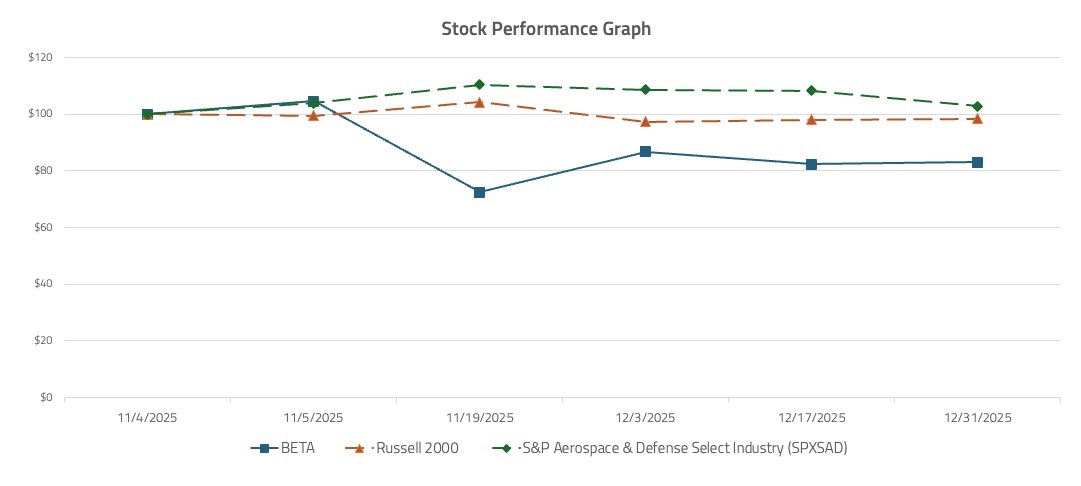
Use of Proceeds from Initial Public Offering of Common Stock
On November 5, 2025, we completed our IPO of 34,330,882 shares of our Class A common stock at a price to the public of $34.00 per share, inclusive of the exercise in full by the underwriters to purchase from the Company 4,477,941 shares of Class A common stock. The Company received net proceeds from the IPO of approximately $1,103 million, after deducting approximately $63.9 million in underwriting discounts and commissions. All shares sold were registered pursuant to a registration statement on Form S-1 (File No. 333-290570), as amended (the “Registration Statement”) which became automatically effective pursuant to Section 8(a) of the Securities Act of 1933, as amended. Morgan Stanley & Co. LLC and Goldman Sachs & Co. LLC acted as representatives of the underwriters for the IPO. The offering terminated after the sale of all the securities registered pursuant to the Registration Statement.
There has been no material change in the use of proceeds from our IPO as described in our prospectus, dated November 3, 2025, filed with the SEC in accordance with Rule 424(b) of the Securities Act on November 4, 2025 (File No. 333-290570) (the “Prospectus”).
Unregistered Sales of Equity Securities
Subsequent to September 30, 2025, the Company issued 1,866,989 shares of Series C-1 Preferred Stock that provided aggregate net proceeds of $33,491 from an entity affiliated with one of the Company’s Board members. See Note 8 “Stockholders' Equity and Convertible Preferred Stock” to the consolidated financial statements in Part II, Item 8 of this Annual Report for additional information regarding the terms of conversion for the convertible preferred stock.
On October 8, 2025, the Company and InspireHQ, LLC (d/b/a Alignd), a developer of project and talent management software, entered into an Asset Purchase Agreement pursuant to which, the Company issued an aggregate of 167,238 shares of restricted stock, subject to certain vesting conditions, for an aggregate fair value of approximately $4.4 million.
68
The offers and sales of the above securities were deemed to be exempt from registration under the Securities Act in reliance upon Section 4(a)(2) of the Securities Act, Regulation D or Regulation S promulgated thereunder. The foregoing transaction did not involve any underwriters, underwriting discounts or commissions or any public offering. The recipients of the above securities represented their intentions to acquire the securities for investment only and not with a view to or for sale in connection with any distribution thereof. Appropriate legends were placed upon any stock certificates issued in these transactions.
Issuer Purchases of Equity Securities
None.
Item 6. [Reserved]
Item 7. Management’s Discussion and Analysis of Financial Condition and Results of Operations.
The following discussion and analysis of our financial condition and results of operations should be read in conjunction with our consolidated financial statements and related notes and other financial information included elsewhere in this Annual Report. This discussion and analysis and other parts of this Annual Report contain forward-looking statements based upon our current plans and expectations that involve risks, uncertainties and assumptions, such as statements regarding our plans, strategies, objectives, expectations, intentions and beliefs. Our actual results and the timing of events could differ materially from those anticipated in these forward-looking statements as a result of various factors, including those set forth under “Risk Factors” and elsewhere in this Annual Report. The “Risk Factors” section of this Annual Report should be carefully read to gain an understanding of the important factors that could cause actual results to differ materially from our forward-looking statements. Please also see “Special Note Regarding Forward-Looking Statements.” Our historical results are not necessarily indicative of the results that may be expected for any period in the future.
Overview
We are redefining the aerospace industry. We have developed an electric aircraft platform and propulsion systems that are positioned to transform the aviation industry forward into a new phase of growth. We design, manufacture, and sell high-performance electric aircraft, advanced electric propulsion systems, charging systems and components. Further, we have invested in the underlying infrastructure of this breakthrough technology, which is critical to bringing electric aviation to life. We believe we have developed a differentiated presence in North America and are well positioned to expand globally.
Our company was purpose-built to capture the significant, untapped market opportunity in sustainable, reliable and efficient electric aviation.
Vertical integration allows us to innovate rapidly and capture meaningful economic value throughout an aircraft’s lifetime, by providing batteries and aftermarket services for BETA aircraft and other customers. Our focus is on the Enabling Technologies essential to electric aviation, including batteries, motors, flight control, charging systems and an international network of electric charging and related equipment. With proprietary control over these core technologies, we offer customers a complete platform to support their adoption of electric aircraft to enable both existing and new missions. This multilayered approach provides us with recurring, high margin opportunities.
We are developing highly scalable technologies that can be tailored to and deployed for cost-effective and safe missions across cargo and logistics, medical, defense and passenger end markets. Our simplified approach to designing electric aircraft allows us to service a variety of end markets and mission types leveraging the same core technologies. The portability of our technologies and systems across various aircraft also unlocks flexibility to innovate on future generations of aircraft.
69
Industry Trends and Outlook
The emergence of electric aviation is ushering in a new era of aviation, with the potential to dramatically lower costs, reduce environmental impact and open up entirely new markets. By leveraging electric propulsion technologies, aircraft can be made quieter, more efficient and less expensive to operate than traditional, fuel-based aircraft. This shift is especially significant for urban and regional routes, where electric aircraft can enable point-to-point travel within and among cities and underserved areas, bypassing the need for large airport infrastructure. This will be impactful for cargo and logistics, medical, defense and passenger operations. This opportunity will continue to grow and, as battery technology and regulatory frameworks evolve, electric aviation is set to further unlock a wave of innovation, of which we believe we are at the forefront. Moreover, as the global installed fleet of BETA aircraft continues to grow, replacement batteries and maintenance requirements are also expected to grow. These maintenance requirements are recurring and often times non-deferrable, even during periods of economic downturn or reduced demand for commercial air travel. In addition, to support growing fleets of electric aircraft, charging infrastructure will be required at airports and vertiports globally. We primarily compete across four end markets within the aerospace industry: cargo and logistics, medical, defense and passenger.
Cargo and Logistics: We believe cargo and logistics represent a near-term, sizable and compelling opportunity for our aircraft and products. Based on the demand for timely supply chain solutions caused by the rise of e-commerce, large global parcel and e-commerce companies have tested and placed orders for electric aircraft and drones to address supply chain constraints. In 2024, e-commerce made up approximately 16% of total retail sales in the United States, based on the U.S. Census Bureau, 2024 Annual Retail Trade Survey. In parallel, customers are increasingly demanding faster delivery times, pressuring traditional distribution networks. The introduction of electric aircraft in cargo and logistics, specifically in rural areas, received additional support in the June 2025 Executive Order. Customers including UPS and Bristow have placed Firm Orders for BETA aircraft.
Medical: Electric aviation, both CTOL and VTOL, are well-suited to meet the growing demand for fast, reliable and environmentally sustainable healthcare logistics. Our aircraft are uniquely suited for medical operations with their large and flexible interior spaces. Lower operating costs of electric aircraft make them well-suited for Medical Cargo and Low-Acuity Patient Transfer missions. Customers including United Therapeutics, Metro Aviation and New Zealand Air Ambulance have placed Firm Orders for BETA aircraft.
Defense: Our ALIA platform is well-suited for emerging necessities of modern warfare in both their low maintenance burden and its autonomy-ready designs. Current events and conflicts across the globe have resulted in increased defense and national security spending, both nationally and internationally. Existing defense logistics platforms, mainly helicopters, are poorly suited for imminent threats, including conflicts across wide expanses of ocean. In the United States, defense and national security spending benefits from strong bi-partisan support, which has resulted in a stable and growing investment over time. Our demand forecast consists of nearly 2,000 BETA aircraft for defense applications through 2035, based on U.S. Military estimates and internal opportunity sizing. We believe that our Enabling Technologies and their high degree of mission flexibility align closely with key national security focus areas and that meaningful new opportunities exist as the U.S. defense budget is expected to expand.
Passenger: We believe that the demand for urban and regional air mobility services will usher in a new wave of growth for the commercial aerospace market. Based on 2025 airline schedule data, 20% of flights globally are under 300 miles, demonstrating this trend. As traditional, ground-based transportation alternatives become increasingly expensive and population growth accelerates, their scalability is becoming highly questionable. At the same time, technological advances in battery energy density, propulsion, design and materials are enabling aircraft to serve shorter distances in a more cost-effective and environmentally sustainable manner. The convergence of these forces has led airlines, aircraft lessors and charter companies to place orders for over 10,000 aircraft worth over $80 billion. We expect these trends to continue and create new opportunities to convert terrestrial transportation demand to aircraft.
Factors and Trends Affecting Our Business
Development of the Urban and Regional Air Mobility Markets
We expect to derive revenue from the continued development of aerial transportation for cargo and logistics, medical, defense and passenger applications globally. Our ALIA CTOL and ALIA VTOL aircraft are well-positioned to serve the urban and regional air mobility markets. While we believe the global market for urban and regional aerial transportation will be large, it remains in the early stages of development and there is no guarantee of future demand.
70
Government Certification
In the U.S., new aircraft must undergo a rigorous FAA certification process to ensure the design, manufacturing and individual aircraft meet all applicable safety and airworthiness standards. This process begins with Type Certification, in which the FAA evaluates the aircraft design through extensive ground and flight testing to verify compliance with federal regulations. The Type Certification process is conducted in five phases. Phases one to three cover definition of requirements and the applicant's plan to meet the FAA requirements. Phase four covers collecting the data to prove the design meets the FAA's requirements. Phase five maintains the aircraft during commercial operations. We began working with the FAA in 2020 and have made significant progress toward the certification of both our eCTOL aircraft and our eVTOL aircraft, as well as the certification of our electric engines. We expect to be an early manufacturer to achieve Part 23 FAA Type Certification for an electric aircraft, which we believe will allow us to reach a large addressable market of cargo and logistics, medical, defense and passenger operators, while simultaneously building momentum for our VTOL and larger passenger aircraft variants. We are currently building CTOL aircraft, to be completed in 2026, that will be conformity inspected by the FAA and used in certification flight testing. Our business will require continued focus leading up to certification of our aircraft, including, but not limited to, prototyping and testing, manufacturing, software development, certification, infrastructure and commercialization. Further modifications required by the FAA to our CTOL electric aircraft’s existing certification basis, or other regulatory changes or revisions, could delay our ability to obtain Type Certification for our VTOL aircraft, and could delay our ability to commercialize our electric aircraft and Enabling Technologies. We have not yet delivered any certified aircraft and therefore, no associated revenue has been recognized.
We expect the FAA Type Certificate will be reciprocated in certain global markets pursuant to bilateral agreements between the FAA and its counterpart civil aviation authorities. This reciprocal recognition provides the regulatory foundation for civil operation of our aircraft in non-U.S. markets. Following FAA Type Certification, we intend to pursue validation with foreign regulators, in support of Firm Orders from customers. We have also initiated discussions with EASA regarding validation of H500A and ALIA CTOL. We anticipate that we will start the validation process on H500A with EASA immediately following FAA Type Certification, which we believe can position us for efficient international expansion as we develop commercial operations around the world.
In addition to certifying our aircraft and engines, we are also working towards Production Certification of the facilities and processes that we use to build our products. While we expect to meet the applicable requirements, if we fail to obtain any of the required authorizations or certifications, or do so in a timely manner, or if any of these authorizations or certifications are modified, suspended or revoked after we obtain them, we may be unable to launch our commercial electric aircraft or do so on the timelines we project, which would have adverse effects on our business, prospects, financial condition or results of operations.
Financing and Commercialization
On November 5, 2025, the Company completed its IPO of 34,330,882 shares of the Company’s Class A common stock at a price to the public of $34.00 per share, inclusive of the exercise in full by the underwriters to purchase from the Company 4,477,941 shares of Class A common stock. The Company received net proceeds from the IPO of $1,103,327, after deducting $63,922 in underwriting discounts and commissions.
Since inception, we have made investments across research and development, facilities, equipment and tooling needed to move toward manufacturing of our aircraft and charging systems. Current and future programs will require significant research and development effort, including extensive testing and regulatory approval, prior to commercialization. These efforts require significant amounts of additional capital, adequate personnel and infrastructure. Near-term cash requirements include investing in our manufacturing facilities and equipment, supporting FAA certification, scaled manufacturing operations for commercialization and development and production of electric aircraft and Enabling Technologies. As a result of these anticipated expenditures, we will need additional financing to support our continuing operations and pursue our growth strategy.
71
Recent Developments
On December 2, 2025, BETA was selected by EVE to supply electric pusher motors for EVE's conforming prototypes and production aircraft. The agreement represents a potential 10-year opportunity for BETA up to $1 billion subsequent to an initial evaluation period in which EVE will purchase, test and validate the performance of BETA's motors in EVE's prototype aircraft.
During 2025, the U.S. Department of Transportation and the Federal Aviation Administration announced the eVTOL Integration Pilot Program ( the “eIPP”). The eIPP is designed to accelerate the safe integration of eVTOL and other advanced air mobility aircraft into the national airspace system, supporting continued global leadership in aviation and bringing the benefits of this technology to communities across the country. BETA is supporting state and local partners across the United States in their proposals for electric aircraft operations and infrastructure under the eIPP.
Results of Operations
Comparison of Results for the Years Ended December 31, 2025 and 2024
Discussion of the results of operations for the year ended December 31, 2024 as compared to December 31, 2023 was included in the section “Management’s Discussion and Analysis of Financial Condition and Results of Operations” of our Prospectus, as filed with the SEC on November 4, 2025.
The following table presents selected financial information for the periods presented (dollars in thousands):
Year Ended December 31, | Increase (Decrease) | Increase (Decrease) | |||||||||||||||||||||
2025 | 2024 | ($) | (%) | ||||||||||||||||||||
Revenues: | |||||||||||||||||||||||
Product | $ | 12,429 | $ | 1,857 | $ | 10,572 | * | ||||||||||||||||
Service | 23,187 | 13,235 | 9,952 | 75 | % | ||||||||||||||||||
| 35,616 | 15,092 | 20,524 | * | ||||||||||||||||||||
Cost of revenues: | |||||||||||||||||||||||
Product | 4,003 | 1,521 | 2,482 | * | |||||||||||||||||||
Service | 5,898 | 2,998 | 2,900 | 97 | % | ||||||||||||||||||
| 9,901 | 4,519 | 5,382 | * | ||||||||||||||||||||
Gross margin: | |||||||||||||||||||||||
Product | 8,426 | 336 | 8,090 | * | |||||||||||||||||||
Service | 17,289 | 10,237 | 7,052 | 69 | % | ||||||||||||||||||
| 25,715 | 10,573 | 15,142 | * | ||||||||||||||||||||
Operating Expenses: | |||||||||||||||||||||||
Research and development | 259,892 | 206,910 | 52,982 | 26 | % | ||||||||||||||||||
General and administrative | 138,491 | 75,883 | 62,608 | 83 | % | ||||||||||||||||||
Total operating expenses | 398,383 | 282,793 | 115,590 | 41 | % | ||||||||||||||||||
Loss from operations | (372,668) | (272,220) | 100,448 | 37 | % | ||||||||||||||||||
Other expense (income): | |||||||||||||||||||||||
Interest expense | 12,972 | 11,427 | 1,545 | 14 | % | ||||||||||||||||||
Interest income | (20,147) | (8,516) | 11,631 | * | |||||||||||||||||||
Loss on issuance of convertible preferred stock | 379,619 | — | 379,619 | * | |||||||||||||||||||
Total other expense | 372,444 | 2,911 | 392,795 | * | |||||||||||||||||||
Loss before income taxes | (745,112) | (275,131) | 493,243 | * | |||||||||||||||||||
Provision for income taxes | 756 | 514 | 242 | 47 | % | ||||||||||||||||||
Net loss | $ | (745,868) | $ | (275,645) | $ | 493,485 | * | ||||||||||||||||
*Percentage increase (decrease) is not meaningful
72
Revenues
Our product revenue is primarily generated from the sale of tangible products such as our Enabling Technologies. Our service revenue is primarily generated from engineering, consulting and other service arrangements for our customers. Service revenue also includes revenue associated with usage of and priority access to our charge stations and from sales-type lease income.
Product revenues increased $10.6 million during the year ended December 31, 2025 compared to the year ended December 31, 2024. The increase was attributable to new contracts with commercial and foreign government customers to deliver electric propulsion motors, batteries, flight control systems and ground support equipment totaling $11.7 million offset by $1.1 million due to a non-recurring contract for the forward operating base (the “FOB”) completed in 2024, which did not repeat in 2025.
Service revenues increased $10.0 million, or 75%, during the year ended December 31, 2025 compared to the year ended December 31, 2024. The increase was attributable to new and existing contracts with commercial customers of $6.0 million related to engineering and consulting services to support our customers’ research and development activities, $1.6 million related to priority access to the Company’s charging stations and a net increase of $2.4 million from U.S. and foreign government customers during 2025.
Cost of Revenues
Cost of product revenues and service revenues may include the direct cost of materials, labor, subcontractors and overhead costs (where allowable), depending on the nature of the agreement. Included within cost of product revenues are purchases made directly for contractual performance obligations primarily recognized over time and as such, no inventories are recorded in the Consolidated Balance Sheets.
Cost of product revenues increased $2.5 million during the year ended December 31, 2025 compared to the year ended December 31, 2024 due to an increase in labor and material costs of $3.6 million to fulfill contracts with commercial and foreign government customers, partially offset by a decrease in labor and material costs due to completion of the FOB during 2024 of $1.1 million.
Cost of service revenues increased $2.9 million, or 97%, during the year ended December 31, 2025 compared to the year ended December 31, 2024. The increase was attributable to an increase of $4.4 million in labor and material costs to fulfill contracts with commercial and government customers, partially offset by a decrease in labor and material costs of $1.5 million due to completion of service agreements with the U.S. government during 2024.
Research and Development Expenses
We have invested in research and development for our electric aircraft and Enabling Technologies. We manage our expenses based on several factors, including industry conditions and expected demand for our products and services.
Research and development expenses increased $53.0 million, or 26%, for the year ended December 31, 2025 compared to the year ended December 31, 2024. The increase was attributable to continued spend related to the development, testing, certification and prototype production of our electric aircraft, electric propulsion systems, charging solutions and network. As part of these efforts, we incurred increased expenses for parts and materials of $17.4 million, labor costs including stock-based compensation of $18.9 million, depreciation and amortization of $4.7 million resulting from our investment in our Final Assembly Facility and related equipment and tooling, warrant expense of $6.1 million resulting from the collaborative arrangement with GE Aerospace and other expenses of $5.9 million.
General and Administrative Expenses
General and administrative expenses increased $62.6 million, or 83%, for the year ended December 31, 2025 compared to the year ended December 31, 2024. The increase was attributable to increased stock-based compensation expense of $19.6 million, salaries and benefits of $21.0 million due to increased headcount and personnel costs, $13.0 million of professional fees and $9.0 million of other administrative costs.
Other Expense (Income)
Interest expense increased $1.5 million, or 14%, for the year ended December 31, 2025 compared to the year ended December 31, 2024. The increase was primarily attributable to the timing of the last borrowing under our Ex-Im Credit Facility during 2024 and a sale-leaseback transaction during 2025.
73
Interest income increased $11.6 million for the year ended December 31, 2025 compared to the year ended December 31, 2024. The increase was attributable to the proceeds from convertible preferred stock offerings and the IPO, which are held in interest-bearing accounts.
Loss on issuance of convertible preferred stock was $379.6 million for the year ended December 31, 2025. The loss was attributable to the difference between the fair value and aggregate proceeds received from the issuance of Series C and C-1.
Provision for Income Taxes
Provision for income taxes increased $0.2 million, or 47%, for the year ended December 31, 2025 compared to the year ended December 31, 2024, primarily due to an increase in the taxes on foreign earnings.
Non-GAAP Financial Measures
EBITDA and Adjusted EBITDA
We define EBITDA as net loss, adjusted for interest income, interest expense, provision for income taxes and depreciation and amortization expense. We define Adjusted EBITDA as EBITDA adjusted for loss on issuance of convertible preferred stock, stock-based compensation expense, warrant expense, loss on disposal of property and equipment and IPO readiness costs.
In addition to traditional financial metrics, we use EBITDA and Adjusted EBITDA to help us evaluate our business. We believe that these non-GAAP measures provide useful information to investors because they allow for greater transparency into what measures we use in operating our business and measuring our performance and enable comparison of financial trends and results between periods where items may vary independent of business performance. These non-GAAP measures are presented for supplemental informational purposes and should not be considered as substitutes for or superior to financial information presented in accordance with GAAP. The principal limitation of these non-GAAP financial measures is that they exclude certain expenses that are required by GAAP to be recorded in our financial statements and they are subject to inherent limitations as they reflect the exercise of judgment by our management about which expenses are excluded or included in determining these non-GAAP financial measures. Further, non-GAAP financial measures are not standardized. It may not be possible to compare these financial measures with other companies’ non-GAAP financial measures having the same or similar names. Investors are encouraged to review the related GAAP financial measures and the reconciliation of these non-GAAP financial measures to their most directly comparable GAAP financial measures. In addition, investors are encouraged to review our consolidated financial statements and the notes thereto in their entirety and not to rely on any single financial measure.
A reconciliation between net loss, the most directly comparable GAAP financial measure, and the non-GAAP financial measures is as follows (in thousands):
Year Ended December 31, | |||||||||||
2025 | 2024 | ||||||||||
Net loss | $ | (745,868) | $ | (275,645) | |||||||
Increase (decrease) as adjusted for: | |||||||||||
Interest income | (20,147) | (8,516) | |||||||||
Interest expense | 12,972 | 11,427 | |||||||||
Provision for income taxes | 756 | 514 | |||||||||
Depreciation and amortization expense | 22,026 | 16,464 | |||||||||
EBITDA | $ | (730,261) | $ | (255,756) | |||||||
Loss on issuance of convertible preferred stock | 379,619 | — | |||||||||
Stock-based compensation expense | 34,761 | 12,105 | |||||||||
Warrant expense | 6,073 | — | |||||||||
Loss on disposal of property and equipment | 3,410 | 365 | |||||||||
IPO readiness costs(1) | 2,258 | — | |||||||||
Adjusted EBITDA | $ | (304,140) | $ | (243,286) | |||||||
(1)Represents legal and accounting expenses incurred in connection with becoming a public company.
74
Liquidity and Capital Resources
We have incurred net losses and negative operating cash flows from operations since we were formed and began designing our electric aircraft in 2018 and we expect to continue to incur losses and negative operating cash flows for the foreseeable future until we successfully commence sustainable commercial operations. Historically, our primary sources of liquidity have been borrowings under our Ex-Im Credit Facility, equity financings, government funding and consideration from contracts with customers, as well as the proceeds from our IPO and the sale-leaseback transaction. To date, our primary use of capital has been for contractual obligations and the development of our electric aircraft and Enabling Technologies. As of December 31, 2025, we had cash and cash equivalents of $1,710 million. Until we generate sufficient operating cash flow to fully cover our operating expenses, working capital needs and planned capital expenditures, or if circumstances evolve differently than anticipated, we expect to utilize a combination of equity and debt financings to fund any future remaining capital needs. If we raise funds by issuing equity securities, dilution to stockholders may result. Any equity securities issued may also provide for rights, preferences or privileges senior to those of holders of common stock. If we raise funds by issuing debt securities, these debt securities may have rights, preferences and privileges senior to those of preferred and common stockholders. The terms of debt securities or borrowings could impose significant restrictions on our operations. The capital markets have, in the past, and may, in the future, experience periods of volatility that could impact the availability and cost of equity and debt financing. We can give no assurances that we will be able to secure such additional sources of funds to support our operations or, if such funds are available to us, that such additional financing will be sufficient to meet our needs. See Note 1 “Nature of Operations and Liquidity” to the consolidated financial statements and the heading “Our business plan requires a significant amount of capital. We expect to require additional future funding to support our operations and implementation of our growth plans and we may be unable to access the capital and credit markets or borrow on affordable terms to obtain additional capital that we may require” in Part I, Item 1A. “Risk Factors” included elsewhere in this Annual Report.
Our principal uses of cash in recent periods were to fund our research and development activities, personnel cost and support services, including our battery, motor and charging services. Near-term cash requirements will also include spending on research and development of emerging technologies, strategic growth initiatives, including obtaining certifications and manufacturing our aircraft, commercial and go-to market infrastructure. We do not have material cash requirements related to current contractual obligations. As such, our cash requirements are highly dependent upon management’s decisions about the pace and focus of both our short and long-term spending.
Cash requirements can fluctuate based on business decisions that could accelerate or defer spending, including the timing or pace of certification, investments, infrastructure and production of electric aircraft and Enabling Technologies. Our future capital requirements will depend on many factors, including our revenue growth rate, the timing and the amount of cash or grants received from our customers or governmental entities, respectively, the expansion of sales and marketing activities and the timing and extent of spending to support development efforts, including collaborative arrangements.
Capital Expenditures
During the year ended December 31, 2025 and 2024, we used $45.4 million and $73.5 million in cash, respectively, to fund capital expenditures. Capital expenditures during the year ended December 31, 2025 primarily related to the purchase of aircraft, production tooling, facility and land improvements, and buildings.
Sources of Cash
The following table sets forth our cash flows for the years indicated (in thousands):
Year Ended December 31, | |||||||||||||||||
2025 | 2024 | 2023 | |||||||||||||||
Net cash (used in) provided by: | |||||||||||||||||
Operating activities | (267,798) | (222,661) | (158,015) | ||||||||||||||
Investing activities | (44,076) | (68,806) | (152,333) | ||||||||||||||
Financing activities | 1,725,086 | 339,331 | 134,329 | ||||||||||||||
Effect of currency translation on cash, cash equivalents and restricted cash | 28 | 25 | (141) | ||||||||||||||
Net increase (decrease) in cash, cash equivalents and restricted cash | 1,413,240 | 47,889 | (176,160) | ||||||||||||||
75
Operating Activities
We continue to experience negative cash flows from operations as we develop our electric aircraft and Enabling Technologies and prepare for the future commercialization of our products and services. Our cash flows from operating activities are significantly affected by our expenditures in research and development and overhead manufacturing related to the scaling of our operations. Our operating cash flows are also affected by our working capital needs to support growth, personnel related expenditures, accounts payable and other current assets and liabilities.
For the year ended December 31, 2025, net cash used in operating activities was $267.8 million due to a net loss of $745.9 million, offset by non-cash charges including $22.0 million related to depreciation and amortization, $34.8 million related to stock-based compensation, $379.6 million related to loss on issuance of convertible preferred stock, $6.1 million of warrant expense, $6.2 million of other non-cash charges and $29.4 million of cash provided by changes in operating assets and liabilities.
For the year ended December 31, 2024, net cash used in operating activities was $222.7 million, primarily due to a net loss of $275.6 million, offset by non-cash charges including $16.5 million related to depreciation and amortization, $12.1 million related to stock-based compensation, $2.8 million of other non-cash charges and $21.6 million of cash provided by changes in operating assets and liabilities.
Investing Activities
We continue to experience negative cash flows from investing activities as we build our infrastructure and purchase equipment to support the development and commercialization of our electric aircraft and charging network. Cash flows used in investing activities primarily relate to capital expenditures to support our growth in operations, including expenditures related to the construction and expansion of our charging and production facilities, acquisitions of machinery and equipment, tooling and technology infrastructure, partially offset by proceeds from sales of property and equipment and governmental grants.
For the year ended December 31, 2025, net cash used in investing activities was $44.1 million, due to net purchases of property and equipment of $45.4 million, partially offset by proceeds from the sale of property and equipment of $1.4 million.
For the year ended December 31, 2024, net cash used in investing activities was $68.8 million, due to net purchases of property and equipment of $73.5 million, partially offset by proceeds from the sale of property and equipment of $4.7 million.
Financing Activities
For the year ended December 31, 2025, net cash provided by financing activities was $1,725.1 million, primarily due to proceeds received from the initial public offering of $1,103.3 million, proceeds received from Series C and C-1 convertible preferred stock totaling of $606.3 million, proceeds from the sale-leaseback transaction of $32.7 million, offset by offering costs related to our financing transactions totaling $18.6 million.
For the year ended December 31, 2024, net cash provided by financing activities was $339.3 million, primarily due to the proceeds received from issuances of our Series C Preferred Stock of $324.0 million and the proceeds received from the issuance of our promissory note of $15.5 million.
76
Credit Facility
On December 13, 2023, we entered into our Credit Facility, which provided commitments in an aggregate amount equal to $170.1 million to, among other things, finance certain of our goods and services costs related to the design, planning, permitting, and construction of the Final Assembly Facility. Our Credit Facility matures on December 20, 2038. As of December 31, 2025, we have fully drawn down the Credit Facility in an aggregate principal amount equal to $151.3 million, net of exposure fees of $18.9 million.
The Company’s obligations under the Credit Agreement are secured by the “Collateral” (as defined in the Credit Agreement), which generally consists of the Final Assembly Facility.
The Company is no longer able to draw down further funds under our Credit Facility given that each of:
(a)the commitment availability period for drawing funds thereunder has expired in accordance with its terms; and
(b)the commitments under our Credit Facility have been fully drawn.
Each disbursement under our Credit Facility accrues interest at a fixed interest rate of 5.52% per annum, which per annum interest rate is subject to increase in accordance with the terms of the Credit Agreement upon the occurrence of a “Payment Default” and/or a “Trigger Event” (each such term as defined in the Credit Agreement). Inclusive of the timing of drawdowns, exposure fees and debt issuance costs, the effective per annum interest rate on outstanding borrowings under our Credit Facility was 7.32%. Interest under our Credit Facility is payable quarterly in arrears on each March 20, June 20, September 20 and December 20 of each year.
The Company may, from time to time, prepay all or any part of the outstanding principal balance of the disbursements made pursuant to our Credit Facility, subject to a prepayment premium in an amount equal to: the amount by which (a) the amount of the prepaid principal is less than (b) the sum of the present values, discounted in accordance with the terms of the Credit Agreement, of (x) the installments of principal being prepaid, plus (y) the amounts of interest which would otherwise have accrued on such principal to the remaining interest payment dates.
The Credit Agreement provides for mandatory amortization payments with respect to the principal amount of funds disbursed pursuant to our Credit Facility, in the amounts and on the terms set forth in the Credit Agreement, such that such principal amount is repaid in 54 successive quarterly installments. Such amortization payments are required to be made by the Company on each March 20, June 20, September 20, and December 20 of each year, commencing on September 20, 2025. Furthermore, the Credit Agreement includes mandatory prepayments in connection with certain sanctions-related events, events of loss and collateral destruction events.
Our Credit Facility documents contain affirmative and negative covenants, including, among other things, delivery of annual audited financial statements and Make More in America Initiative (“MMIA”) annual reports, maintenance of certain governmental consents, licenses, permits, authorizations, and approvals, compliance with laws (including sanctions) and the “MMIA Compliance Plan” (as defined in the Credit Agreement) and maintenance of insurance, along with restrictions on the incurrence of liens, asset dispositions, acquisitions, changes in nature of business, mergers, consolidations, dissolutions, and sales and other customary covenants, in each case, subject to customary exceptions. The Credit Agreement also includes events of default relating to customary matters (and customary notice and cure periods), including, among other things, nonpayment of principal, interest, or other amounts, violation of covenants, incorrectness of representations and warranties in any material respect, cross-default with respect to material indebtedness and other Ex-Im indebtedness, bankruptcy, material judgments and certain ERISA events.
Contractual Obligations and Commercial Commitments
See Note 5 “Notes Payable” in the notes to our consolidated financial statements for further detail of the Company's debt obligations and the timing of expected future principal and interest payments.
See Note 6 “Leases” in the notes to our consolidated financial statements for further detail of the Company's lease obligations and the timing of expected future lease payments.
77
Critical Accounting Estimates
Our consolidated financial statements are prepared in accordance with GAAP. In connection with preparing our consolidated financial statements and interim condensed consolidated financial statements, we are required to make assumptions and estimates about future events and apply judgments that affect the reported amounts of assets, liabilities, revenue, expense and the related disclosures. We base our assumptions, estimates and judgments on historical experience, current trends and other factors that management believes to be relevant at the time we prepare our consolidated financial statements. On a regular basis, management reviews the accounting policies, assumptions, estimates and judgments to ensure that our consolidated financial statements are presented fairly and in accordance with GAAP. However, because future events and their effects cannot be determined with certainty, actual results could differ materially from our assumptions and estimates.
Our significant accounting policies are discussed in Note 2 “Basis of Presentation and Accounting Policies” in the notes to our consolidated financial statements. Management believes that the following accounting policies are critical to fully understanding and evaluating our reported financial results, and they require management to make estimates about the effect of matters that are inherently uncertain.
Stock-Based Compensation
We measure all stock options, restricted stock units and other stock-based awards granted to employees, non-employees and directors based on the fair value on the date of the grant. We recognize compensation expense over the requisite service period, which is generally the vesting period of the respective award. We generally issue stock options with only service-based vesting conditions and record the expense for such awards using the straight-line accounting method. We recognize forfeitures at the time forfeitures occur.
The fair value of stock options is estimated on the date of grant using the Black-Scholes option-pricing model, which requires inputs based on certain subjective assumptions. These assumptions include:
•Fair value of Common Stock – Following our IPO, in connection with our accounting for granted stock options, restricted stock units and other awards we may grant, the fair value of our common stock is determined based on the quoted market price. See discussion below for our determination of the fair value of our Common Stock prior to IPO.
•Expected volatility – We estimate our expected stock volatility based on the historical volatility of a publicly traded set of peer companies and expect to continue to do so until we have adequate historical data regarding the volatility of our own traded stock price.
•Expected term – The expected term of our stock options has been determined utilizing the “simplified” method for awards that qualify as “plain-vanilla” options. The expected term of stock options is equal to the weighted average vesting term plus the contractual term divided by two.
•Risk-free interest rate – The risk-free interest rate is determined by reference to the U.S. Treasury yield curve in effect at the time of grant of the award for time periods approximately equal to the expected term of the award.
•Expected dividend yield – The expected dividend yield is zero because we have never paid cash dividends on Common Stock and do not expect to pay any cash dividends in the foreseeable future.
Fair Value of Common Stock prior to IPO, Preferred Stock and Warrants
During 2025, the Company issued shares of Series C and Series C-1 convertible preferred stock. The Company recorded a non-cash loss for the difference between the purchase price and the fair value of the convertible preferred stock issued. Additionally, the Company issued warrants for common stock.
The estimated fair value of the common stock prior to IPO, Series C and C-1 convertible preferred stock and warrants was determined using a third-party valuation prepared using the hybrid method, with one or more scenarios using the option pricing model (the “OPM”) to allocate the equity value to respective share classes. The valuation was based on numerous inputs and assumptions including, but not limited, to economic factors, industry trends and likelihood of achieving a liquidity event. A discount for lack of marketability of the common stock was then applied to arrive at an indication of value for the common stock.
78
Recently Issued Accounting Pronouncements
See Note 2 “Basis of Presentation and Accounting Policies” to our consolidated financial statements for discussion of recent accounting pronouncements.
Related Party Transactions
See Note 14 “Related Party Transactions” to our consolidated financial statements for discussion of related party transactions.
Emerging Growth Company Status
Under the JOBS Act, we are an “emerging growth company,” which allows us to have an extended transition period for complying with new or revised accounting standards pursuant to Section 107(b) of the JOBS Act. Thus, an emerging growth company can delay the adoption of certain accounting standards until those standards would otherwise apply to private companies. We have elected to take advantage of the extended transition period to comply with new or revised accounting standards. Electing to use the phase-in periods permitted by this election may make it difficult to compare our financial statements to those of non-emerging growth companies and other emerging growth companies that have opted out of the longer phase-in periods under Section 107 of the JOBS Act and who will comply with new or revised financial accounting standards.
We will remain an emerging growth company until the earliest of (i) the last day of our first fiscal year in which we have total annual gross revenues of $1.235 billion or more, (ii) the last day of the first fiscal year in which we become a “large accelerated filer” as defined in Rule 12b-2 under the Exchange Act, with at least $700 million of equity securities held by non-affiliates as of the end of the last business day of the second quarter of that fiscal year, (iii) the date on which we have issued, in any three-year period, more than $1.0 billion in non-convertible debt securities, or (iv) the last day of our fiscal year after the fifth anniversary of the date of the completion of the IPO.
Off-Balance Sheet Arrangements
We have no material off-balance sheet arrangements.
Item 7A. Quantitative and Qualitative Disclosures About Market Risk.
Market risk is the risk of loss arising from adverse changes in market rates and prices. Currently, our market risks relate to potential changes in the fair value of our long-term debt due to fluctuations in applicable market interest rates. Going forward, our market risk exposure will generally be limited to those risks that arise in the normal course of business, as we do not engage in speculative, non-operating transactions, nor do we utilize financial instruments or derivative instruments for trading purposes.
Interest Rate Risk
Our cash and cash equivalents are invested in demand deposit and money market funds and held for working capital purposes. We do not enter into investments for trading or speculative purposes. We believe that we do not have any material exposure to changes in the fair value as a result of changes in interest rates due to the short-term nature of our cash equivalents. Declines in interest rates, however, would reduce future interest income.
Credit Risk
Financial instruments that subject us to significant concentrations of credit risk consist primarily of cash and money-market cash equivalents. Our cash is held in accounts with multiple financial institutions that we believe are creditworthy. These amounts at times may exceed federally insured limits. We have not experienced any credit losses in such accounts and do not believe we are exposed to any significant credit risk on these funds.
79
REPORT OF INDEPENDENT REGISTERED PUBLIC ACCOUNTING FIRM
To the shareholders and the Board of Directors of BETA Technologies, Inc.
Opinion on the Financial Statements
We have audited the accompanying consolidated balance sheets of BETA Technologies, Inc. and subsidiaries (the "Company") as of December 31, 2025 and 2024, the related consolidated statements of operations and comprehensive loss, stockholders' equity and convertible preferred stock, and cash flows, for each of the three years in the period ended December 31, 2025, and the related notes (collectively referred to as the "financial statements"). In our opinion, the financial statements present fairly, in all material respects, the financial position of the Company as of December 31, 2025 and 2024, and the results of its operations and its cash flows for each of the three years in the period ended December 31, 2025, in conformity with accounting principles generally accepted in the United States of America.
Basis for Opinion
These financial statements are the responsibility of the Company's management. Our responsibility is to express an opinion on the Company's financial statements based on our audits. We are a public accounting firm registered with the Public Company Accounting Oversight Board (United States) (PCAOB) and are required to be independent with respect to the Company in accordance with the U.S. federal securities laws and the applicable rules and regulations of the Securities and Exchange Commission and the PCAOB.
We conducted our audits in accordance with the standards of the PCAOB. Those standards require that we plan and perform the audit to obtain reasonable assurance about whether the financial statements are free of material misstatement, whether due to error or fraud. The Company is not required to have, nor were we engaged to perform, an audit of its internal control over financial reporting. As part of our audits, we are required to obtain an understanding of internal control over financial reporting but not for the purpose of expressing an opinion on the effectiveness of the Company's internal control over financial reporting. Accordingly, we express no such opinion.
Our audits included performing procedures to assess the risks of material misstatement of the financial statements, whether due to error or fraud, and performing procedures that respond to those risks. Such procedures included examining, on a test basis, evidence regarding the amounts and disclosures in the financial statements. Our audits also included evaluating the accounting principles used and significant estimates made by management, as well as evaluating the overall presentation of the financial statements. We believe that our audits provide a reasonable basis for our opinion.
/s/ Deloitte & Touche LLP
March 9, 2026
We have served as the Company's auditor since 2020.
80
BETA TECHNOLOGIES, INC.
CONSOLIDATED BALANCE SHEETS
(in thousands, except share and per share amounts)
| As of December 31, | ||||||||||||||
| 2025 | 2024 | |||||||||||||
| Assets | ||||||||||||||
| Current assets: | ||||||||||||||
| Cash and cash equivalents | $ | $ | ||||||||||||
Accounts receivable(1) | ||||||||||||||
Prepaid expenses and other current assets(1) | ||||||||||||||
| Total current assets | ||||||||||||||
| Property and equipment, net | ||||||||||||||
| Operating lease right-of-use assets | ||||||||||||||
| Other non-current assets | ||||||||||||||
| Total assets | $ | $ | ||||||||||||
| Liabilities, stockholders’ equity and convertible preferred stock | ||||||||||||||
| Current liabilities: | ||||||||||||||
| Accounts payable | $ | $ | ||||||||||||
Accrued expenses | ||||||||||||||
Deferred revenue(2) | ||||||||||||||
| Operating lease liabilities | ||||||||||||||
| Notes payable | ||||||||||||||
| Other current liabilities | ||||||||||||||
| Total current liabilities | ||||||||||||||
Deferred revenue, non-current(2) | ||||||||||||||
| Operating lease liabilities, non-current | ||||||||||||||
Notes payable, non-current(3) | ||||||||||||||
| Other liabilities | ||||||||||||||
| Total liabilities | ||||||||||||||
| Commitments and contingencies (see Note 7) | ||||||||||||||
| Stockholders’ equity and convertible preferred stock: | ||||||||||||||
Convertible Series A preferred stock,(4) $ Authorized, issued and outstanding - Liquidation preference of $ | ||||||||||||||
Convertible Series B preferred stock,(4) $ Authorized - Issued and outstanding - Liquidation preference - $ | ||||||||||||||
Convertible Series C preferred stock,(4) $ Authorized - Issued and outstanding - Liquidation preference - $ | ||||||||||||||
Convertible Series C-1 preferred stock,(4) $ Authorized, issued and outstanding - Liquidation preference of $ | ||||||||||||||
Preferred stock, $ Authorized - Issued and outstanding: | ||||||||||||||
Common stock,(4) $ Authorized - Issued - Outstanding - | ||||||||||||||
Common stock, super voting(4) $ Authorized, issued and outstanding: | ||||||||||||||
Class A Common stock,(4) $ Authorized - Issued and outstanding - | ||||||||||||||
Class B Common stock,(4) $ Authorized - Issued and outstanding: | ||||||||||||||
| Treasury stock | ( | |||||||||||||
| Additional paid-in capital | ||||||||||||||
| Accumulated deficit | ( | ( | ||||||||||||
| Accumulated other comprehensive loss | ( | ( | ||||||||||||
| Total stockholders’ equity and convertible preferred stock | ||||||||||||||
| Total liabilities, stockholders’ equity and convertible preferred stock | $ | $ | ||||||||||||
______________
(1)Includes related party amounts of $2,202 and $1,473 (accounts receivable) and $2,802 and $9,897 (prepaid expenses and other current assets) as of December 31, 2025 and 2024, respectively (see Note 14).
(2)Includes related party amounts of $1,011 and $400 (deferred revenue) and $8,290 and $3,497 (deferred revenue, non-current) as of December 31, 2025 and 2024, respectively (see Note 14).
(3)Includes related party amounts of $32,626 and $0 as of December 31, 2025 and 2024, respectively (see Note 14).
(4)Share amounts have been adjusted to reflect the 6.3811681 -for-1 forward stock split that became effective on November 3, 2025 in connection with the initial public offering .
81
BETA TECHNOLOGIES, INC.
CONSOLIDATED STATEMENTS OF OPERATIONS AND COMPREHENSIVE LOSS
(in thousands, except share and per share amounts)
| Year Ended December 31, | |||||||||||||||||
| 2025 | 2024 | 2023 | |||||||||||||||
| Revenues: | |||||||||||||||||
Product(1) | $ | $ | $ | ||||||||||||||
Service(1) | |||||||||||||||||
| Cost of revenues: | |||||||||||||||||
Product | |||||||||||||||||
Service | |||||||||||||||||
| Gross margin: | |||||||||||||||||
| Product | ( | ||||||||||||||||
| Service | |||||||||||||||||
| Operating expenses: | |||||||||||||||||
Research and development(2) | |||||||||||||||||
General and administrative(2) | |||||||||||||||||
| Total operating expenses | |||||||||||||||||
| Loss from operations | ( | ( | ( | ||||||||||||||
| Other expense (income): | |||||||||||||||||
Interest expense(3) | |||||||||||||||||
| Interest income | ( | ( | ( | ||||||||||||||
| Loss on issuance of convertible preferred stock | |||||||||||||||||
| Total other expense (income) | ( | ||||||||||||||||
| Loss before income taxes | ( | ( | ( | ||||||||||||||
| Provision for income taxes | |||||||||||||||||
| Net loss | ( | ( | ( | ||||||||||||||
| Convertible preferred stock paid-in-kind dividend | |||||||||||||||||
| Net loss attributable to common stockholders | $ | ( | $ | ( | $ | ( | |||||||||||
| Net loss per share attributable to common stockholders, basic and diluted | $ | ( | $ | ( | $ | ( | |||||||||||
| Comprehensive loss: | |||||||||||||||||
| Net loss | $ | ( | $ | ( | $ | ( | |||||||||||
| Foreign currency translation adjustments | ( | ||||||||||||||||
| Comprehensive loss | $ | ( | $ | ( | $ | ( | |||||||||||
______________
(1) Includes related party amounts of $0 , $1,075 and $167 (product revenue) and $8,000 , $5,477 and $4,536 (service revenue) as of December 31, 2025, 2024 and 2023, respectively (see Note 14).
(2) Includes related party amounts of $6,073 , $0 and $0 (research and development) and $1,084 , $(2,899 ) and $(1,441 ) (general and administrative) as of December 31, 2025, 2024 and 2023, respectively (see Note 14) .
(3) Includes related party amounts of $1,403 , $0 and $0 as of December 31, 2025, 2024 and 2023, respectively (see Note 14).
82
BETA TECHNOLOGIES, INC.
CONSOLIDATED STATEMENTS OF
STOCKHOLDERS’ EQUITY AND CONVERTIBLE PREFERRED STOCK
(in thousands, except share and per share amounts)
| Convertible Preferred Stock (Series A, B, C and C-1) | Common Stock Including Class A, Class B and Treasury Stock | Additional Paid-in Capital | Accumulated Deficit | Accumulated Other Comprehensive Loss | Total Stockholders’ Equity and Convertible Preferred Stock | ||||||||||||||||||||||||||||||||||||||||||
Shares(1) | Amount | Shares(1) | Amount | ||||||||||||||||||||||||||||||||||||||||||||
| Balance as of December 31, 2022 | $ | $ | ( | $ | $ | ( | $ | ( | $ | ||||||||||||||||||||||||||||||||||||||
| Issuance of common stock upon exercise of stock options | - | - | - | - | - | ||||||||||||||||||||||||||||||||||||||||||
| Convertible preferred stock paid-in-kind dividend | - | - | - | ( | ( | - | - | ||||||||||||||||||||||||||||||||||||||||
| Stock-based compensation | - | - | - | - | - | - | |||||||||||||||||||||||||||||||||||||||||
| Foreign currency translation adjustments | - | - | - | - | - | - | |||||||||||||||||||||||||||||||||||||||||
| Net loss | - | - | - | - | - | ( | - | ( | |||||||||||||||||||||||||||||||||||||||
| Balance as of December 31, 2023 | $ | $ | ( | $ | $ | ( | $ | ( | $ | ||||||||||||||||||||||||||||||||||||||
| Issuance of common stock upon exercise of stock options | - | - | - | - | - | ||||||||||||||||||||||||||||||||||||||||||
| Repurchase of common stock | - | - | ( | ( | - | - | - | ( | |||||||||||||||||||||||||||||||||||||||
| Issuance of Series C convertible preferred stock, net of issuance costs | - | - | - | - | - | ||||||||||||||||||||||||||||||||||||||||||
| Convertible preferred stock paid-in-kind dividend | - | - | - | ( | ( | - | - | ||||||||||||||||||||||||||||||||||||||||
| Stock-based compensation | - | - | - | - | - | - | |||||||||||||||||||||||||||||||||||||||||
| Foreign currency translation adjustments | - | - | - | - | - | - | ( | ( | |||||||||||||||||||||||||||||||||||||||
| Net loss | - | - | - | - | - | ( | - | ( | |||||||||||||||||||||||||||||||||||||||
| Balance as of December 31, 2024 | $ | $ | ( | $ | $ | ( | $ | ( | $ | ||||||||||||||||||||||||||||||||||||||
| Issuance of common stock upon exercise of stock options | - | - | - | - | - | ||||||||||||||||||||||||||||||||||||||||||
| Issuance of Series C convertible preferred stock, net of issuance costs | - | - | - | - | - | ||||||||||||||||||||||||||||||||||||||||||
| Issuance of Series C-1 convertible preferred stock, net of issuance costs | - | - | - | - | - | ||||||||||||||||||||||||||||||||||||||||||
| Convertible preferred stock paid-in-kind dividend | - | - | - | ( | ( | - | - | ||||||||||||||||||||||||||||||||||||||||
Conversion of Series A convertible preferred stock to Class A common stock(2) | ( | ( | - | - | - | ||||||||||||||||||||||||||||||||||||||||||
Conversion of Series B convertible preferred stock to Class A common stock(2) | ( | ( | - | - | - | ||||||||||||||||||||||||||||||||||||||||||
Conversion of Series C convertible preferred stock to Class A common stock(2) | ( | ( | - | - | - | ||||||||||||||||||||||||||||||||||||||||||
Conversion of Series C-1 convertible preferred stock to Class A common stock(2) | ( | ( | - | - | - | ||||||||||||||||||||||||||||||||||||||||||
Cancellation of treasury stock | - | - | - | - | ( | - | - | ||||||||||||||||||||||||||||||||||||||||
Issuance of Class A common stock from IPO, net of issuance costs | - | - | - | - | |||||||||||||||||||||||||||||||||||||||||||
| Stock-based compensation | - | - | - | - | - | - | |||||||||||||||||||||||||||||||||||||||||
| Warrant expense | - | - | - | - | - | - | |||||||||||||||||||||||||||||||||||||||||
| Foreign currency translation adjustments | - | - | - | - | - | - | |||||||||||||||||||||||||||||||||||||||||
| Net loss | - | - | - | - | - | ( | - | ( | |||||||||||||||||||||||||||||||||||||||
| Balance as of December 31, 2025 | $ | $ | $ | $ | ( | $ | ( | $ | |||||||||||||||||||||||||||||||||||||||
______________
(1) Share amounts have been adjusted to reflect the 6.3811681 -for-1 forward stock split that became effective on November 3, 2025 in connection with the initial public offering (see Note 1).
(2) Upon completion of the IPO, the Company’s convertible preferred stock converted into Class A common stock (see Note 8). Prior to the closing of the Company's IPO, the Company's Series A, Series A-1, Series A-2, Series A-3, Series B, Series C and Series C-1 convertible preferred stock had carrying values of $367,886 , $34,989 , $115,375 , $121,755 , $410,925 , $474,394 and $455,867 , respectively.
83
BETA TECHNOLOGIES, INC.
CONSOLIDATED STATEMENTS OF CASH FLOWS
(in thousands)
| Year Ended December 31, | ||||||||||||||||||||
| 2025 | 2024 | 2023 | ||||||||||||||||||
| Cash flows from operating activities | ||||||||||||||||||||
| Net loss | $ | ( | $ | ( | $ | ( | ||||||||||||||
| Adjustments to reconcile net loss to net cash used in operating activities: | ||||||||||||||||||||
| Depreciation and amortization | ||||||||||||||||||||
| Loss on disposal of property and equipment | ||||||||||||||||||||
| Loss on issuance of convertible preferred stock | ||||||||||||||||||||
| Stock-based compensation | ||||||||||||||||||||
| Warrant expense | ||||||||||||||||||||
| Non-cash interest expense | ||||||||||||||||||||
Other | ||||||||||||||||||||
| Changes in operating assets and liabilities: | ||||||||||||||||||||
| Accounts receivable | ( | ( | ||||||||||||||||||
| Prepaid expenses and other current assets | ( | ( | ||||||||||||||||||
| Other assets and liabilities | ( | |||||||||||||||||||
| Accounts payable, accrued expenses and current liabilities | ||||||||||||||||||||
| Operating lease liabilities | ( | ( | ||||||||||||||||||
| Deferred revenue | ( | |||||||||||||||||||
| Net cash used in operating activities | ( | ( | ( | |||||||||||||||||
| Cash flows from investing activities | ||||||||||||||||||||
| Purchases of property and equipment | ( | ( | ( | |||||||||||||||||
| Proceeds from sale of property and equipment | ||||||||||||||||||||
| Net cash used in investing activities | ( | ( | ( | |||||||||||||||||
| Cash flows from financing activities | ||||||||||||||||||||
| Proceeds from convertible Series C preferred stock | ||||||||||||||||||||
Payment of convertible Series C preferred stock issuance costs | ( | ( | ||||||||||||||||||
| Proceeds from convertible Series C-1 preferred stock | ||||||||||||||||||||
Payment of convertible Series C-1 preferred stock issuance costs | ( | |||||||||||||||||||
| Proceeds from sale-leaseback transaction | ||||||||||||||||||||
| Proceeds from initial public offering, net of underwriters discounts and commissions | ||||||||||||||||||||
Payment of other initial public offering issuance costs | ( | |||||||||||||||||||
| Proceeds from issuance of promissory note | ||||||||||||||||||||
| Payment of debt issuance costs | ( | ( | ||||||||||||||||||
| Repayment of borrowings | ( | ( | ( | |||||||||||||||||
| Exercise of stock options | ||||||||||||||||||||
| Principal payments on finance lease obligations | ( | ( | ( | |||||||||||||||||
| Repurchase of common stock | ( | |||||||||||||||||||
| Net cash provided by financing activities | ||||||||||||||||||||
| Effect of currency translation on cash, cash equivalents and restricted cash | ( | |||||||||||||||||||
| Increase (decrease) in cash, cash equivalents and restricted cash | ( | |||||||||||||||||||
| Cash, cash equivalents and restricted cash at beginning of period | ||||||||||||||||||||
| Cash, cash equivalents and restricted cash at end of period | $ | $ | $ | |||||||||||||||||
| Supplemental cash flow information | ||||||||||||||||||||
| Cash paid for interest | $ | $ | $ | |||||||||||||||||
| Cash paid for taxes | ||||||||||||||||||||
| Non-cash investing and financing activities: | ||||||||||||||||||||
| Right-of-use assets recognized for new leases | ||||||||||||||||||||
| Right-of-use assets modified for amendments | ( | |||||||||||||||||||
| Property and equipment recorded in accounts payable | ||||||||||||||||||||
| Stock issuance costs recorded in accounts payable and accrued liabilities | ||||||||||||||||||||
| Assets received in lieu of cash | ||||||||||||||||||||
| Asset transferred to held for sale | ||||||||||||||||||||
84
BETA TECHNOLOGIES, INC.
NOTES TO CONSOLIDATED FINANCIAL STATEMENTS
(in thousands, except share and per share amounts)
1. Nature of Operations and Liquidity
BETA Technologies, Inc. (“BETA” or the “Company”) specializes in the design, development and manufacturing of electric aircraft, including advanced flight control and electric propulsion systems, with a focus on clean aviation technology. The Company has wholly-owned subsidiaries located in the United States and certain foreign jurisdictions for the purpose of holding its interests in aircraft, intellectual and real property.
On November 5, 2025, the Company completed its IPO of 34,330,882 shares of the Company’s Class A common stock at a price to the public of $34.00 per share, inclusive of the exercise in full by the underwriters to purchase from the Company 4,477,941 shares of Class A common stock. The Company received net proceeds from the IPO of $1,103,327 , after deducting $63,922 in underwriting discounts and commissions. The Company’s Class A common stock trades on the New York Stock Exchange under the symbol “BETA.” In connection with the IPO, all shares of the Company’s pre-IPO convertible preferred stock (“Preferred Stock”), including the acceleration of the related paid-in-kind (“PIK”) dividend, automatically converted into 147,806,859 shares of the Company’s pre-IPO common stock. In addition, the Company authorized a 6.3811681 -for-1 forward stock split of the Company’s pre-IPO common stock and pre-IPO super voting common stock (the “Stock Split”) and the reclassification and exchange of the resulting stock into Class A common stock and Class B common stock, respectively. All references in these consolidated financial statements to shares, share prices, exercise prices and other per-share information in all periods have been adjusted, on a retroactive basis, to reflect the Stock Split.
Since inception, the Company has devoted substantially all of its time and efforts to performing research and development activities, raising capital, recruiting management and technical staff to support these operations and designing manufacturing processes. During 2025, the Company continued to make investments across facilities, equipment and tooling needed to move toward manufacturing of its aircraft and charging systems. The Company is subject to risks and uncertainties common to early-stage companies in the aerospace industry including, but not limited to, technical risks associated with the successful research, development and certification from the FAA, development by competitors of new technological innovations, dependence on key personnel, protection of proprietary technology, compliance with government regulations and the ability to secure additional capital to fund operations. Current and future programs will require significant research and development efforts, including extensive testing and regulatory approval prior to commercialization. These efforts require significant amounts of additional capital, adequate personnel and infrastructure. Even if the Company’s aviation development efforts are successful, it is uncertain when, if ever, the Company will realize significant revenue from sales.
The Company is in the process of testing its electric aircraft for commercial feasibility and FAA certification. Although the Company is still in the development phase for its aircraft, companies within the medical, military, personal transport and logistics industries have shown interest in the application to their businesses. In addition, the Company manufactures and operates charge stations and infrastructure for charging electric aircraft. The charging systems provide the power needed to safely, quickly and efficiently charge electric aircraft. The Company also maintains and provides access to simulators for its customers and partners to understand the capabilities of the aircraft.
The Company’s principal uses of cash in recent periods were to fund research and development activities, personnel costs, and support services, including battery, motor and charging services. Near-term cash requirements will also include spending on manufacturing facilities and equipment, supporting FAA certification, scaled manufacturing operations for commercialization and development and production of aircraft and charging systems. The Company does not have material cash requirements related to current contractual obligations. The Company’s cash requirements are highly dependent upon management’s decisions about the pace and focus of the Company's short and long-term spending.
85
2. Basis of Presentation and Accounting Policies
Basis of Presentation and Principles of Consolidation
The accompanying consolidated financial statements included have been prepared in accordance with generally accepted accounting principles in the United States of America (“GAAP”). Any reference in these notes to applicable guidance is meant to refer to the authoritative United States generally accepted accounting principles as found in the Accounting Standards Codification (the “ASC”) and Accounting Standards Updates (“ASU”) of the Financial Accounting Standards Board (the “FASB”). The Company’s consolidated financial statements include the accounts of the Company and its wholly-owned subsidiaries. All intercompany balances and transactions have been eliminated in consolidation.
A financial statement line item was added to the Consolidated Statements of Cash Flows for other changes in operating activities. Additionally, accrued expenses and other current liabilities were separated and contract assets were combined with prepaid expenses and other current assets on the Consolidated Balance Sheets. The corresponding prior-period amounts have been reclassified to conform to the current period presentation.
Emerging Growth Company Status
The Company is an emerging growth company, as defined in the JOBS Act. Under the JOBS Act, emerging growth companies can delay adopting new or revised accounting standards issued subsequent to the enactment of the JOBS Act until such time as those standards apply to private companies. The Company has elected to use this extended transition period for complying with new or revised accounting standards that have different effective dates for public and private companies until the earlier of the date that it (i) is no longer an emerging growth company or (ii) affirmatively and irrevocably opts out of the extended transition period provided in the JOBS Act. As a result, these consolidated financial statements may not be comparable to companies that comply with the new or revised accounting pronouncements as of public company effective dates. The Company expects to use the extended transition period for any other new or revised accounting standards during the period in which it remains an emerging growth company.
Use of Estimates
Cash, Cash Equivalents and Restricted Cash
| As of December 31, | ||||||||||||||||||||
| 2025 | 2024 | 2023 | ||||||||||||||||||
| Cash and cash equivalents | $ | $ | $ | |||||||||||||||||
| Restricted cash included in: | ||||||||||||||||||||
| Prepaid expenses and other current assets | ||||||||||||||||||||
| Other assets | ||||||||||||||||||||
| Total cash, cash equivalents and restricted cash | $ | $ | $ | |||||||||||||||||
As of December 31, 2025 and 2024, cash and cash equivalents included $1,550,925 and $190,223 of cash equivalents, respectively.
86
Accounts Receivable
Concentration of Credit Risk
Specific customer receivable balances in excess of 10% of total accounts receivable as of December 31, 2025 and 2024 were as follows:
| As of December 31, | ||||||||||||||
| 2025 | 2024 | |||||||||||||
| Customer A | ||||||||||||||
| Customer B | ||||||||||||||
| Customer C | * | |||||||||||||
Customer G | * | |||||||||||||
| Customer H | * | |||||||||||||
______________
*Less than 10%
Specific revenue from customers exceeding 10% of total revenues for the years ended December 31, 2025, 2024 and 2023 were as follows:
| Year Ended December 31, | ||||||||||||||||||||
| 2025 | 2024 | 2023 | ||||||||||||||||||
| Customer A | ||||||||||||||||||||
| Customer B | ||||||||||||||||||||
Customer D | * | * | ||||||||||||||||||
Customer E | * | * | ||||||||||||||||||
______________
*Less than 10%
87
Property and Equipment
| Estimated Useful Life | |||||
| Computer equipment and software | |||||
| Machinery and equipment | Lesser of | ||||
| Vehicles and aviation | |||||
| Leasehold and land improvements | Lesser of | ||||
| Buildings, structures and recharge sites | Lesser of Lesser of | ||||
Deferred Offering Costs
Fair Value Measurements
Fair value is defined as the price that the Company would receive to sell an asset or pay to transfer a liability in a timely transaction with an independent buyer in the principal market or, in the absence of a principal market, the most advantageous market for the investment or liability. A fair value hierarchy is applied in measuring fair value that maximizes the use of observable inputs and minimizes the use of unobservable inputs by requiring that the observable inputs be used when available. The three levels of inputs used to measure fair value are detailed below.
Level 1—Unadjusted quoted prices in active markets that are accessible at the measurement date for identical, unrestricted assets or liabilities;
Level 2—Quoted prices in markets that are not considered to be active or financial instrument valuations for which all significant inputs are observable, either directly or indirectly; and
Level 3—Prices or valuations that require inputs that are both significant to the fair value measurement and unobservable.
Financial instruments are categorized in their entirety based on the lowest level of input that is significant to the fair value measurement.
88
The Company’s Preferred Stock is classified in stockholders’ equity and convertible preferred stock on the Company’s Consolidated Balance Sheets. All shares of the Company’s previously issued and outstanding Preferred Stock and PIK dividends were converted into shares of Class A common stock upon the closing of the IPO. See Note 8 “Stockholders’ Equity and Convertible Preferred Stock.”
As of the closings of Series C and Series C-1 Preferred Stock issued during fiscal year 2025 and prior to the IPO, the estimated fair value of the Preferred Stock ranged between $17.94 and $30.83 per share compared with the purchase price per share of $17.94 . As a result, the Company recorded a non-cash loss of $379,619 to other expense to account for the difference between the amount of aggregate purchase price and the fair value of the shares issued as of the date of issuance. The estimated fair value of the Preferred Stock was prepared using the hybrid method, with one or more scenarios using the OPM to allocate the equity value to respective share classes. The valuation was based on numerous valuation factors, including, but not limited to economic factors, industry trends and likelihood of achieving a liquidity event. These are Level 3 inputs within the fair value hierarchy.
Revenue Recognition
The Company’s revenues are derived from contracts with commercial and government customers and include the sale of products and services related to the development of electric aircraft and Enabling Technologies. Revenues are generated from fixed-price and cost-reimbursable contracts, which typically include cost-plus fixed fee and time and materials contracts.
The Company’s contracts generally require payment based on contractually-stated milestones or upon completion or delivery of goods or services. Certain contracts permit customers to unilaterally terminate or cancel the contract without substantive termination penalties incurred by the customer. Additionally, certain contracts have options for the customer to acquire additional goods or services. In cases where the pricing of these options are not reflective of standalone selling price of the good or service, a material right would be accounted for as a separate performance obligation. The Company’s contracts do not contain significant financing components, as differences that arise between receipt of payment and delivery of goods or services is generally within a one-year period.
The Company categorizes revenues associated with tangible products as product revenue. Revenues associated with engineering or other services arrangements are categorized as service revenue. Service revenue also includes revenues associated with usage of and priority access to the Company’s charge stations and from sales-type lease income. In cases where a singular performance obligation encompasses both elements of product revenue and service revenue, the associated revenues and costs are categorized based upon the predominant nature of the overall promise made to the customer.
The Company assesses whether the goods or services promised within each contract are separate performance obligations. Goods and services that are determined not to be distinct are combined with other promised goods and services until a distinct bundle is identified. For contracts with more than one performance obligation, the Company allocates the transaction price to each performance obligation using the standalone selling price of each distinct good or service. Standalone selling prices of our goods and services are not directly observable. Accordingly, they typically closely approximate the stated contract price for each distinct good or service. The Company also includes an estimate of variable consideration within the transaction price, to the extent it is probable that it will not result in a significant future reversal of revenue. To the extent the transaction price includes variable consideration, the Company estimates the amount of variable consideration that should be included in the transaction price utilizing the most likely amount method.
The Company recognizes revenue over time for a performance obligation when (i) there is a continuous transfer of control to the customer; (ii) the Company’s performance under the contract creates or enhances an asset that the customer controls as the asset is created or enhanced; or (iii) the Company’s performance does not create an asset with an alternative use and there is an enforceable right to payment for performance completed to date. In determining whether an asset with an alternative use is created, the Company considers, on a contract-by-contract basis, the level of configuration required to meet customer demands and the overall customization of the product. Revenue is typically recognized over time for contracts with research, development and service-based performance obligations. All other performance obligations are recognized at a point in time.
89
The Company’s over-time revenues are typically recognized using a cost-to-cost or time-expended input method, based on the estimated total cost to complete a performance obligation, and the percentage of the associated input in relation to the estimated total at the end of the period. As a significant change in one or more of these estimates could affect the profitability of the Company’s contracts, the Company regularly assesses the contract schedule, performance, technical matters and estimated costs at completion and updates its contract-related estimates. The Company’s estimates are based upon the professional knowledge and experience of its engineers, program managers and other personnel. When changes in estimated total costs, time at completion or estimated total transaction price are determined, the related impact is recognized on a cumulative basis through revenues. Total revenue recognized on over-time contracts was 44 %, 49 % and 38 % of total revenues for the years ended December 31, 2025, 2024 and 2023, respectively.
The Company's point-in-time revenues are recognized when a customer obtains control of promised goods or services, which the Company has determined to be when title and risks and rewards of ownership transfer to the customer and the Company is entitled to payment.
Contract modifications frequently occur in the performance of the Company’s contracts. In most instances, the nature of the modification determines whether or not the Company accounts for the modification as an adjustment to the existing contract, in the case of the original goods or services being modified, or as a new contract, when the modification provides for additional goods and services that are distinct.
Contract Balances
Contract assets primarily represent services performed by the Company for which revenue recognition precedes the billing of the services. Contract assets are included in prepaid expenses and other current assets on the Consolidated Balance Sheets as of December 31, 2025 and 2024. Contract liabilities primarily relate to contracts where the Company received payments but has not yet satisfied the related performance obligations as well as customer deposits. At each reporting period, to the extent that customer contract billings exceed revenue recognized on such contracts, these contract liabilities are presented as deferred revenue or deferred revenue, non-current on the Consolidated Balance Sheets as of December 31, 2025 and 2024.
Cost of Revenues
90
Collaborative Arrangement
Government Assistance
The Company receives government assistance pursuant to agreements with U.S. federal, state and local government agencies, as well as agreements with other non-government organizations that have authority from U.S. government agencies to administer assistance on their behalf (together, “government agencies”). Contracts with government agencies generally relate to the design, development or manufacture of aerospace products and related support services. Agreements with the government agencies generally contain provisions including termination for convenience. Because the Company has not adopted ASU 2025-10, Government Grants (Topic 832): Accounting for Government Grants Received by Business Entities, government assistance is accounted for by analogy to IAS 20, Accounting for Government Grants.
Research and Development
Stock-Based Compensation
91
Income Taxes
Foreign Currency
Derivative Financial Instruments
The accounting treatment of derivative financial instruments requires that the Company record embedded features and any related freestanding instruments at their fair values as of the inception date of the agreement and at fair value as of each subsequent balance sheet date. The Company’s notes payable from the Ex-Im Credit Agreement contains a significant discount to be bifurcated from the host instrument, along with other bifurcated features related to events of default. Due to the low risk of default upon funding and through December 31, 2025, no value has been assigned to these features. The Company reassesses the classification of this derivative instrument at each balance sheet date.
Net Loss Per Share
Prior to the amendment of the Company’s certificate of incorporation on October 23, 2024, the Company calculated basic and diluted net loss per share attributable to common stockholders in conformity with the two-class method required for companies with participating securities. Subsequent to the amendment, the Company’s convertible preferred stock is no longer a participating security. Basic net loss per share attributable to common stockholders is calculated by dividing the net loss attributable to common stockholders by the weighted-average number of shares of common stock outstanding during the period. Diluted net loss per share attributable to common stockholders is computed by giving effect to all potentially dilutive securities outstanding for the period.
The Company has two classes of common stock that are identical except with respect to voting. See Note 8 “Stockholders’ Equity and Convertible Preferred Stock.” As a result, basic and diluted net income per share of Class A common stock and Class B common stock are equivalent.
Recently Issued Accounting Pronouncements
In December 2023, the FASB issued ASU 2023-09, Improvements to Income Tax Disclosures. ASU 2023-09 requires disaggregated information about a reporting entity’s effective tax rate reconciliation as well as information on income taxes paid. The new standard is effective for annual periods beginning after December 15, 2025, with early adoption permitted. The guidance will be applied on a prospective basis with the option to apply the standard retrospectively. The Company is still evaluating the effects of adopting this accounting standard on the consolidated financial statements.
92
In November 2024, the FASB issued ASU 2024-03, Income Statement—Reporting Comprehensive Income—Expense Disaggregation Disclosures (subtopic 220-40): Disaggregation of Income Statement Expenses, which requires public entities to disclose in the notes to the consolidated financial statements, of specified information about certain costs and expenses. In January 2025, the FASB issued ASU 2025-01, Income Statement—Reporting Comprehensive Income—Expense Disaggregation Disclosures (subtopic 220-40): Disaggregation of Income Statement Expenses, Clarifying the Effective Date. ASU 2025-01 clarifies that the guidance in ASU 2024-03 is effective for annual periods beginning after December 15, 2026, and interim reporting periods beginning after December 15, 2027. The Company is still evaluating the effects of adopting this accounting standard on the consolidated financial statements.
In December 2025, the FASB issued ASU 2025-10, Government Grants (Topic 832): Accounting for Government Grants Received by Business Entities, which adds guidance to ASC 832 on the recognition, measurement, and presentation of government grants. ASU 2025-10 is effective for annual periods beginning after December 15, 2028, and interim reporting periods beginning after December 15, 2029. The Company does not anticipate that the standard will have a material impact on the consolidated financial statements.
3. Revenue Recognition
Disaggregated Revenue
The Company disaggregates revenue from contracts with customers by customer type, product or service type and geographic location, as the Company believes these categories best depict how the nature, amount, timing and uncertainty of revenue and cash flows are affected by economic factors.
The Company’s revenues by customer type are as follows (in thousands):
| Year Ended December 31, | |||||||||||||||||
| 2025 | 2024 | 2023 | |||||||||||||||
| U.S. and foreign governments | $ | $ | $ | ||||||||||||||
| Commercial customers | |||||||||||||||||
| Total | $ | $ | $ | ||||||||||||||
The Company recognized revenue from sales to customers in the United States for the years ended December 31, 2025, 2024 and 2023 of $33,864 , $15,092 and $15,357 , respectively. The Company generated $1,752 of revenue from international customers for the year ended December 31, 2025 and no
Remaining performance obligations represent the amount of contracted future revenue that has not yet been recognized. As of December 31, 2025, the Company's remaining performance obligations were $14,267 . The Company currently expects to recognize approximately $6,091 of the remaining performance obligations as revenue during the next 12 months and the remaining to be recognized thereafter. For contracts that the Company has elected the practical expedient to recognize revenue in the amount of consideration to which it has the right to invoice the customer based on services provided, the Company does not disclose unsatisfied performance obligations.
Contract Liabilities
As of December 31, 2025 and 2024, the Company had total deferred revenue of $16,254 and $12,761 , respectively. Deferred revenue decreased in 2025 primarily due to revenue recognized on contracts that were billed in advance of satisfaction or partial satisfaction of performance obligations. Deferred revenue, non-current increased in 2025 primarily due to receipt of customer deposits and payments exceeding revenue recognized on performance obligations. Revenue recognized related to these balances that existed at the beginning of the year was $6,404 , $895 and $955 for the years ended December 31, 2025, 2024 and 2023, respectively. During the years ended December 31, 2025 and 2024, the Company also entered into agreements for pre- and post-certification aircraft sales. These agreements have no 1,000 and $0 within deferred revenue and $4,260 and $1,285 within deferred revenue, non-current, respectively.
93
4. Property and Equipment, Net
Property and equipment, net consisted of the following (in thousands):
| As of December 31, | |||||||||||
| 2025 | 2024 | ||||||||||
Buildings, structures and recharge sites | $ | $ | |||||||||
| Machinery and equipment | |||||||||||
Leasehold and land improvements | |||||||||||
| Vehicles and aviation | |||||||||||
Computer equipment and software | |||||||||||
| Construction in progress | |||||||||||
| Less: accumulated depreciation | ( | ( | |||||||||
| Property and equipment, net | $ | $ | |||||||||
Depreciation expense for the years ended December 31, 2025, 2024 and 2023 was $22,026 , $16,464 and $8,618 , respectively.
As of December 31, 2025 and 2024 the Company had assets held for sale of $0 and $852 included within prepaid expenses and other current assets. In the years ended December 31, 2025 and 2024, the Company disposed of $4,781 and $5,068 of property and equipment, net.
94
5. Notes Payable
On December 13, 2023, BETA entered into the Ex-Im Credit Agreement, which provides a $170,103 direct loan facility. The Company drew $170,103 170,103 , of which $151,250 was used to finance the costs of construction of the Company’s Final Assembly Facility and the remaining $18,853 was used to finance the total exposure fees incurred under the agreement. The total discount of $20,207 18,853 1,354
Borrowings under the Ex-Im Credit Agreement bear interest at a fixed per annum rate of 5.52 %, payable quarterly in arrears. The effective per annum interest rate is 7.32 % on the Company’s outstanding borrowings under the Ex-Im Credit Agreement, which considers the timing and amount of borrowings and payments, exposure fees and debt issuance costs. Borrowings under the Ex-Im Credit Agreement are required to be repaid in 54 quarterly installments, commencing on September 20, 2025, with a maturity date of December 20, 2038. The Ex-Im Credit Agreement is secured by first-priority liens on the Final Assembly Facility with an approximate amount of $141,976 .
In addition, the Ex-Im Credit Agreement contains covenants that limit, among other things, the Company’s ability to sell assets, participate in mergers and acquisitions and grant liens on certain assets.
As of December 31, 2025, the Company recognized $32,626 in notes payable, non-current, as a result of a sale-leaseback transaction. See Note 6 “Leases.”
Notes payable consisted of the following (in thousands):
| As of December 31, | |||||||||||
| 2025 | 2024 | ||||||||||
| Ex-Im credit agreement | $ | $ | |||||||||
| Financing liability | |||||||||||
Other note | |||||||||||
Unamortized discount and debt issuance costs | ( | ( | |||||||||
| Less: current portion of notes payable | ( | ( | |||||||||
| Notes payable, non-current | $ | $ | |||||||||
The estimated aggregate amounts and timing of payments on the Company’s notes payable for the next five fiscal years and thereafter are as follows (in thousands):
| As of December 31, 2025 | |||||
| 2026 | $ | ||||
| 2027 | |||||
| 2028 | |||||
| 2029 | |||||
| 2030 | |||||
| Thereafter | |||||
| Total principal payments | |||||
| Unamortized discount and debt issuance costs | ( | ||||
| Total | $ | ||||
95
6. Leases
The Company determines if an arrangement is or contains a lease at inception. For leases with a term of 12 months or less, the Company does not recognize a right-of-use asset or lease liability. Lease expense for operating leases is recognized on a straight-line basis over the lease term and is included as a component of research and development and general and administrative expenses, based on the nature of the lease.
As the Company’s leases typically do not provide an implicit rate, the incremental borrowing rate is used in determining the present value of lease payments. The Company determines the incremental borrowing rate using our credit rating for secured borrowings and other current economic information available at the commencement date, including relevant industry rates. Operating lease right-of-use assets also include the effect of any lease payments made and lease incentives received. The lease terms may include options to extend or terminate the lease when it is reasonably certain that the Company will exercise that option. Reassessment of the lease term occurs when there is a significant event or a significant change in circumstances that is within the control of the Company that directly affects whether the Company is reasonably certain to exercise or not exercise an option to extend or terminate the lease or to purchase the underlying asset.
The Company has elected, as a practical expedient, an accounting policy by class of underlying asset to not separate lease and non-lease components and instead, accounted for them as a single lease component. Right-of-use assets represent the Company’s right to use an underlying asset for the lease term and lease liabilities represent the Company’s obligation to make lease payments arising from the lease. Operating lease right-of-use assets and liabilities are recognized at the lease commencement date based on the present value of lease payments less applicable lease incentives over the lease term. Variable components of the lease payments such as fair market value adjustments, taxes, utilities and maintenance costs are expensed as incurred and not included in determining the present value. The Company’s lease arrangements consist of facility, vehicle, aircraft and equipment, as well as other short-term leases for storage and office space.
Certain information related to the lease costs was as follows (in thousands):
| Year Ended December 31, | |||||||||||||||||
| 2025 | 2024 | 2023 | |||||||||||||||
| Operating lease cost (excluding short-term leases) | $ | $ | $ | ||||||||||||||
| Short-term lease cost | |||||||||||||||||
Variable lease cost(1) | |||||||||||||||||
| Total | $ | $ | $ | ||||||||||||||
Supplemental information related to operating leases was as follows:
| As of December 31, | |||||||||||
| 2025 | 2024 | ||||||||||
| Weighted-average remaining lease term | |||||||||||
| Weighted-average discount rate | % | % | |||||||||
96
Minimum lease payments under operating leases as of December 31, 2025 were as follows (in thousands):
| 2026 | $ | ||||
| 2027 | |||||
| 2028 | |||||
| 2029 | |||||
| 2030 | |||||
| Thereafter | |||||
| Total lease payments | $ | ||||
| Less imputed interest | ( | ||||
| Present value of future lease payments | $ | ||||
Cash paid for amounts included in the measurement of operating lease liabilities was $3,671 , $3,500 and $3,338 for the years ended December 31, 2025, 2024 and 2023, respectively.
Certain lease agreements contain provisions which could require restoration of real estate to its original condition at the end of the lease term. The Company has recorded asset retirement obligations for which the liability was initially measured at fair value and subsequently adjusted for accretion expense and changes in the amount or timing of the estimated cash flows. The corresponding asset retirement costs are capitalized as part of the carrying amount of the related long-lived asset and depreciated over the asset’s remaining useful life. The Company included $1,601 and $444 of asset retirement obligations within other liabilities, which includes revisions of $633 and $201 and additions of $455 and $0 for the years ended December 31, 2025 and 2024, respectively. There were no
Sale-Leaseback Transaction
In July 2025, the Company entered into a sale-leaseback transaction with a related party for two of its buildings with an initial leaseback term of 29 years. Due to the Company obtaining the ability to direct the use of and derive substantially all the benefits from the underlying assets, the transaction was accounted for as a debt financing. As a result, the Company continues to reflect the buildings in property and equipment, net, as if it were the legal owner and continues to recognize depreciation expense over its estimated useful life. In July 2025, the Company recorded an initial financing liability of $32,658 , net of transaction costs. The effective per annum interest rate of the financing liability is 10.04 %. As of December 31, 2025, the Company recognized $32,626 in . The Company will not recognize rent expense related to the leased assets. Instead, monthly rent payments are recorded as interest expense and a reduction of the outstanding liability. For the year ended December 31, 2025, payments of $1,403 representing interest expense were made under the financing.
7. Commitments and Contingencies
Commitments
On May 25, 2021, the Company exercised its right to buy shares back from a former employee of the Company, to be paid over five years . As of December 31, 2025 and 2024, the Company’s remaining liability for the share buy-back was $0 and $913 , respectively.
Legal Proceedings
The Company records accruals for contingencies when it is probable that a liability has been incurred and the amount can be reasonably estimated. The Company expenses the costs related to its legal proceedings as they are incurred. As of December 31, 2025, the Company was not aware of any material existing, pending or threatened legal actions against the Company.
97
Indemnification Agreements
As permitted under Delaware law, the Company indemnifies its officers, directors and employees for certain events or occurrences while the officer or director is, or was, serving at the Company’s request in such capacity. The term of the indemnification is for the officer’s or director’s lifetime. Further, in the ordinary course of business, the Company may provide indemnification of varying scope and terms to vendors, lessors, business partners and other parties with respect to certain matters including, but not limited to, losses arising out of breach of such agreements or from intellectual property infringement claims made by third parties. The maximum potential amount of future payments the Company could be required to make under these indemnification agreements is, in many cases, unlimited. To date, the Company has not incurred any material costs as a result of such indemnifications, nor experienced any losses related to them. As of December 31, 2025, the Company was not aware of any claims under indemnification arrangements and does not expect significant claims related to these indemnification obligations and, consequently, concluded that the fair value of these obligations is negligible; therefore, no related reserves were established.
8. Stockholders’ Equity and Convertible Preferred Stock
Class A Common Stock
As a result of the IPO and the filing of the Company's Amended and Restated Certificate of Incorporation, all of the Company’s pre-IPO common stock was converted to Class A common stock on a one -for-one basis and the Company's treasury stock was thereby cancelled. Each holder of the Company’s Class A common stock and pre-IPO common stock is entitled to one vote per share on all matters submitted to a vote of the stockholders, including the election of directors.
Class B Common Stock
As a result of the IPO and the filing of the Company's Amended and Restated Certificate of Incorporation, all of the Company’s super voting common stock converted into Class B common stock on a one -for-one basis. The Class B common stock is beneficially owned, either directly or indirectly, by the Company’s Chief Executive Officer. Each share of Class B common stock and pre-IPO super voting common stock is entitled to forty votes on all matters submitted to a vote of the stockholders and is convertible into one share of common stock, at the option of the holder, at any time.
The total number of directors shall be determined exclusively by resolution adopted by the Board. However, when the outstanding shares of Class B common stock represent at least 35 % of the combined voting power of Class A common stock and Class B common stock, the stockholders may also fix the number of directors by resolution adopted by the stockholders. Notwithstanding the foregoing, GE Aerospace shall have the right (but not the obligation) to designate one individual for election to the Board.
98
Preferred Stock
Subsequent to the closing of the IPO, there were no shares of Preferred Stock outstanding. In connection with the IPO, the Company authorized the issuance of 50,000,000 shares of preferred stock, par value $0.0001 per share, none
The Company's Preferred Stock consisted of the following:
| November 3, 2025 | December 31, 2024 | |||||||||||||||||||||||||
Shares Authorized | Shares Issued and Outstanding | Shares Authorized | Shares Issued and Outstanding | |||||||||||||||||||||||
| Series A | ||||||||||||||||||||||||||
Series A-1 | ||||||||||||||||||||||||||
Series A-2 | ||||||||||||||||||||||||||
Series A-3 | ||||||||||||||||||||||||||
| Series B | ||||||||||||||||||||||||||
| Series C | ||||||||||||||||||||||||||
| Series C-1 | ||||||||||||||||||||||||||
| Total | ||||||||||||||||||||||||||
During 2025, the Company issued 8,384,459 shares of Series C Preferred Stock for total gross proceeds of $150,406 . The Company also entered into a Series C-1 Preferred Stock purchase agreement and issued 25,412,440 shares of Series C-1 Preferred Stock for total gross proceeds of $455,867 . During 2025, the Company recognized losses on the issuances of Series C and Series C-1 Preferred Stock of $52,025 and $327,594 , respectively.
During 2025, the Company declared a PIK dividend for the Series B, Series C and Series C-1 Preferred Stock of $55,175 , $63,039 and $99,139 , respectively.
During 2024, the Company issued 18,060,773 shares of Series C Preferred Stock for total gross proceeds of $323,987 .
Additionally, the holders of Series A, Series A-1, Series A-2, Series A-3, Series B, Series C and Series C-1 Preferred Stock had various rights and preferences as follows:
99
Series A, Series A-1, Series A-2 and Series A-3 | Series B | Series C and Series C-1 | |||||||||||||||
| Voting | Each share of convertible preferred stock had voting rights equal to an equivalent number of shares of common stock into which it is convertible and votes together as one class with the common stock super voting common stock, on all matters submitted to a vote of the stockholders, including the election of directors. | ||||||||||||||||
| Dividends | The holders of Series A, Series A-1, Series A-2, and Series A-3 preferred stock were entitled to receive noncumulative dividends prior and in preference to any dividends paid on the common stock, at the rate of | The holders of Series B preferred stock accrued dividends on each such share at a rate of | The holders of Series C and Series C-1 preferred stock accrued dividends on each such share at a rate of | ||||||||||||||
| Liquidation Amount | In the event of any voluntary or involuntary liquidation, dissolution or winding up of the Company, the holders of shares of Series C and Series C-1 preferred stock then outstanding were entitled to be paid out of the assets of the Company available for distribution to its stockholders, and were entitled to be paid out of the consideration payable to stockholders, in either case before any payment shall be made to the holders of Series B preferred stock, Series A preferred stock, Series A sister stock, common stock or super voting stock by reason of their ownership thereof, an amount per share equal to the greater of (i) the Stated Value of such share plus any dividends accrued but unpaid and (ii) such amount per share as would have been payable had all shares of Series C and Series C-1 preferred stock been converted into common stock immediately prior to such liquidation, dissolution, winding up or deemed liquidation event. After the payment in full to the holders of shares of Series C and Series C-1 preferred stock, the holders of shares of Series B preferred stock then outstanding would have been entitled to be paid out of the remaining available proceeds, before any payment shall be made to the holders of Series A preferred stock, Series A sister stock, common stock or super voting stock. After the payment in full of all Series C and Series C-1, Series B and Series A liquidation amounts required to be paid to the holders of shares of preferred, the remaining available proceeds would have been distributed among the holders of shares of common stock and super voting stock, pro rata based on the number of shares held by each such holder. | ||||||||||||||||
| Redemption | The Preferred Stock was redeemable for cash upon the occurrence of a Deemed Liquidation Event, which was defined to include a merger or consolidation of the Company with another entity for which the Company was a constituent party (or a subsidiary of the Company is a constituent party) and sale of all or substantially all of the assets of the Company. | ||||||||||||||||
| Voluntary Conversion | Each share of preferred stock was convertible at the option of the holder into shares of Common Stock. The pre-split conversion price per share of Series A, Series A-1, Series A-2 and Series A-3 convertible preferred stock would have been $ | Each share of preferred stock was convertible at the option of the holder into shares of Common Stock as by dividing the Stated Value of preferred stock plus all accrued but unpaid dividends by the conversion price in effect at the time of conversion for such series of preferred stock. Series B Preferred Stock was initially equal to $ | Each share of preferred stock was convertible at the option of the holder into shares of Common Stock as by dividing the Stated Value of preferred stock plus all accrued but unpaid dividends by the conversion price in effect at the time of conversion for such series of preferred stock. Series C and C-1 Preferred Stock was initially equal to $ | ||||||||||||||
100
9. Stock-Based Compensation
2025 Omnibus Incentive Plan
On October 15, 2025, following the approval of the stockholders of the Company, and effective upon the consummation of the IPO, the Board adopted the BETA Technologies Omnibus Incentive Plan (the “2025 Plan”). The 2025 Plan provides for grants of (i) stock options, (ii) stock appreciation rights, (iii) restricted shares, (iv) performance awards, (v) other share-based awards, and (vi) other cash-based awards to eligible employees, non-employee directors and consultants of the Company. The total number of shares reserved for issuance under the 2025 Plan increases on January 1 of each of the first 10 calendar years during the term of the 2025 Plan by the lesser of: (i) a number of shares of our common stock equal to 5 % of the total number of shares of the Company’s Class A common stock outstanding on December 31 of the preceding calendar year or (ii) a lesser number of shares of the Company’s Class A common stock as determined by the Board.
As of December 31, 2025, the total number of shares of common stock that may be issued under the 2025 Plan was 36,207,812 , of which 34,112,139 remained available for future grant. Shares that are forfeit, terminated, surrendered or canceled under the 2025 Plan without having been fully vested will be available for future awards.
2025 Employee Stock Purchase Plan
On October 15, 2025, following the approval of the stockholders of the Company and effective upon the consummation of the IPO, the Board adopted the BETA Technologies, Inc. 2025 Employee Stock Purchase Plan (the “2025 ESPP”). The initial number of shares of Class A common stock which will be authorized for sale under the 2025 ESPP is 2,413,854 shares of Class A common stock. The 2025 ESPP is expected to be implemented during 2026.
2018 Equity Incentive Plan
On August 1, 2018, the Company adopted the 2018 Equity Incentive Plan, as amended (the “2018 Plan”), which provides for the Company to grant qualified incentive stock options, nonqualified stock options, stock grants and other stock-based awards to employees and non-employees to purchase the Company’s common stock. The 2018 Plan is administered by the Board, or at the discretion of the Board, by a committee of the Board.
As of December 31, 2025 and 2024, the total number of shares of common stock that may be issued under the 2018 Plan was 25,084,129 1,018,764 and 4,598,168 remained available for future grant, respectively. Shares that are expired, terminated, surrendered or canceled under the 2018 Plan without having been fully exercised will be available for future awards.
Stock Options
The vesting period of incentive options is generally three years . The option term for incentive awards may not be greater than ten years from the date of the grant. Incentive options granted to persons possessing more than 10 % of the total combined voting power of all classes of stock may not have an option term of greater than five years from the date of the grant. All incentive options granted to any person possessing less than 10 % of the total combined voting power of all classes of stock may not have an exercise price of less than 100 % of the fair market value of the common stock on the grant date. All incentive options granted to any person possessing more than 10 % of the total combined voting power of all classes of stock may not have an exercise price of less than 110 % of the fair market value of the common stock on the grant date.
101
The following table summarizes stock option activity during the year ended December 31, 2025 (in thousands, except share and per share amounts):
| Number of Options | Weighted-Average Exercise Price | Weighted-Average Remaining Contractual Term (in years) | Average Intrinsic Value | ||||||||||||||||||||
| Outstanding as of December 31, 2024 | $ | $ | |||||||||||||||||||||
| Granted | |||||||||||||||||||||||
| Exercised | ( | ||||||||||||||||||||||
| Forfeited or cancelled | ( | ||||||||||||||||||||||
| Outstanding as of December 31, 2025 | $ | $ | |||||||||||||||||||||
| Options exercisable as of December 31, 2025 | $ | $ | |||||||||||||||||||||
| Expected to vest as of December 31, 2025 | $ | $ | |||||||||||||||||||||
The aggregate intrinsic value is calculated as the difference between the exercise price of the underlying stock options and the estimated fair value of the Company’s common stock for those stock options that had exercise prices lower than the estimated fair value of the Company’s common stock. The aggregate intrinsic value of stock options exercised during the years ended December 31, 2025, 2024 and 2023 was $23,502 , $3,405 and $1,638 , respectively.
The fair value of each stock option grant is estimated on the date of grant using the Black-Scholes option pricing model. The Company lacks sufficient historical data on the volatility of its common stock and as such, the expected volatility is based on the historical volatility of similar, publicly-traded peer companies. The expected dividend yield is zero , as the Company has never declared or paid cash dividends on common stock and does not expect to pay any cash dividends in the foreseeable future.
The fair value of stock options granted during 2025, 2024 and 2023 was estimated using the following assumptions:
| Year Ended December 31, | |||||||||||||||||
| 2025 | 2024 | 2023 | |||||||||||||||
| Stock price | $ | $ | $ | ||||||||||||||
| Exercise price | $ | $ | $ | ||||||||||||||
| Risk-free interest rate | % | ||||||||||||||||
| Expected term (in years) | |||||||||||||||||
| Dividend yield | % | % | % | ||||||||||||||
| Expected volatility | |||||||||||||||||
The weighted-average grant-date fair value of stock options granted during the years ended December 31, 2025, 2024 and 2023 was $5.67 , $5.08 and $4.50 , respectively. As of December 31, 2025, there was $24,110 of unrecognized compensation cost related to unvested stock options. This amount is expected to be recognized over a weighted-average period of 2.0 years.
102
Restricted Stock
Restricted stock units are granted under the 2025 Plan and generally have a vesting period of four years . Additionally, during 2025, the Company issued 167,238 restricted stock awards under the 2018 Plan, which vest over a period of two years . The Company determines the fair value of restricted stock using the per-share market price of the Class A common stock on the grant date. Upon vesting, each share is converted into one share of the Company's Class A common stock.
The following table summarizes restricted stock activity during the year ended December 31, 2025:
| Shares | Weighted- Average Grant-Date Fair Value | ||||||||||
| Unvested as of December 31, 2024 | $ | ||||||||||
| Granted | |||||||||||
| Vested | |||||||||||
| Expired or forfeited | ( | ||||||||||
| Unvested as of December 31, 2025 | $ | ||||||||||
As of December 31, 2025, there was $60,259 of unrecognized compensation cost related to unvested restricted stock. This amount is expected to be recognized over a weighted-average period of 3.7 years.
Total Stock-Based Compensation Expense
Total stock-based compensation expense was allocated as follows (in thousands):
| Year Ended December 31, | |||||||||||||||||
| 2025 | 2024 | 2023 | |||||||||||||||
| Cost of product revenue | $ | $ | $ | ||||||||||||||
| Cost of service revenue | |||||||||||||||||
| Research and development | |||||||||||||||||
| General and administrative | |||||||||||||||||
| Total stock-based compensation | $ | $ | $ | ||||||||||||||
During the year ended December 31, 2025, the Company approved modifications to certain incentive stock option awards in connection with the termination of certain employees. These modifications resulted in an extension of the post-termination exercise period for vested awards and a change of vesting conditions for unvested awards. As a result of these modifications, the Company recorded additional stock-based compensation expense of $9,024 during the year ended December 31, 2025.
Stock Purchases
10. Income Taxes
103
| Year Ended December 31, | |||||||||||||||||
| 2025 | 2024 | 2023 | |||||||||||||||
Domestic | $ | ( | $ | ( | $ | ( | |||||||||||
Foreign | |||||||||||||||||
Total loss before income taxes | $ | ( | $ | ( | $ | ( | |||||||||||
The following table summarizes the components of the Company’s provision for income taxes (in thousands):
| Year Ended December 31, | |||||||||||||||||
| 2025 | 2024 | 2023 | |||||||||||||||
| Current: | |||||||||||||||||
| Federal | $ | $ | $ | ||||||||||||||
| State | |||||||||||||||||
| Foreign | |||||||||||||||||
| Total current provision for income taxes | $ | $ | $ | ||||||||||||||
| Deferred: | |||||||||||||||||
| Federal | $ | $ | $ | ||||||||||||||
| State | |||||||||||||||||
| Foreign | ( | ||||||||||||||||
| Total deferred provision (benefit) for income taxes | ( | ||||||||||||||||
| Provision for income taxes | $ | $ | $ | ||||||||||||||
A reconciliation of the U.S. federal statutory income tax rate to the Company’s effective U.S. federal income tax rate is as follows:
| Year Ended December 31, | |||||||||||||||||
| 2025 | 2024 | 2023 | |||||||||||||||
| Income taxes computed at federal statutory rate | % | % | % | ||||||||||||||
| State taxes, net of federal benefit | % | % | % | ||||||||||||||
| Other permanent differences | ( | %) | ( | %) | ( | %) | |||||||||||
| Prior year credit true-up | % | % | ( | %) | |||||||||||||
Loss on issuance of convertible preferred stock | ( | %) | % | % | |||||||||||||
| Credits | % | % | % | ||||||||||||||
| Change in valuation allowance | ( | %) | ( | %) | ( | %) | |||||||||||
| Effective income tax rate | ( | %) | ( | %) | ( | %) | |||||||||||
104
The Company’s deferred tax assets and liabilities consist of the following (in thousands):
| As of December 31, | |||||||||||
| 2025 | 2024 | ||||||||||
| Deferred tax assets: | |||||||||||
| Net operating losses | $ | $ | |||||||||
| Tax credits | |||||||||||
| Stock-based compensation | |||||||||||
| Lease liabilities | |||||||||||
| Reserves | |||||||||||
| Capitalized research and development expenses | |||||||||||
| Accruals and other temporary differences | |||||||||||
| Total deferred tax assets | |||||||||||
Valuation allowance | ( | ( | |||||||||
Total deferred tax assets, net of valuation allowance | $ | $ | |||||||||
Deferred tax liabilities: | |||||||||||
| Depreciation | $ | ( | $ | ( | |||||||
| Right-of-use asset | ( | ( | |||||||||
Total deferred tax liabilities | ( | ( | |||||||||
| Net deferred tax (liabilities) assets | $ | ( | $ | ||||||||
The Company has recorded net deferred tax assets in other non-current assets and net deferred tax liabilities in other liabilities.
As of December 31, 2025, the Company has deferred tax assets primarily related to U.S. federal and state NOL carryforwards of approximately $110,862 and $19,123 , respectively, which carryforward indefinitely for U.S. federal purposes and begin to expire in 2030 for state purposes. As of December 31, 2024, the Company had deferred tax assets primarily related to U.S. federal and state NOL carryforwards of approximately $76,592 and $13,738 , respectively. The Company has established a full valuation allowance on the U.S. net deferred tax assets as of December 31, 2025 and 2024.
Activity in the deferred tax assets valuation allowance is summarized as follows (in thousands):
| As of December 31, 2023 | $ | ||||
| Additions | |||||
Reductions/charges | |||||
| As of December 31, 2024 | $ | ||||
| Additions | |||||
Reductions/charges | |||||
| As of December 31, 2025 | $ | ||||
As of December 31, 2025 and 2024, the Company had U.S. federal research and development tax credit carryforwards of approximately $25,269 and $19,043 , respectively, which begin to expire in 2039. As of December 31, 2025 and 2024, the Company had state research and development tax credit carryforwards of approximately $4,311 and $2,858 , respectively, which begin to expire in 2032. As of December 31, 2025 and 2024, the Company had foreign federal research and development tax credit carryforwards of approximately $127 and $144 , respectively, which begin to expire in 2043.
The Company’s ability to utilize the NOLs and tax credit carryforwards in the future may be subject to restrictions in the event of past or future ownership changes, as defined in Sections 382 and 383 of the U.S. Internal Revenue Code of 1986, as amended, and similarly restricting state or foreign tax laws, or changes to such laws.
105
The Company files federal and state income tax returns in the United States as well as tax returns in certain foreign jurisdictions. All tax years since incorporation remain open to examination by the major taxing jurisdictions (U.S. federal, state and foreign) to which the Company is subject. Carryforward attributes generated in years past may still be adjusted upon examination by the Internal Revenue Service (“IRS”) or other authorities if they have, or will be, used in a future period. As of December 31, 2025, the Company is not under examination by the IRS or any other jurisdictions for any tax year. Subsequent to December 31, 2025, the Company was notified that it is under examination for 2024 for a foreign jurisdiction.
The Company evaluates uncertain tax positions on an annual basis and adjusts the level of the liability to reflect any subsequent changes in the relevant facts surrounding the uncertain positions. As of December 31, 2025, the Company had no recorded liabilities for uncertain tax positions.
The Company permanently reinvests the earnings of its foreign subsidiaries and therefore, does not provide for taxes that could result from the distributions of those earnings to the United States.
On July 4, 2025, the reconciliation bill, commonly referred to as the One Big Beautiful Bill Act (“OBBBA”), was signed into law. Changes to corporate income tax as a result of the OBBBA include the extension and modification of many provisions of the TCJA. There was no material impact to the Company's 2025 tax rate as a result of the OBBBA.
11. Net Loss Per Share
The calculations of net loss per share were as follows (in thousands, except share and per-share amounts):
| Year Ended December 31, | |||||||||||||||||
| 2025 | 2024 | 2023 | |||||||||||||||
| Numerator: | |||||||||||||||||
| Net loss | $ | ( | $ | ( | $ | ( | |||||||||||
| Preferred Stock PIK dividend | |||||||||||||||||
| Net loss attributable to common stockholders | $ | ( | $ | ( | $ | ( | |||||||||||
| Denominator: | |||||||||||||||||
| Weighted-average common shares outstanding, basic and diluted | |||||||||||||||||
| Net loss per share, basic and diluted | $ | ( | $ | ( | $ | ( | |||||||||||
Prior to the Company’s IPO, the Company’s Series B, Series C and Series C-1 convertible preferred stockholders were entitled to cumulative dividends based on their stated value. As such, the Company calculates its net loss attributable to common stockholders by adjusting its net loss for the aggregate cumulative dividends that had accrued since the original issuance dates in the period in which the preferred stockholders became legally entitled to such dividends.
The Company’s potentially dilutive securities, which include convertible preferred stock, unvested warrants, stock options and restricted stock, have been excluded from the computation of diluted net loss per share, as the effect would be anti-dilutive. Therefore, the weighted-average number of common shares outstanding used to calculate both basic and diluted net loss per share attributable to common stockholders is the same. The following potentially dilutive securities have been excluded from the calculation of diluted net loss per share due to their anti-dilutive effect:
| As of December 31, | |||||||||||||||||
| 2025 | 2024 | 2023 | |||||||||||||||
| Series A Preferred Stock | |||||||||||||||||
| Series B Preferred Stock | |||||||||||||||||
| Series C Preferred Stock | |||||||||||||||||
| Warrants to purchase Class A common stock | |||||||||||||||||
| Unvested restricted stock | |||||||||||||||||
| Options to purchase Class A common stock | |||||||||||||||||
106
12. Segment Reporting
The Company has one
The Company’s CODM is its Chief Executive Officer. As the Company has a single reportable segment and is managed on a consolidated basis, the measure of segment profit or loss is consolidated net loss. The CODM reviews the financial information presented on a consolidated basis for purposes of making operating decisions, allocating resources and evaluating financial performance. The CODM does not use any segment asset measures to assess performance and decide how to allocate resources.
The following table sets out the Company’s measure of profit or loss and significant segment expenses (in thousands):
| Year Ended December 31, | |||||||||||||||||
| 2025 | 2024 | 2023 | |||||||||||||||
| Revenues | $ | $ | $ | ||||||||||||||
| Cost of revenues | |||||||||||||||||
| Operating and other expenses | |||||||||||||||||
| Research and development | |||||||||||||||||
| General and administrative | |||||||||||||||||
Other segment items(1) | ( | ||||||||||||||||
| Net loss | $ | ( | $ | ( | $ | ( | |||||||||||
(1)Other segment items are comprised of the loss on issuance of convertible preferred stock, interest income/expense and income taxes.
13. Government Assistance
During 2024 and 2023, the Company entered into agreements (“2024 Agreement” and “2023 Agreement”, respectively, and collectively, the “2024 and 2023 Agreements”) with ARMI, a nonprofit organization granted authority by the Department of Health and Human Services (“DHHS”) to administer grant funds on its behalf. In connection with the 2024 and 2023 Agreements, the Company constructed a FOB, which is a mobile control center and charge pad that can be transported and deployed quickly in remote or hard-to-access areas, and installed several electric charging stations in exchange for funding of $19,825
Additionally, during 2024, the Company entered into an agreement with a state government agency for the construction and installation of charging stations. Under this agreement, the state government agency will fund a portion of the associated costs up to $2,601 but will not take ownership of or be granted additional rights or preferences associated with the charging stations.
The Company recorded a reduction to of $2,304 and $8,245 during the years ended December 31, 2025 and 2024, respectively and $140 , $2,899 and $1,441 as a reduction to general and administrative expenses during the years ended December 31, 2025, 2024 and 2023, respectively. As of December 31, 2025 and 2024, the Company recorded $0 and $9,897 , respectively, of grants receivable included in prepaid expenses and other current assets.
107
14. Related Party Transactions
The Company generates revenue from transactions with related parties, primarily through the Company’s relationship with United Therapeutics Corporation, ARMI and GE Aerospace, who have executives that are also on the Company’s Board of Directors. These amounts are disclosed within the Company’s Consolidated Balance Sheets and Consolidated Statements of Operations and Comprehensive Loss.
Additionally, the Company enters into certain transactions with management for the lease of aircraft and property for use within the business. The aggregate expenses are included with general and administrative expenses for the years ended December 31, 2025, 2024 and 2023.
Sale-Leaseback Transaction
In July 2025, the Company entered into a sale-leaseback transaction with an associated company of a Board member for two of its buildings. See Note 6 “Leases.”
Series C Financing
In 2025, as part of the Series C financing, 5,397,160 shares of Series C Preferred Stock were purchased by certain of the Company’s directors, their associated companies and certain members of management.
In 2024, as part of the Series C financing, 6,641,966 shares of Series C Preferred Stock were purchased by Board members or their associated companies.
Series C-1 Financing
In 2025, as part of the Series C-1 financing, 2,535,250 shares of Series C-1 Preferred Stock were purchased by certain of the Company’s Board members and their associated companies, exclusive of GE Aerospace.
GE Aerospace
108
Item 9. Changes in and Disagreements With Accountants on Accounting and Financial Disclosure
None.
Item 9A. Controls and Procedures
Evaluation of Disclosure Controls and Procedures
Our management, with the participation of our principal executive officer and principal financial officer, evaluated the effectiveness of our disclosure controls and procedures pursuant to Rules 13a-15(e) and 15d-15(e) under the Exchange Act as of the end of the period covered by this Annual Report.
Based on this evaluation, our principal executive officer and principal financial officer concluded that, as of December 31, 2025, our disclosure controls and procedures were effective to provide reasonable assurance that information we are required to disclose in reports that we file or submit under the Exchange Act is recorded, processed, summarized and reported within the time periods specified in the SEC’s rules and forms, and that such information is accumulated and communicated to our management, including our principal executive officer and principal financial officer, as appropriate, to allow timely decisions regarding required disclosure.
Management's Report on Internal Controls Over Financial Reporting
This report does not include a report of management’s assessment regarding internal control over financial reporting (as defined in Rule 13a-15(f) under the Exchange Act) or an attestation report of the Company’s registered public accounting firm due to a transition period established by rules of the SEC for newly public companies.
Changes in Internal Control Over Financial Reporting
There were no changes in our internal control over financial reporting (as defined in Rule 13a-15(f) and Rule 15d-15(f) under the Exchange Act) during the year ended December 31, 2025 that materially affected, or are reasonably likely to materially affect, our internal control over financial reporting.
Item 9B. Other Information
Securities Trading Plans of Directors and Executive Officers
During the three months ended December 31, 2025 none of our directors or “officers” (as such term is defined in Rule 16a-1(f) under the Exchange Act) adopted terminated
Item 9C. Disclosure Regarding Foreign Jurisdictions that Prevent Inspections
Not applicable.
109
Part III
Item 10. Directors, Executive Officers and Corporate Governance
The information required by this Item will be included in our Proxy Statement for our 2025 Annual Meeting of Stockholders to be filed with the SEC within 120 days of the fiscal year ended December 31, 2025 and is incorporated herein by reference.
Code of Ethics
We adopted a Code of Ethics that applies to all of our employees, officers and directors, including our principal executive officer, principal financial officer and principal accounting officer. Our Code of Ethics is available on our website at investors.beta.team under “Governance.” We intend to satisfy the disclosure requirements under Item 5.05 of Form 8-K regarding any amendments to our Code of Ethics, or any waivers of its requirements with respect to our principal executive officer, principal financial officer and principal accounting officer, on our website at investors.beta.team.
Item 11. Executive Compensation
The information required by this Item will be included in our Proxy Statement for our 2025 Annual Meeting of Stockholders to be filed with the SEC within 120 days of the fiscal year ended December 31, 2025 and is incorporated herein by reference.
Item 12. Security Ownership of Certain Beneficial Owners and Management and Related Stockholder Matters
The information required by this Item will be included in our Proxy Statement for our 2025 Annual Meeting of Stockholders to be filed with the SEC within 120 days of the fiscal year ended December 31, 2025 and is incorporated herein by reference.
Item 13. Certain Relationships and Related Transactions and Director Independence
The information required by this Item will be included in our Proxy Statement for our 2025 Annual Meeting of Stockholders to be filed with the SEC within 120 days of the fiscal year ended December 31, 2025 and is incorporated herein by reference.
Item 14. Principal Accountant Fees and Services
Our independent registered public accounting firm is Deloitte & Touche LLP, PCAOB ID: 34 .
The information required by this Item will be included in our Proxy Statement for our 2025 Annual Meeting of Stockholders to be filed with the SEC within 120 days of the fiscal year ended December 31, 2025 and is incorporated herein by reference.
110
Part IV
Item 15. Exhibits and Financial Statement Schedules
The following exhibits are filed as part of, or incorporated by reference into, this Annual Report on Form 10-K:
111
112
| 101.CAL | Inline XBRL Taxonomy Extension Calculation Linkbase Document. | ||||||||||
| 101.DEF | Inline XBRL Taxonomy Extension Definition Linkbase Document. | ||||||||||
| 101.LAB | Inline XBRL Taxonomy Extension Label Linkbase Document. | ||||||||||
| 101.PRE | Inline XBRL Taxonomy Extension Presentation Linkbase Document. | ||||||||||
| 104 | Cover Page Interactive Data File (embedded within the Inline XBRL and contained in Exhibit 101). | ||||||||||
* | Incorporated herein by reference as indicated. | |||||||||||||
** | Filed herewith. | |||||||||||||
*** | Furnished herewith. | |||||||||||||
† | Management compensatory plan or contract. | |||||||||||||
| + | Certain of the schedules and exhibits to the agreement have been omitted pursuant to Item 601(a)(5) of Regulation S-K. A copy of any omitted schedule or exhibit will be furnished to the U.S. Securities and Exchange Commission upon request. | |||||||||||||
# | Portions of this exhibit (indicated by “[***]”) have been omitted pursuant to Item 601(b)(10)(iv) of Regulation S-K as the registrant has determined that (i) the omitted information is not material and (ii) the omitted information is the type that the registrant treats as private or confidential. | |||||||||||||
Item 16. Form 10-K Summary
None.
113
SIGNATURES
Pursuant to the requirements of Section 13 or 15(d) of the Securities Act of 1934, the registrant has duly caused this report to be signed on its behalf by the undersigned, thereunto duly authorized.
BETA Technologies, Inc. | ||||||||
Date: March 9, 2026 | /s/ Kyle Clark | |||||||
Kyle Clark | ||||||||
President and Chief Executive Officer (Principal Executive Officer) | ||||||||
Date: March 9, 2026 | /s/ Herman Cueto | |||||||
Herman Cueto | ||||||||
Chief Financial Officer (Principal Financial Officer) | ||||||||
114
Pursuant to the requirements of the Securities Exchange Act of 1934, this report has been signed below by the following persons on behalf of the registrant and in the capacities and on the dates indicated.
Date: March 9, 2026 | /s/ Kyle Clark | |||||||
Kyle Clark | ||||||||
President, Chief Executive Officer and Director (Principal Executive Officer) | ||||||||
Date: March 9, 2026 | /s/ Herman Cueto | |||||||
Herman Cueto | ||||||||
Chief Financial Officer (Principal Financial Officer) | ||||||||
Date: March 9, 2026 | /s/ Mark Hunter | |||||||
Mark Hunter | ||||||||
Chief Accounting Officer (Principal Accounting Officer) | ||||||||
Date: March 9, 2026 | /s/ David Churchill | |||||||
David Churchill | ||||||||
Chief Technology Officer and Director | ||||||||
Date: March 9, 2026 | /s/ Charles Davis | |||||||
Charles Davis | ||||||||
Director | ||||||||
| Date: March 9, 2026 | /s/ John E. Abele | |||||||
John E. Abele | ||||||||
Director | ||||||||
| Date: March 9, 2026 | /s/ Amy Gowder | |||||||
Amy Gowder | ||||||||
Director | ||||||||
| Date: March 9, 2026 | /s/ General (RET) James McConville | |||||||
General (RET) James McConville | ||||||||
Director | ||||||||
Date: March 9, 2026 | /s/ Dr. Martine A. Rothblatt | |||||||
Dr. Martine A. Rothblatt | ||||||||
Director | ||||||||
Date: March 9, 2026 | /s/ Michael Stone | |||||||
Michael Stone | ||||||||
Director | ||||||||
Date: March 9, 2026 | /s/ John Slattery | |||||||
John Slattery | ||||||||
Director | ||||||||
115